:+86 15106109009
:sales@couplingzy.com


 English
  русский
  Español
  عربى
عربى  Português
  Deutsch
  Türk
Türk  Indonesia

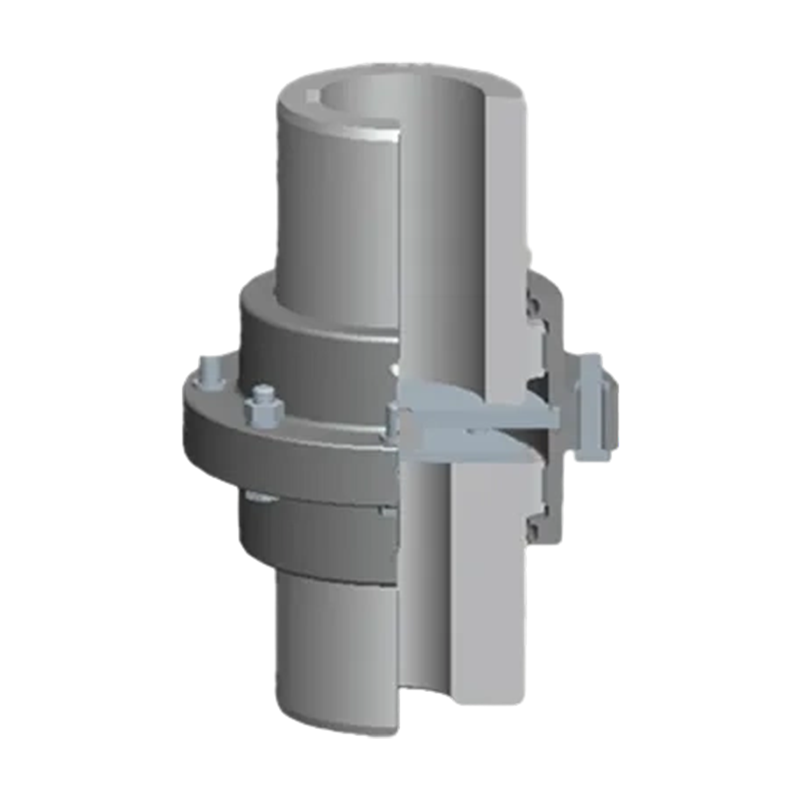
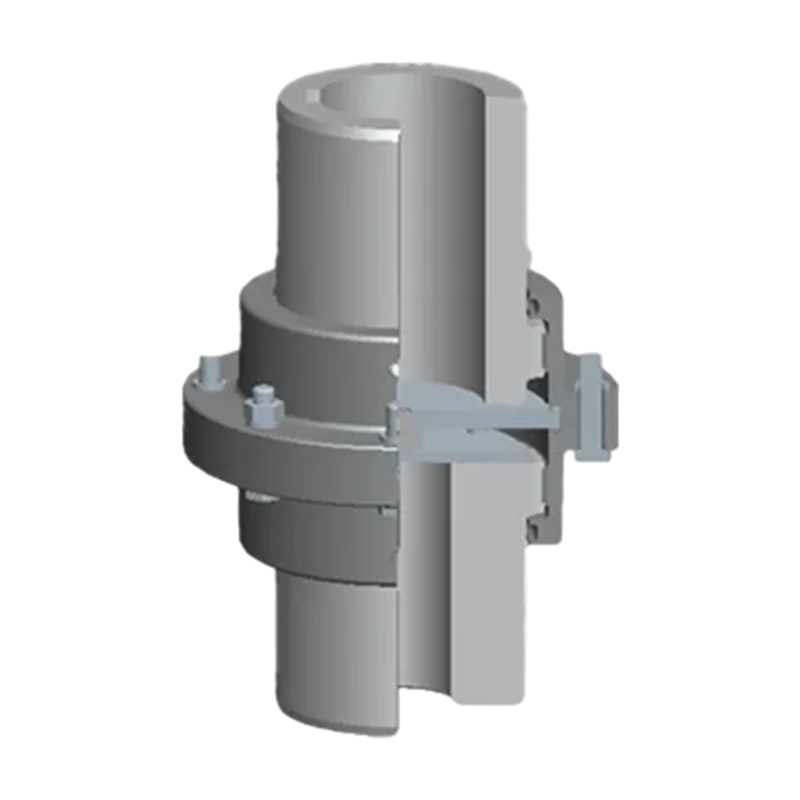
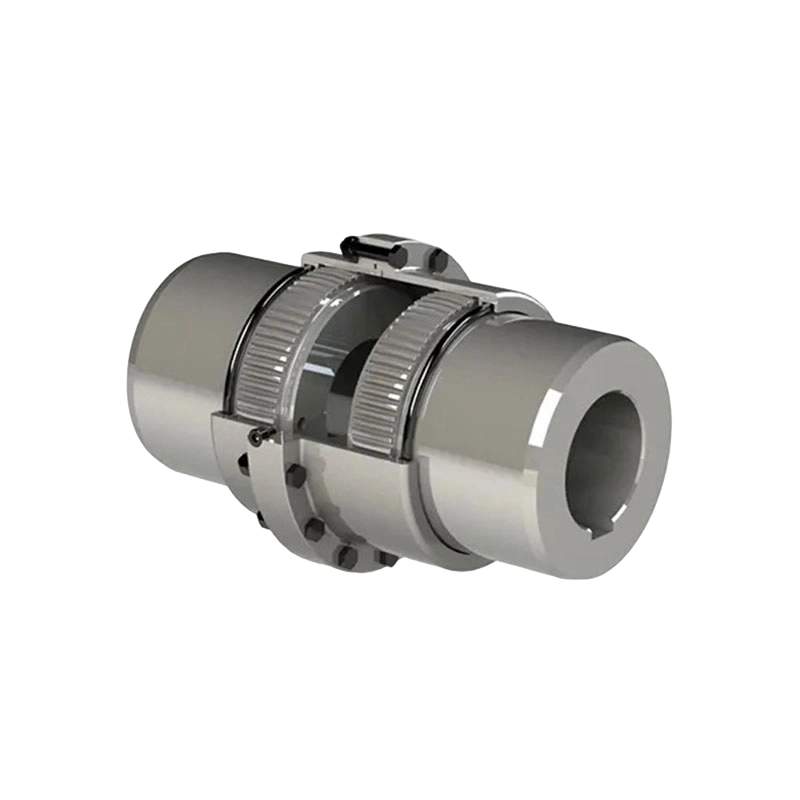
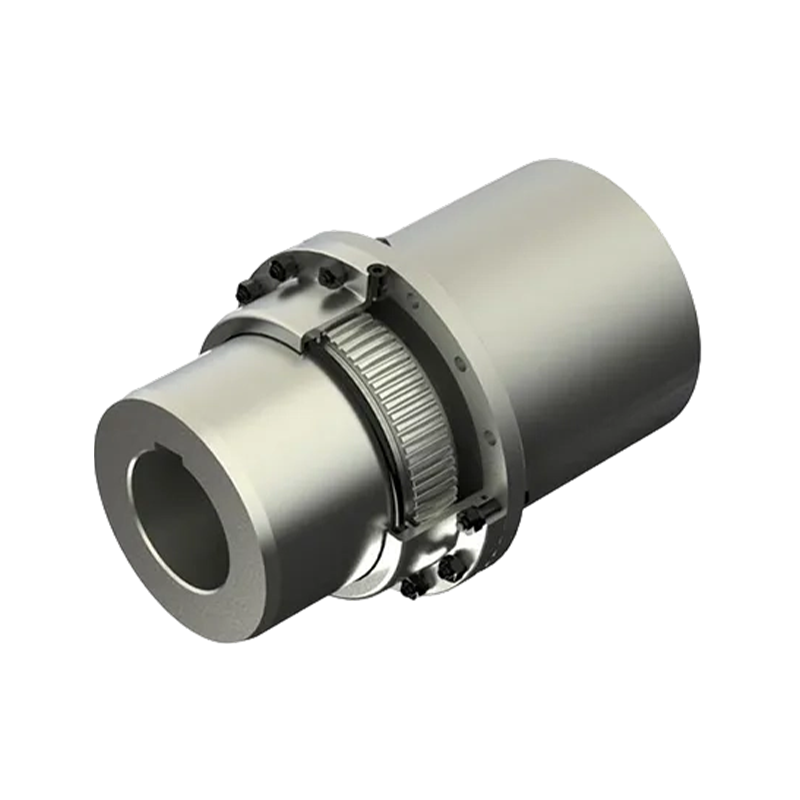
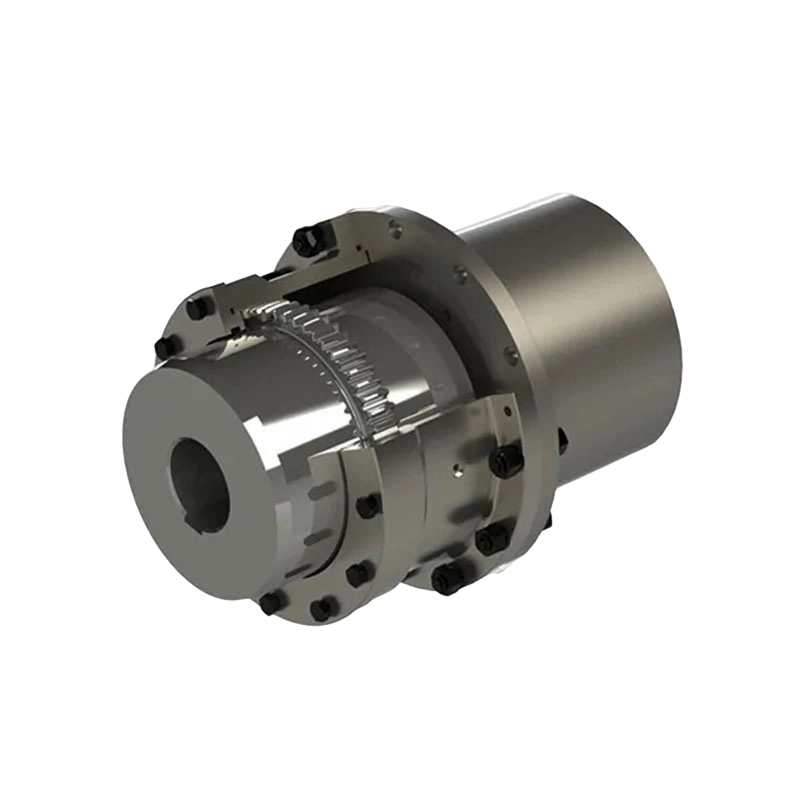
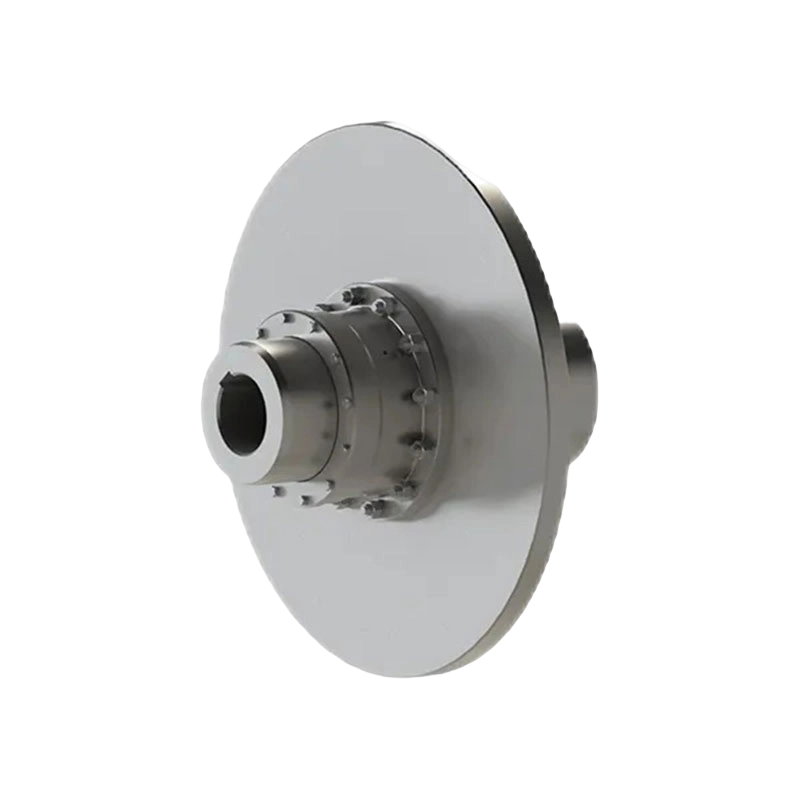
GCC Vertical installation drum gear coupling(Q/YG 13014X-2018)
Product Overview: The GCC type vertically mounted drum gear coupling (standard: Q/YG 13014X-2018) is a cutting-edge mechanical connection solution designed specifically for vertical power transmission systems. In vertically arranged shaft systems, this product, with its precise design and superior reliability, becomes a core component ensuring efficient and stable torque transmission.
Core Advantages:
1. Dedicated Vertical Structure Design: Unlike traditional horizontally mounted couplings, the GCC type is specifically optimized for the axial positioning and stability challenges that may arise in vertical installations, making it particularly suitable for vertically aligned shaft transmissions.
2. Drum Gear Compensation Technology: Utilizing a drum gear configuration, it not only enhances the ability to handle shaft misalignment and impact loads but also ensures uniform torque distribution, reducing stress on connected machinery and resulting in smoother operation.
3. High Torque Load Capacity: Designed for heavy-duty applications, this coupling possesses extremely high nominal torque, easily meeting the power demands of large vertical pumps, turbines, and other high-power equipment.
4. High Durability and Corrosion Resistance: Manufactured from high-strength, wear-resistant, high-quality materials, it possesses excellent fatigue resistance and corrosion resistance, maintaining an extremely long service life even in harsh industrial environments.
5. Excellent Alignment Flexibility: Effectively compensates for angular, radial, and axial misalignment, maintaining precise shaft alignment performance even under varying loads or harsh operating conditions.
Application Areas: This product is widely used in industries requiring vertical transmission:
1. Fluid Engineering: Large vertical water pumps, compressors, circulating pumps.
2. Energy and Power: Vertical turbines, generator sets.
3. Heavy Industry: Metallurgical equipment, mining machinery, port handling equipment, and hoisting machinery.
Installation and Maintenance: The GCC type coupling is designed with user convenience in mind. Its compact structure facilitates installation in confined vertical spaces; simultaneously, its low-maintenance design significantly reduces downtime. Clear markings on the product surface aid in precise positioning and installation/commissioning.
- Product Parameters
- Send Message
TECHNICAL PARAMETERS
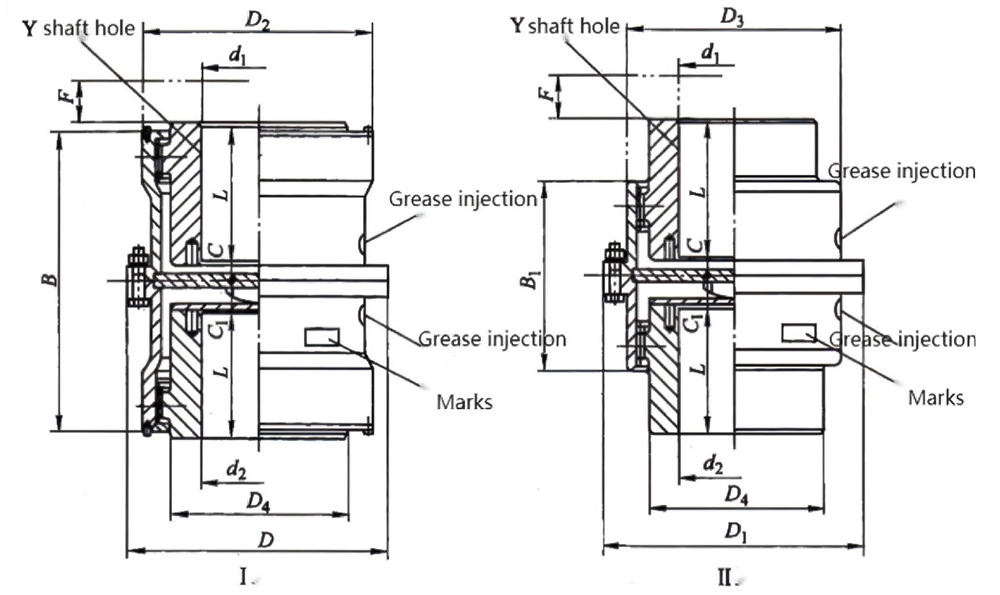
Basic parameters and main dimensions of GCC vertical mounting drum gear coupling
| Type | Nominal torque Tn/KN·m |
Allowable speed [n]/r·min⁻¹ |
Shaft hole diameter d₁,d₂ |
Shaft hole length L |
D | D₁ | D₂ | D₃ | D₄ | B | B₁ | F | C | C₁ | Mass /kg |
Moment of inertia /kg·m² |
Grease | |||||
| Ⅰ | Ⅱ | |||||||||||||||||||||
| J1 | Ⅰ | Ⅱ | Ⅰ | Ⅱ | Ⅰ | Ⅱ | Up | Down | Up, Down | |||||||||||||
| GCC1 | 800 | 7500 | 12,14 | 32 | 122 | 115 | 98 | 88 | 60 | 116 | 100 | 30 | 30 | — | 30 | 5.8 | 5.1 | 0.0079 | 0.0064 | 0.07 | 0.016 | 0.052 |
| 16,18,19 | 42 | 20 | 14 | 20 | ||||||||||||||||||
| 20,22,24 | 52 | 10 | 6 | 14 | ||||||||||||||||||
| 25,28 | 62 | 6 | 6 | |||||||||||||||||||
| 30,32,35,38 | 82 | |||||||||||||||||||||
| 40,42 | 112 | |||||||||||||||||||||
| GCC2 | 1400 | 6700 | 22,24 | 52 | 150 | 145 | 118 | 108 | 77 | 136 | 104 | 30 | 20 | 7 | 20 | 10 | 7.9 | 0.022 | 0.017 | 0.095 | 0.025 | 0.069 |
| 25,28 | 62 | 10 | 16 | |||||||||||||||||||
| 30,32,35,38 | 82 | 7 | ||||||||||||||||||||
| 40,42,45,48 | 112 | |||||||||||||||||||||
| 50,55,56 | ||||||||||||||||||||||
| GCC3 | 2800 | 6300 | 22,24 | 52 | 170 | 165 | 140 | 125 | 90 | 160 | 108 | 30 | 33 | 7 | 30 | 17 | 12.8 | 0.047 | 0.033 | 0.17 | 0.07 | 0.11 |
| 25,28 | 62 | 23 | 20 | |||||||||||||||||||
| 30,32,35,38 | 82 | 7 | ||||||||||||||||||||
| 40,42,45,48,50,55,56 | 112 | |||||||||||||||||||||
| 60,63 | 142 | |||||||||||||||||||||
| GCC4 | 5000 | 5600 | 30,32,35,38 | 82 | 200 | 195 | 160 | 145 | 112 | 180 | 116 | 30 | 13 | 7 | 20 | 26.2 | 20.5 | 0.099 | 0.074 | 0.29 | 0.11 | 0.14 |
| 40,42,45,48,50,55,56 | 112 | 7 | ||||||||||||||||||||
| 60,63,65,70,71,75 | 142 | |||||||||||||||||||||
| 80 | 172 | |||||||||||||||||||||
| GCC5 | 8000 | 5300 | 30,32,35,38 | 82 | 225 | 215 | 180 | 168 | 128 | 200 | 126 | 30 | 23 | 8 | 26 | 36.1 | 27.7 | 0.177 | 0.13 | 0.36 | 0.15 | 0.21 |
| 40,42,45,48,50,55,56 | 112 | 8 | ||||||||||||||||||||
| 60,63,65,70,71,75 | 142 | |||||||||||||||||||||
| 80,85,90 | 172 | |||||||||||||||||||||
| GCC6 | 11200 | 5000 | 32,35,38 | 82 | 245 | 230 | 200 | 185 | 145 | 224 | 134 | 30 | 35 | 10 | 24 | 53.2 | 39.8 | 0.3 | 0.22 | 0.5 | 0.21 | 0.27 |
| 40,42,45,48,50,55,56 | 112 | 10 | ||||||||||||||||||||
| 60,63,65,70,71,75 | 142 | |||||||||||||||||||||
| 80,85,90,95 | 172 | |||||||||||||||||||||
| 100 | 212 | |||||||||||||||||||||
| GCC7 | 16000 | 4500 | 32,35,38 | 82 | 272 | 265 | 230 | 210 | 160 | 244 | 148 | 30 | 45 | 10 | 28 | 71.1 | 47.5 | 0.53 | 0.35 | 0.78 | 0.31 | 0.4 |
| 40,42,45,48,50,55,56 | 112 | 15 | ||||||||||||||||||||
| 60,63,65,70,71,75 | 142 | 10 | ||||||||||||||||||||
| 80,85,90,95 | 172 | |||||||||||||||||||||
| 100,110 | 212 | |||||||||||||||||||||
| GCC8 | 22400 | 4250 | 55,56 | 112 | 290 | 272 | 245 | 225 | 176 | 272 | 162 | 30 | 29 | 10 | 30 | 83 | 59.6 | 0.72 | 0.47 | 0.98 | 0.43 | 0.52 |
| 60,63,65,70,71,75 | 142 | 10 | ||||||||||||||||||||
| 80,85,90,95 | 172 | |||||||||||||||||||||
| 100,110,120,125 | 212 | |||||||||||||||||||||
| GCC9 | 28000 | 4000 | 65,70,71,75 | 142 | 315 | 305 | 265 | 245 | 190 | 280 | 176 | 30 | 10 | 10 | 30 | 110 | 85 | 1.06 | 0.8 | 1.3 | 0.57 | 0.58 |
| 80,85,90,95 | 172 | |||||||||||||||||||||
| 100,110,120,125 | 212 | |||||||||||||||||||||
| 130,140 | 252 | |||||||||||||||||||||
| GCC10 | 45000 | 3550 | 75 | 142 | 355 | 340 | 300 | 280 | 225 | 330 | 196 | 30 | 28 | 10 | 30 | 164 | 128 | 1.77 | 1.56 | 1.6 | 0.7 | 0.69 |
| 80,85,90,95 | 172 | |||||||||||||||||||||
| 100,110,120,125 | 212 | 10 | ||||||||||||||||||||
| 130,140,150 | 252 | |||||||||||||||||||||
| 160 | 302 | |||||||||||||||||||||
| GCC11 | 63000 | 3000 | 85,90,95 | 172 | 412 | 385 | 345 | 325 | 256 | 360 | 224 | 40 | 15 | 14 | 36 | 224 | 178 | 3.76 | 2.88 | 2.1 | 0.93 | 0.94 |
| 100,110,120,125 | 212 | 14 | ||||||||||||||||||||
| 130,140,150 | 252 | |||||||||||||||||||||
| 160,170,180 | 302 | |||||||||||||||||||||
| GCC12 | 90000 | 2800 | 120,125 | 212 | 440 | 435 | 375 | 360 | 288 | 414 | 250 | 40 | 14 | 14 | 36 | 315 | 255 | 6.55 | 4.93 | 3.1 | 1.3 | 1.5 |
| 130,140,150 | 252 | |||||||||||||||||||||
| 160,170,180 | 302 | |||||||||||||||||||||
| 190,200 | 352 | |||||||||||||||||||||
| GCC13 | 125000 | 2500 | 140,150 | 252 | 490 | 480 | 425 | 400 | 320 | 470 | 272 | 50 | 14 | 14 | 36 | 406 | 325 | 10.6 | 8 | 4.5 | 1.5 | 2.3 |
| 160,170,180 | 302 | |||||||||||||||||||||
| 190,200,220 | 352 | |||||||||||||||||||||
| GCC14 | 180000 | 2300 | 160,170,180 | 302 | 545 | 540 | 462 | 440 | 362 | 530 | 316 | 50 | 16 | 16 | 36 | 542 | 423 | 17.8 | 13.9 | 6.8 | 2.3 | 3.1 |
| 190,200,220 | 352 | |||||||||||||||||||||
| 240,250,260 | 410 | |||||||||||||||||||||
Note:
The mass and moment of inertia are approximate values calculated by the Y-shaped shaft hole with the largest shaft hole diameter.

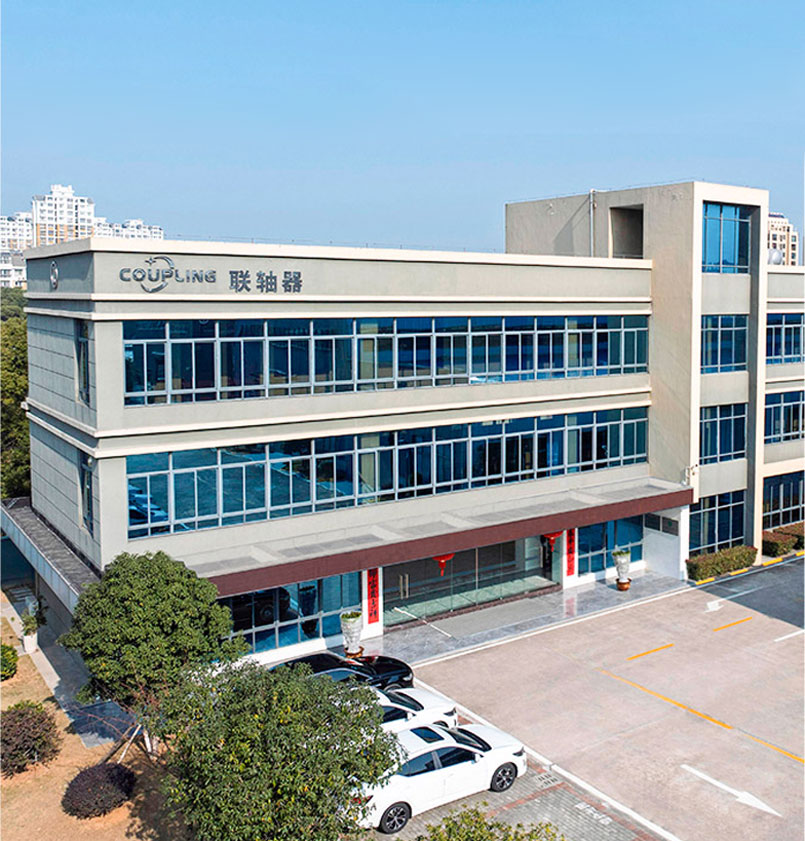
Zhongye Heavy Industry Technology (Zhenjiang) Co., Ltd.
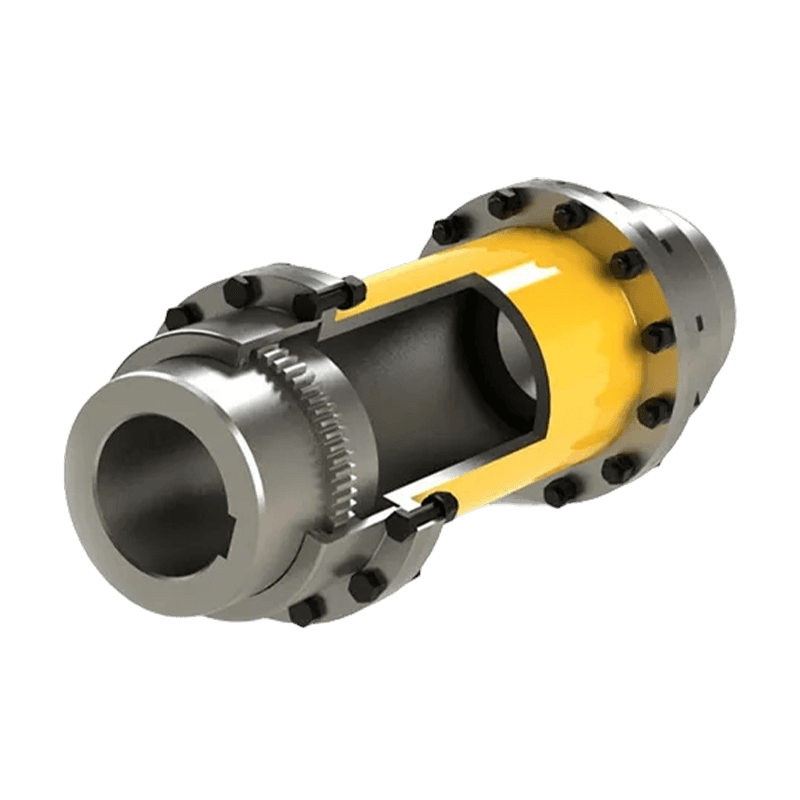
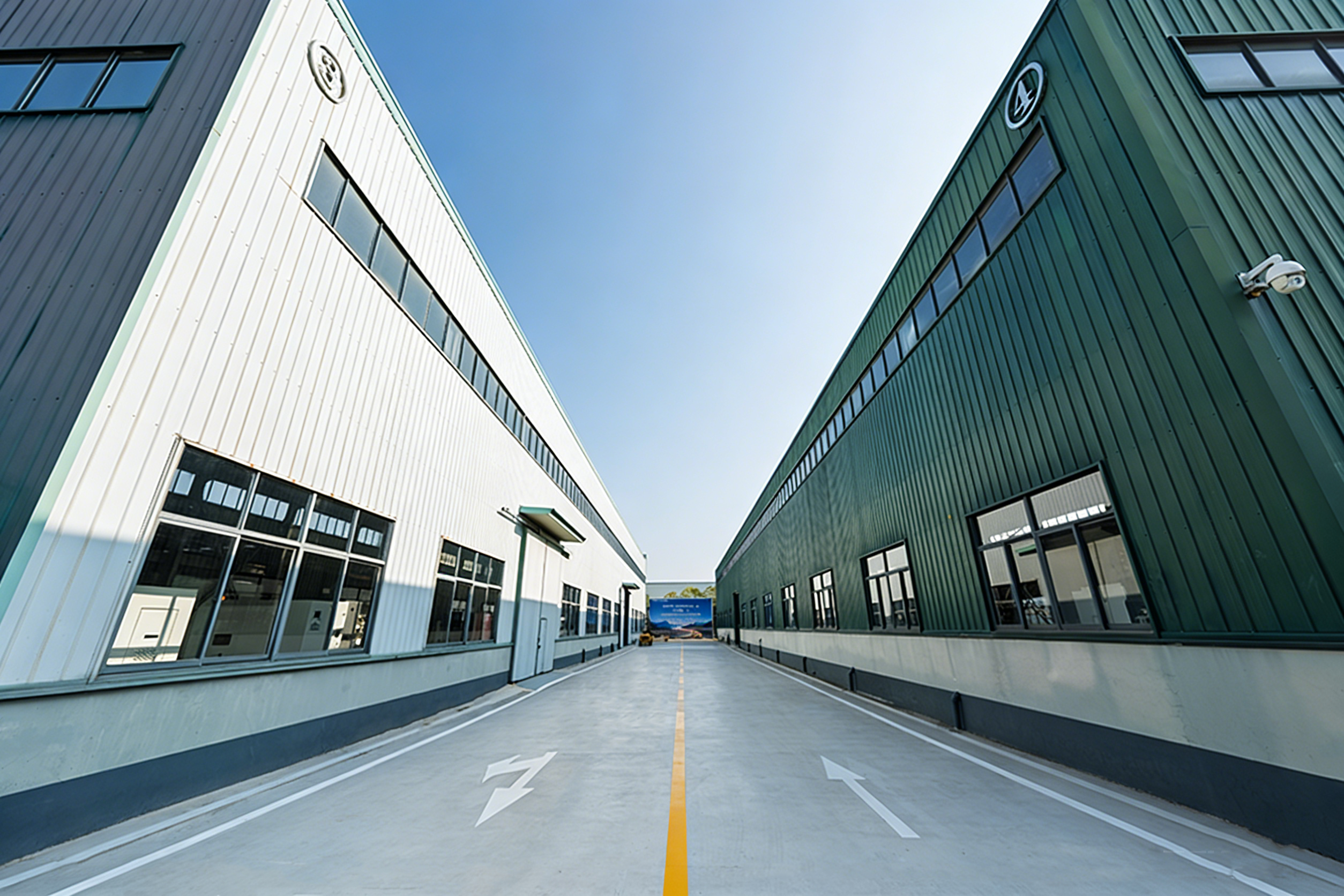
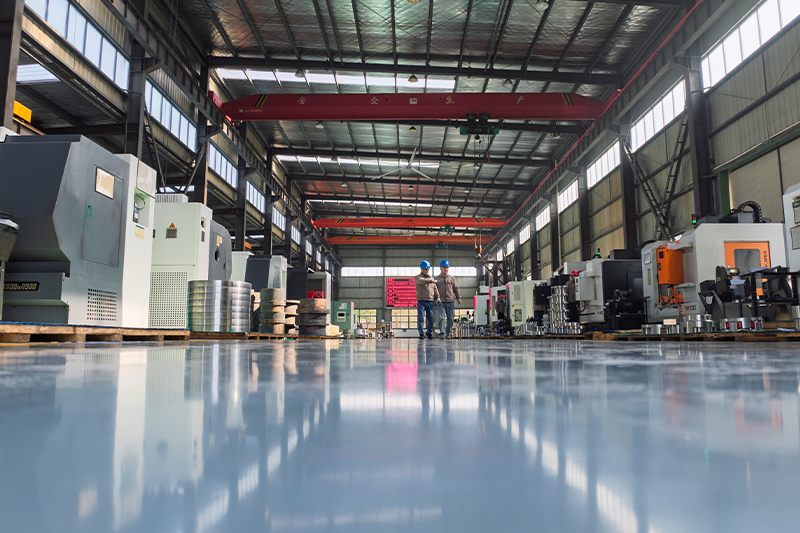
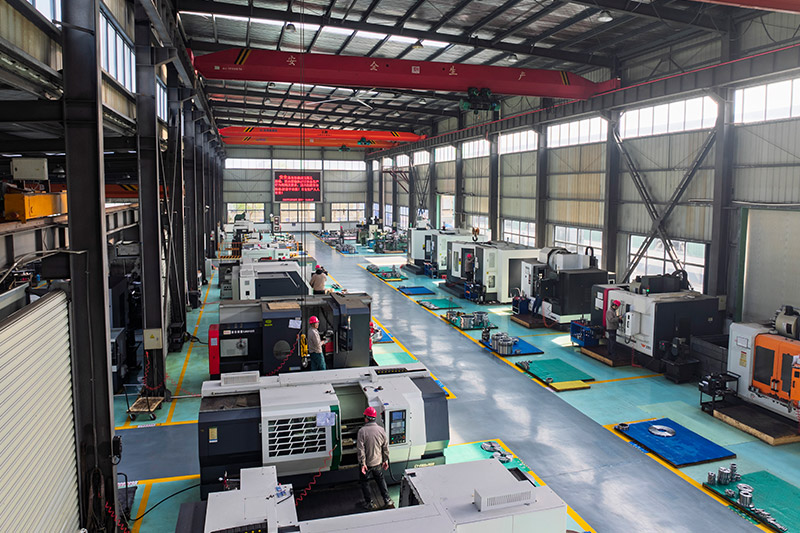
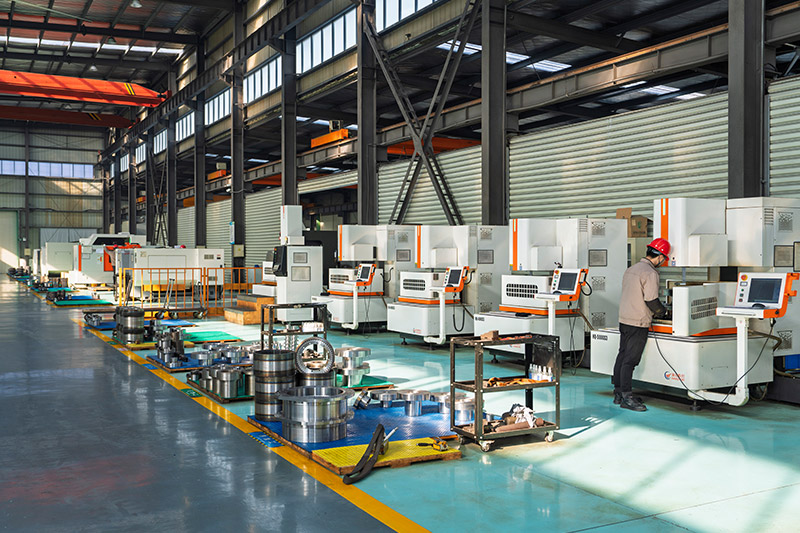
Zhongye Heavy Industry Technology (Zhenjiang) Co., Ltd. is located in a well-known ancient city, Zhenjiang. We are an enterprise integrating R & D, manufacturing, and sales. As a famous China GCC Vertical installation drum gear coupling(Q/YG 13014X-2018) Manufacturers and GCC Vertical installation drum gear coupling(Q/YG 13014X-2018) Suppliers, our products are widely used in metallurgical equipment, mining equipment, water equipment, lifting equipment, paper equipment, port equipment and other industries.
Our main products are toothed coupling, elastic sleeve column pin coupling, elastic column pin coupling, gear coupling with elastic pin, a universal coupling, tire coupling, jaw coupling, star coupling, diaphragm coupling, drum coupling and grid coupling, the Oldham coupling, flange coupling, clip shell coupling, GL type roller chain coupling and a safety coupling, and so on. Our company also undertakes a variety of non-standard coupling designs and manufacturing.
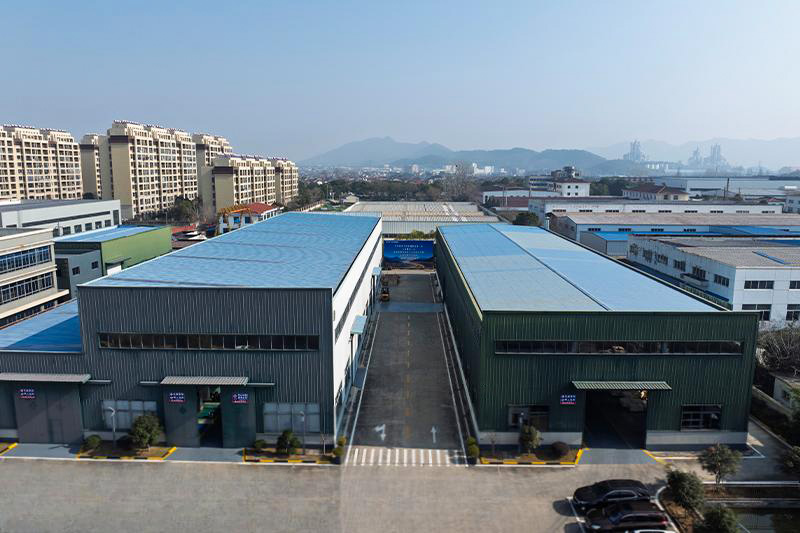
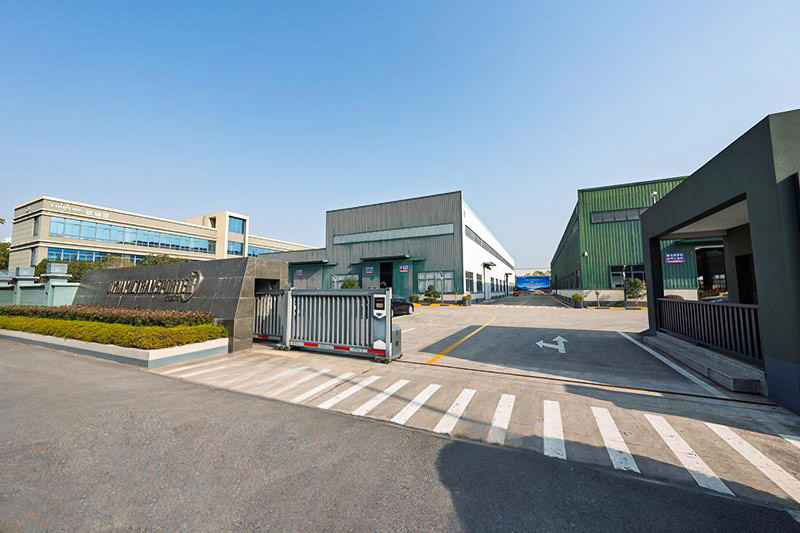
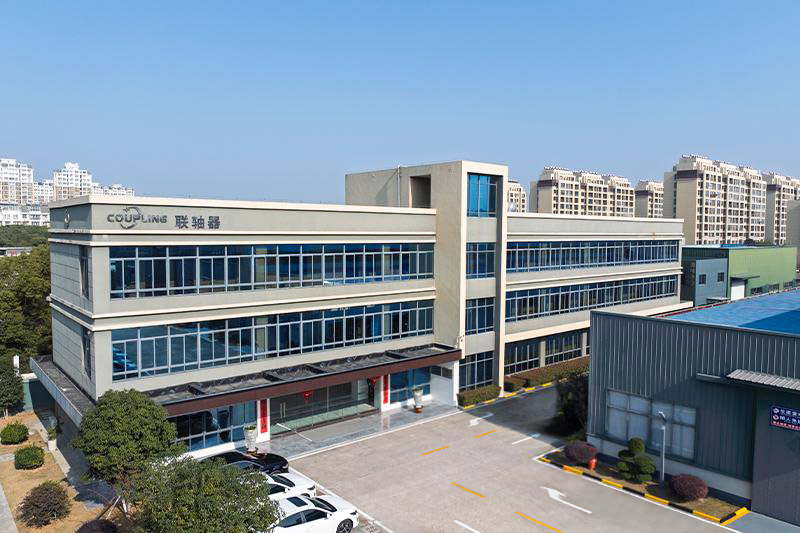
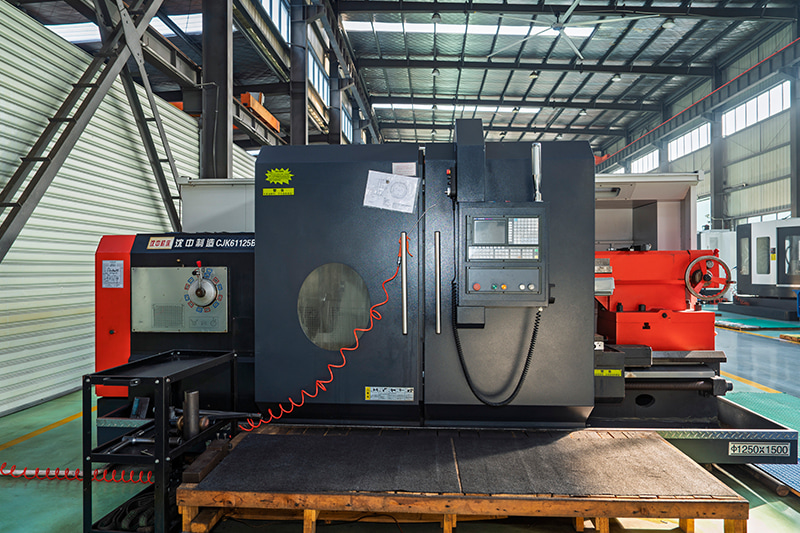
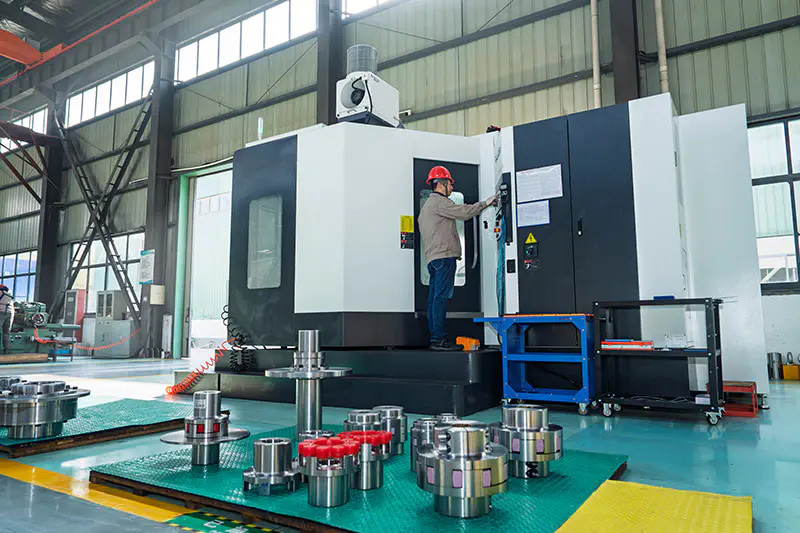
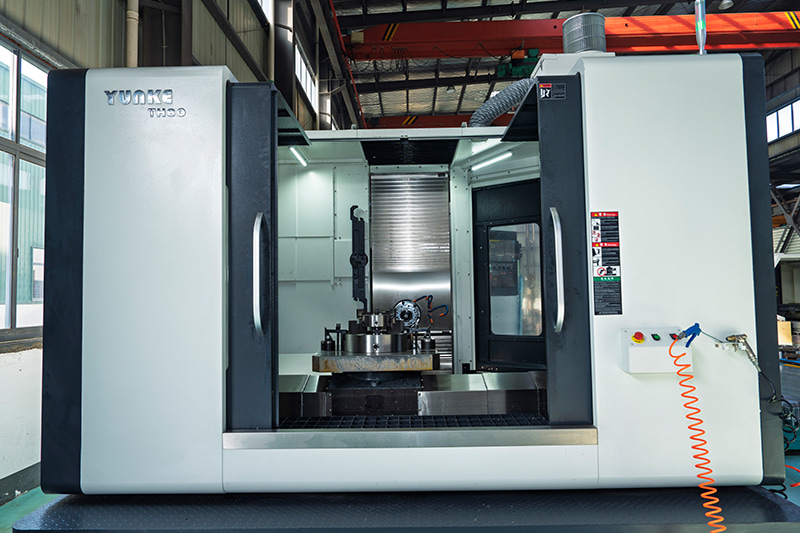
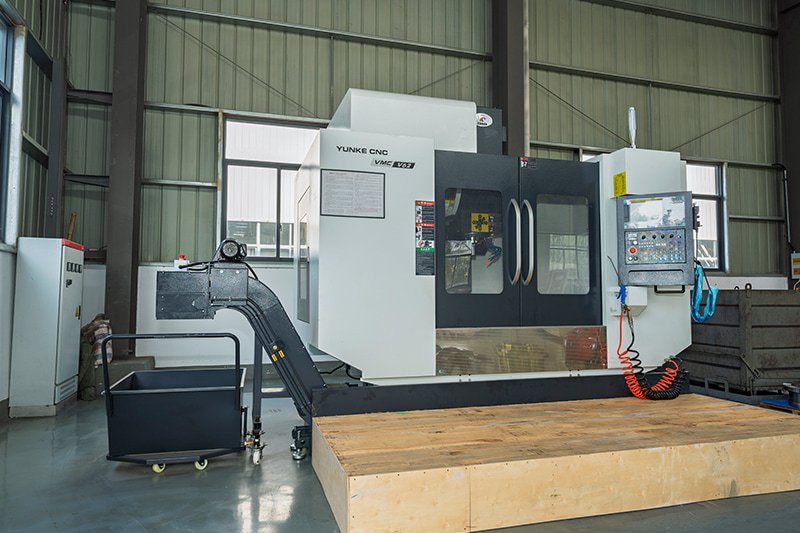
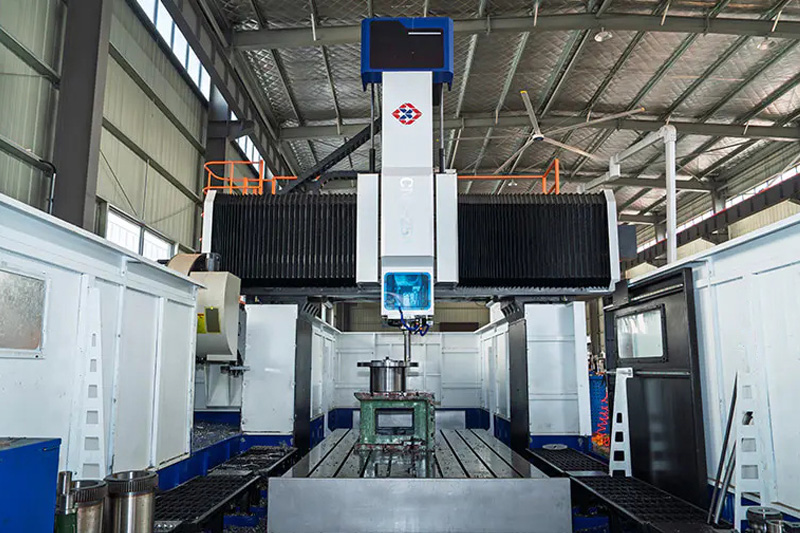
New workshop covers an area of about 16463.52m². heavy workshop 5,500 M2, Precision workshop 4,600m², office building and the gymnasium 2000 M2, Dinning hall 500m², Warehouse 1000m², Roads, greening, parking areas 3563 M2.
View more
Our main products are toothed coupling, elastic sleeve column pin coupling, elastic column pin coupling, gear coupling with elastic pin, a universal coupling, tire coupling, jaw coupling, star coupling, diaphragm coupling, drum coupling and grid coupling, the Oldham coupling, flange coupling, clip shell coupling, GL type roller chain coupling and a safety coupling, and so on. Our company also undertakes a variety of non-standard coupling designs and manufacturing.
New workshop covers an area of about 16463.52m². heavy workshop 5,500 M2, Precision workshop 4,600m², office building and the gymnasium 2000 M2, Dinning hall 500m², Warehouse 1000m², Roads, greening, parking areas 3563 M2.
Plant Equipment
FACTORY TOUR
Get In Touch
Follow us
- Quick Links
- About
- Products
- Our Service
- News & Events
- Contact
- Products Series
- Flexible Couplings with Non-Elastic Elements
- Flexible Couplings with Metal Elastic Elements
- Flexible Couplings with Non-Metallic Elastic Elements
- Safety Coupling
- Rigid Coupling
- Contact Us
- Tel: +86 511 8572 3800 +86 511 8572 3900
- Mobile: +86 15106109009
- Email: sales@couplingzy.com
- Add:No.1 Zhongye Yingbin Avenue, Gaozi Street, Dantu Economic Development Zone, Zhenjiang City, Jiangsu Province, China.


