:+86 15106109009
:sales@couplingzy.com


 English
  русский
  Español
  عربى
عربى  Português
  Deutsch
  Türk
Türk  Indonesia

Custom Coupling Manufacturer for Bespoke Shaft Coupling Design and Build
Content
- 1 What "Custom" Means in This Line of Work
- 2 Five Product Families That Anchor Custom Work
- 3 Matching the Coupling to the Duty, Not Just the Shaft
- 4 Overload Protection: A Common Reason Custom Work Starts
- 5 How a Custom Coupling Project Usually Runs
- 6 What to Send Before You Ask for a Quote
- 7 Choosing a Custom Coupling Manufacturer
Most couplings look simple from the outside: two hubs, an elastic or metallic element between them, and a ring of bolts holding the assembly together. The difficulty usually shows up at the edges of the catalogue instead — a shaft that sits further away than the standard model assumes, a brake wheel that has to share the same hub, a drive that runs faster or hotter than any off-the-shelf unit was designed for. That gap between the catalogue page and the real machine is exactly where custom coupling manufacturing lives.
What "Custom" Means in This Line of Work
Custom is not one single thing, and treating it as one is where projects tend to go wrong. In practice, the requests we handle fall into two broad groups, and they call for quite different amounts of engineering.
The first group is a catalogue coupling with changes: a different bore and keyway, a longer hub, a modified flange bolt pattern, a different material, a balancing grade the standard version was never held to. The structure stays; the interfaces move.
The second group is genuine design work. The torque, speed, misalignment, temperature and space envelope simply do not fit any existing model, so the coupling has to be configured around the duty rather than selected from a table. This is the work that benefits from having engineers and machinists in the same building.
Zhongye Heavy Industry Technology (Zhenjiang) Co., Ltd. has been manufacturing couplings in Zhenjiang, Jiangsu since 2014, and both kinds of work are part of the normal order book. The workshop layout helps: a heavy workshop of roughly 5,500 square metres and a precision workshop of roughly 4,600 square metres sit on the same site, so large hubs and closely toleranced components can be produced under one roof. For custom work, that shortens the loop between the first drawing and the first article considerably.
Five Product Families That Anchor Custom Work
Custom designs rarely start from a blank page. They start from a family we already build in volume, which is why knowing the catalogue matters even when nothing in it fits perfectly.
| Family | Typical designs | Usually chosen for |
|---|---|---|
| Flexible, metal elastic elements | Diaphragm couplings, snake spring couplings, heavy-duty axial drum gear coupling | High speed, high temperature, long service life |
| Flexible, non-metallic elastic elements | Elastic sleeve pin, tire, plum-shaped, star, elastic pin gear | Vibration damping in cost-sensitive drive lines |
| Flexible, non-elastic elements | Drum gear GA/GB/GC and variants, roller chain, slider, cross slider, universal joints | High torque, angular offset, long shaft spans |
| Rigid couplings | JK/JKW clamp couplings | Permanently aligned, precise shaft connections |
| Safety couplings | MAC friction safety coupling | Overload protection of the driven machine |
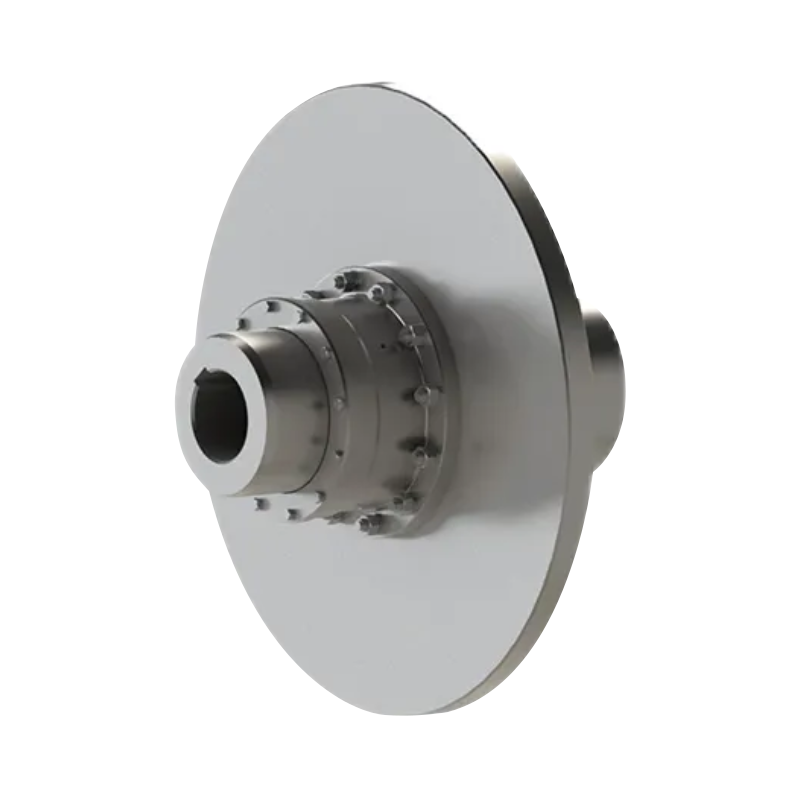
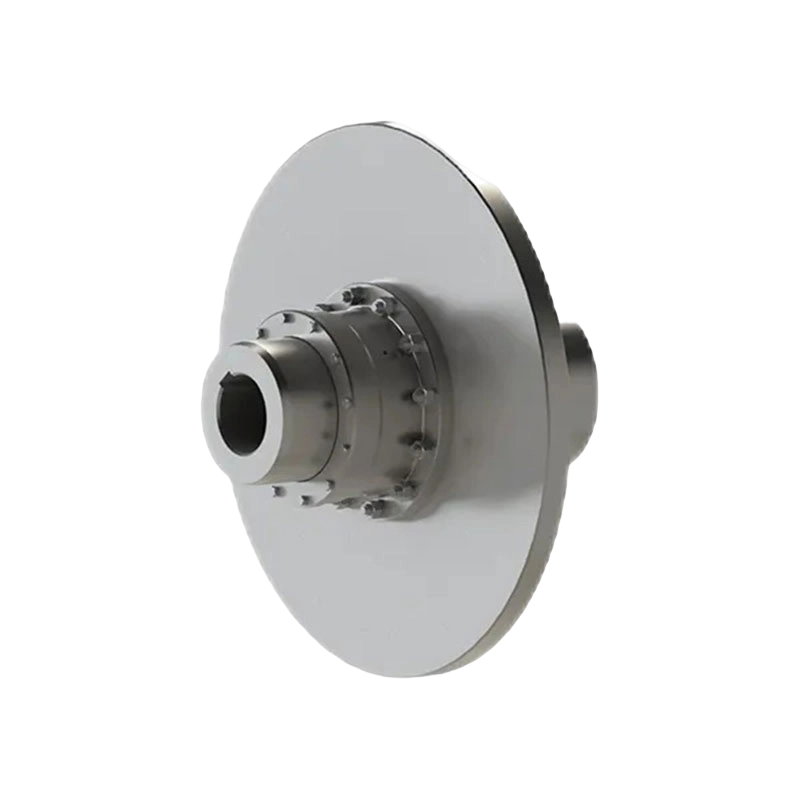
Gear couplings are a good illustration of how far a single family can stretch. The drum gear line runs from base types through versions with brake wheels, brake discs, intermediate shafts, intermediate sleeves, vertical mounting and motor shaft extension. Each variant answers a specific installation problem — a brake that needs its own mounting face, a shaft pair that will not sit close together, a vertical pump drive — and those same problems reappear in custom enquiries.
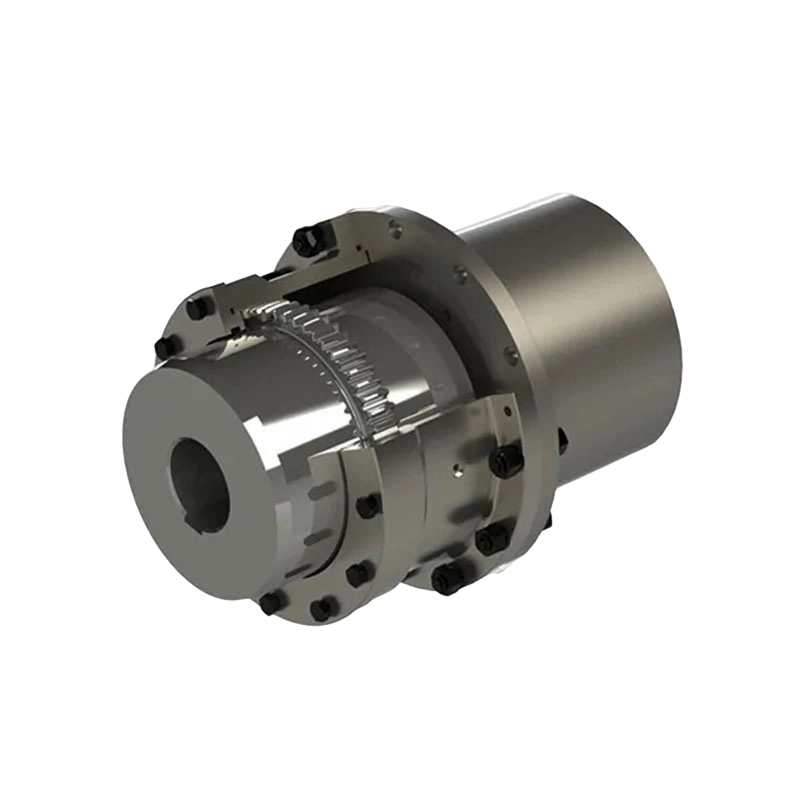
The base GA drum gear coupling is a typical starting point for these discussions, and it is often the reference a customer already has on the bench in the form of a worn-out unit.
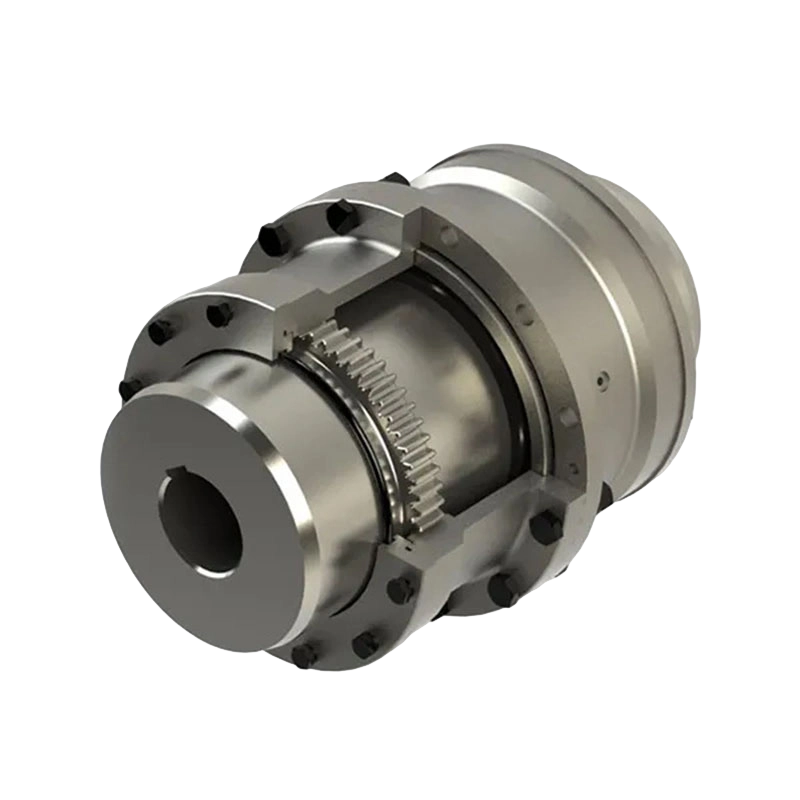 GA Drum Gear Coupling for Heavy-Duty Industrial DrivesThe GA series offers a heavy-duty reference point for high-torque drives, compensating misalignment and spanning GA1 to GA30 for varied industrial duty.View Product →
Matching the Coupling to the Duty, Not Just the Shaft
A coupling connects two shafts, but it has to survive everything the drive does to it. When we look at a custom request, torque capacity is only the first question. The rest are just as likely to decide the final design:
- Continuous and peak torque, including starting conditions
- Operating speed, and whether the unit must be balanced to a specific grade
- Radial, angular and axial misalignment the installation will actually see
- Ambient and operating temperature, dust, moisture and corrosive atmosphere
- How often the machine starts and stops in a shift
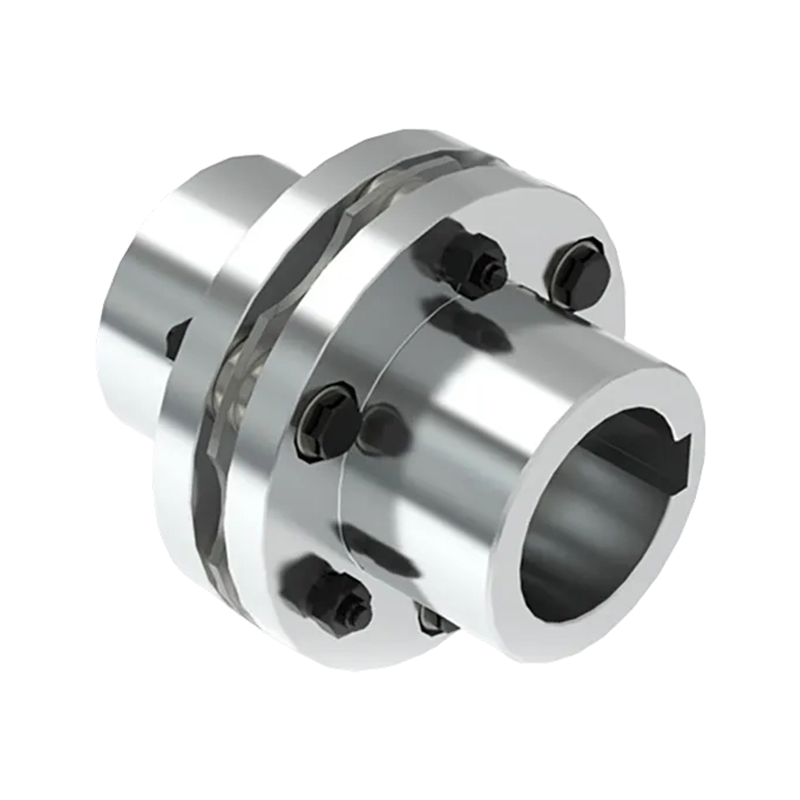
Speed is the variable most often underestimated. A drive that looks ordinary on paper can demand a balanced, high-speed design once the numbers are checked, and the answer may well be a metal element coupling rather than an elastomer. The T20 high-speed snake spring coupling exists for exactly this reason, and custom versions of this family are regularly built around one particular speed and service factor.
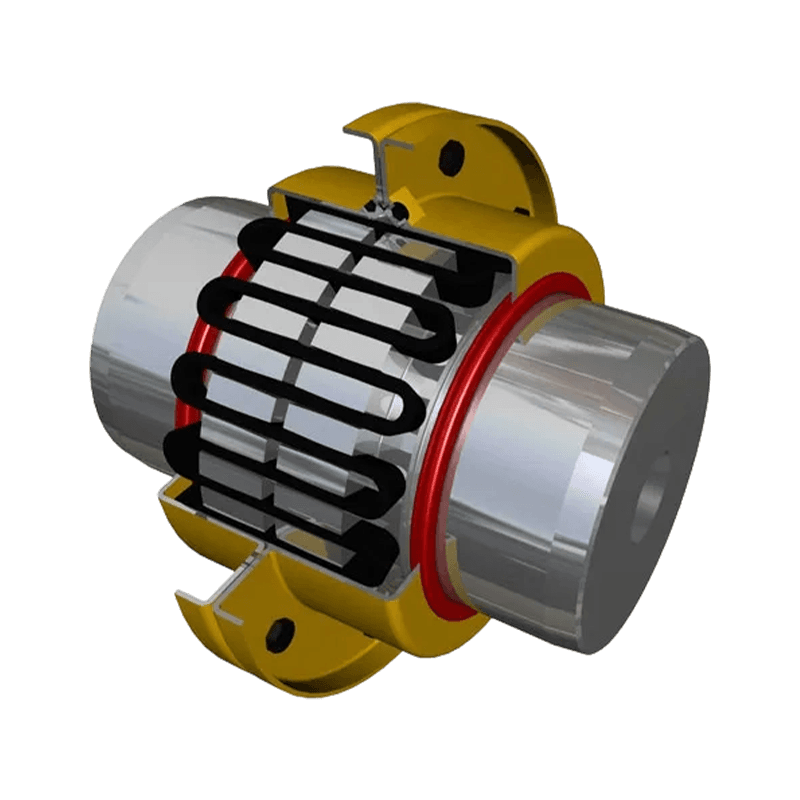 T20 High-Speed Snake Spring Metal Element CouplingFor high-speed drive trains requiring damping, flexibility, and angular, axial, or parallel misalignment compensation, the T20 metal-element coupling is the relevant series to review.View Product →
Overload Protection: A Common Reason Custom Work Starts
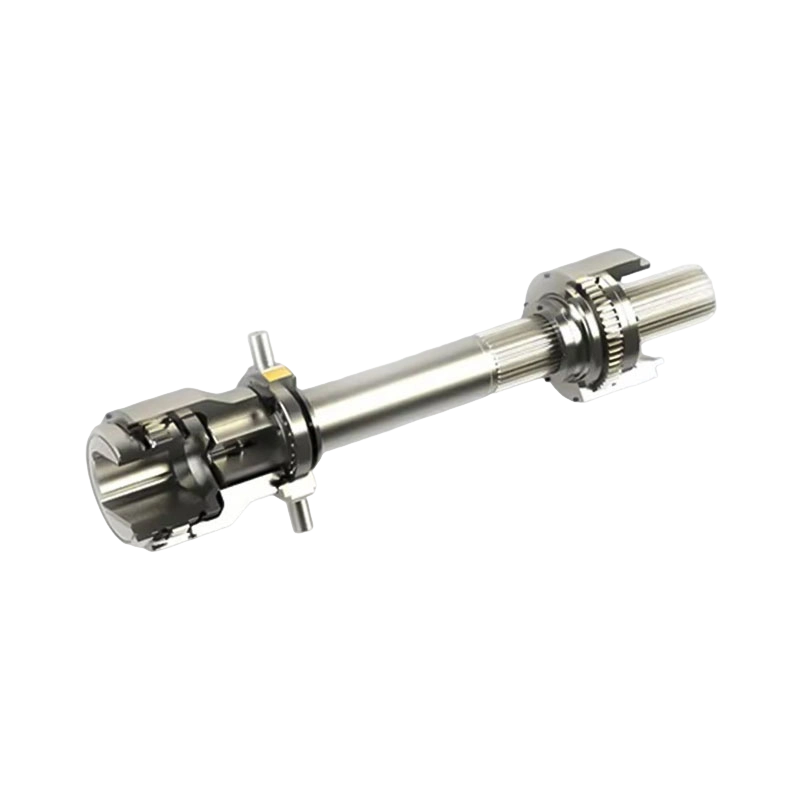
Sometimes the requirement is not to transmit more torque but to stop transmitting it. Where a jammed conveyor, a stalled roll or a seized pump would otherwise destroy a gearbox or shear a shaft, a safety coupling is added to the drive train as a deliberate weak link. The MAC friction safety coupling is our standard answer here, and it is frequently adapted for a specific slipping torque, a specific shaft fit or a particular mounting arrangement. Because the setting is tied to the value of the machine it protects, this is one of those areas where a custom build is usually cheaper than the damage it prevents.
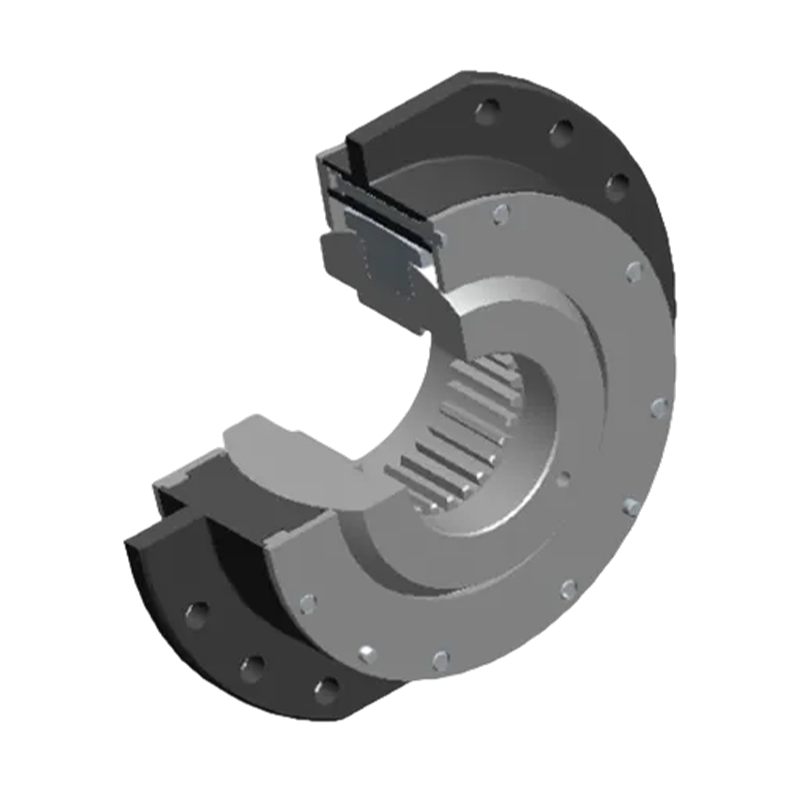 MAC Friction Safety Coupling for Overload ProtectionWhere a jammed conveyor or stalled roll could damage a gearbox, this adjustable-slip friction coupling isolates overloads and can be tailored to the protected machine.View Product →
How a Custom Coupling Project Usually Runs
The sequence is fairly consistent, whether the order is for one unit or fifty:
- Duty data and drawings are collected — motor power, speed, shaft dimensions, available space.
- A selection or outline design is proposed, with the coupling type, size and any modifications listed.
- An approval drawing is issued for the customer to confirm before anything is cut.
- Machining, heat treatment and assembly proceed in the heavy and precision workshops.
- Inspection covers critical dimensions, runout and balance where required.
- The finished coupling is packed with its documentation and shipped.
The step most customers underestimate is the third one. Confirming the drawing early is what keeps a custom coupling from turning into a custom mistake.
What to Send Before You Ask for a Quote
None of the information below is difficult to gather, and having it ready usually removes one or two rounds of questions:
- Motor or turbine power, speed and starting method
- Shaft diameters, keyway dimensions and the distance between shaft ends
- The maximum outside diameter and length the installation allows
- Operating environment and temperature range
- Whether a brake wheel, brake disc or clutch has to be integrated
- Quantity, expected delivery, and any balancing or inspection standard that applies
A photograph or a dismantled sample is often more useful than a page of description, particularly when the machine is an older unit with no surviving documentation.
Choosing a Custom Coupling Manufacturer
The companies that do this well share a few habits. They ask about the machine before they quote a model. They are willing to say that a requested design will not survive its duty. They machine, treat and inspect in house rather than passing the difficult half of the job to somebody else. If you would like to see how those habits look in practice, you can read more about our manufacturing and testing capabilities at our facility in Zhenjiang.
If you are still working out which coupling type suits your drive, this guide to coupling selection is a reasonable place to start before the drawings come out.
And when you are ready, send what you have. A sketch, a worn sample and a few duty numbers are usually enough for us to tell you whether your application is a catalogue item or something we need to design from scratch.
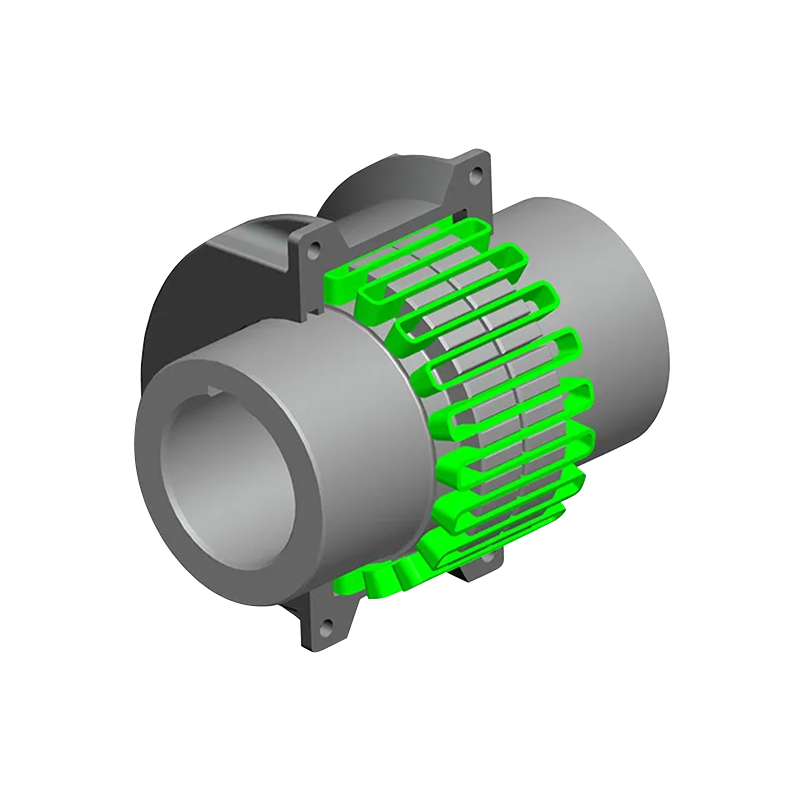
- Quick Links
- About
- Products
- Our Service
- News & Events
- Contact
- Products Series
- Flexible Couplings with Non-Elastic Elements
- Flexible Couplings with Metal Elastic Elements
- Flexible Couplings with Non-Metallic Elastic Elements
- Safety Coupling
- Rigid Coupling
- Contact Us
- Tel : +86 511 8572 3800 +86 511 8572 3900
- Mobile : +86 15106109009
- Email : sales@couplingzy.com
- Add:No.1 Zhongye Yingbin Avenue, Gaozi Street, Dantu Economic Development Zone, Zhenjiang City, Jiangsu Province, China.


