:+86 15106109009
:sales@couplingzy.com


 English
  русский
  Español
  عربى
عربى  Português
  Deutsch
  Türk
Türk  Indonesia

Flexible Coupling vs Diaphragm Coupling: Key Differences and How to Choose
Content
Selecting the right shaft coupling is rarely a one-size-fits-all exercise. In industrial drive systems, engineers often find themselves weighing two broad options: a flexible coupling that relies on elastic components or mechanical articulation to accommodate misalignment, and a diaphragm coupling that uses a thin metal disc pack to transmit torque while allowing angular, parallel and axial displacement. But because "flexible coupling" is itself a family that includes several distinct designs, the comparison is not always as straightforward as it sounds. This guide breaks down the real differences, the application factors that matter, and how to make a confident selection for your equipment.
What Is a Flexible Coupling?
At its simplest, a flexible coupling is any shaft connector that transmits power while tolerating a controlled amount of misalignment between the driving and driven shafts. Unlike rigid couplings, flexible couplings allow angular, radial and axial movement, which protects bearings, seals and connected machinery from the effects of thermal expansion, foundation settlement, and machining tolerances.
In our daily work at Zhongye, we categorise flexible couplings into three broad design groups:
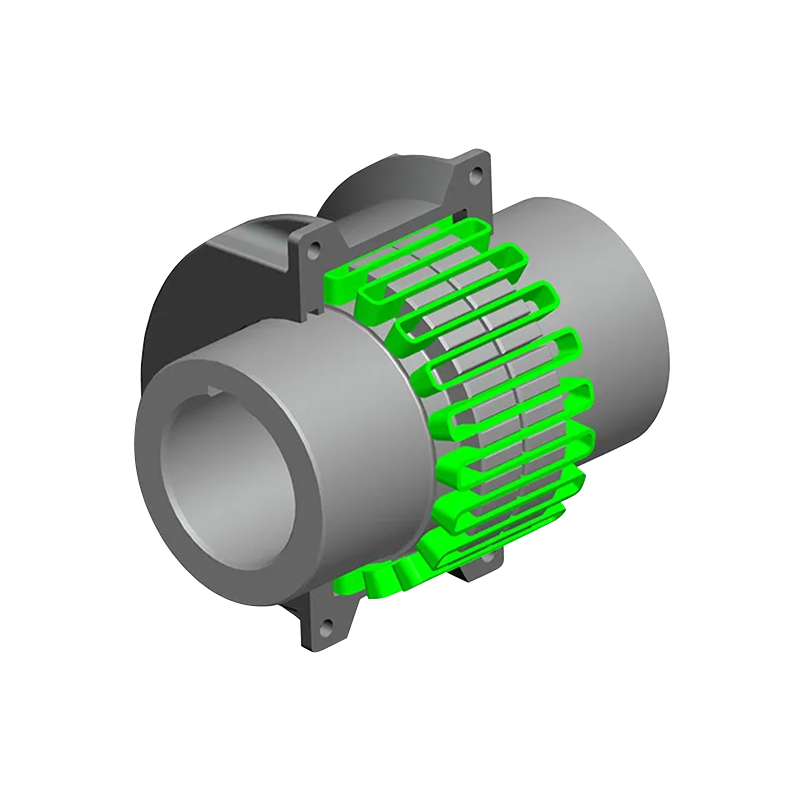
- Couplings with metallic elastic elements, such as diaphragm couplings and snake-spring couplings. These use the elastic deformation of steel plates or springs to handle misalignment.
- Couplings with non-metallic elastic elements, such as pin-and-bush, tyre, star and plum-shaped couplings. These use rubber or polyurethane inserts that also damp vibration.
- Couplings without elastic elements but with mechanical flexibility, such as gear couplings and universal joints. These rely on sliding or rolling contact to accommodate misalignment.
Every group has a different character, and each is suited to different operating conditions. If your priority is high-speed, maintenance-free transmission, the metal-elastic flexible couplings in our range are a good starting point.
What Is a Diaphragm Coupling?
A diaphragm coupling is a specific type of flexible coupling that transmits torque through one or more thin metal diaphragms, usually made of high-strength stainless steel or alloy steel. The diaphragms are bolted alternately to the driving and driven hubs. When torque is applied, the diaphragm transmits the force through its metal structure while flexing elastically to accommodate angular, parallel and axial misalignment. Because the deformation is purely elastic, there is no wear in the flexing element itself.
This construction gives diaphragm couplings several valuable characteristics. They require no lubrication, which means no oil leaks and no routine greasing schedule. They have zero backlash, making them suitable for precise motion control. They also handle high speeds better than most elastic-element couplings because the thin metal plates are well balanced and do not creep or soften under centrifugal load.
The MP-Series single-type elastic diaphragm coupling is a representative example of this design in our production programme.
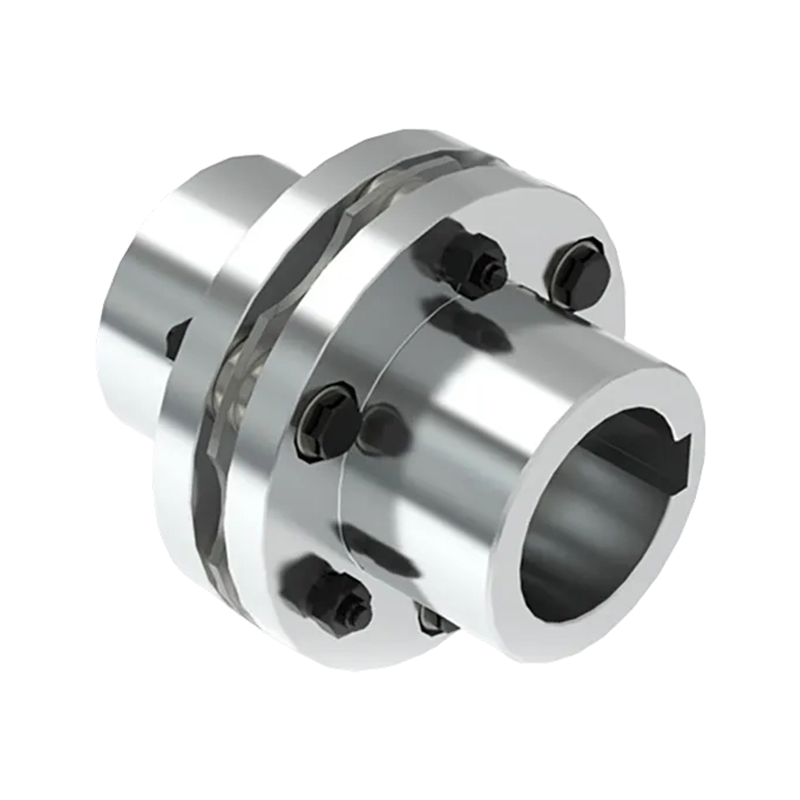 MP diaphragm coupling(Q/YP 21001X-2018)MP Diaphragm Coupling (complying with Q/YP 21001X-2018 standard) is an advanced metal elastic element transmission device designed for high-precision and high torque t...View Product →
For applications requiring greater misalignment capacity or longer spans, we also supply double-flex diaphragm couplings and models with an intermediate shaft.
Structural and Working Principle Differences
Diaphragm coupling construction
The diaphragm coupling's core element is its laminated metal disc pack. The pack is clamped between hub flanges by high-strength bolts. There are no sliding parts, no seals and no lubrication points. Flexibility is provided entirely by the elastic bending of the thin metal plates. This makes the coupling inherently backlash-free, a requirement in precision positioning and servo drive applications. It also means that axial end thrust is relatively low, because the plates expand and contract within their elastic limit.
Other flexible coupling constructions
Other flexible coupling designs achieve flexibility by different means. Non-metallic elastic couplings use rubber, polyurethane or nylon elements that deform under load. These materials give good shock absorption and electrical isolation, but they have limits: most elastomers lose stiffness at high temperature and can age or swell in contact with oil. The HC-Series elastic pin coupling is a typical example of this non-metallic design.
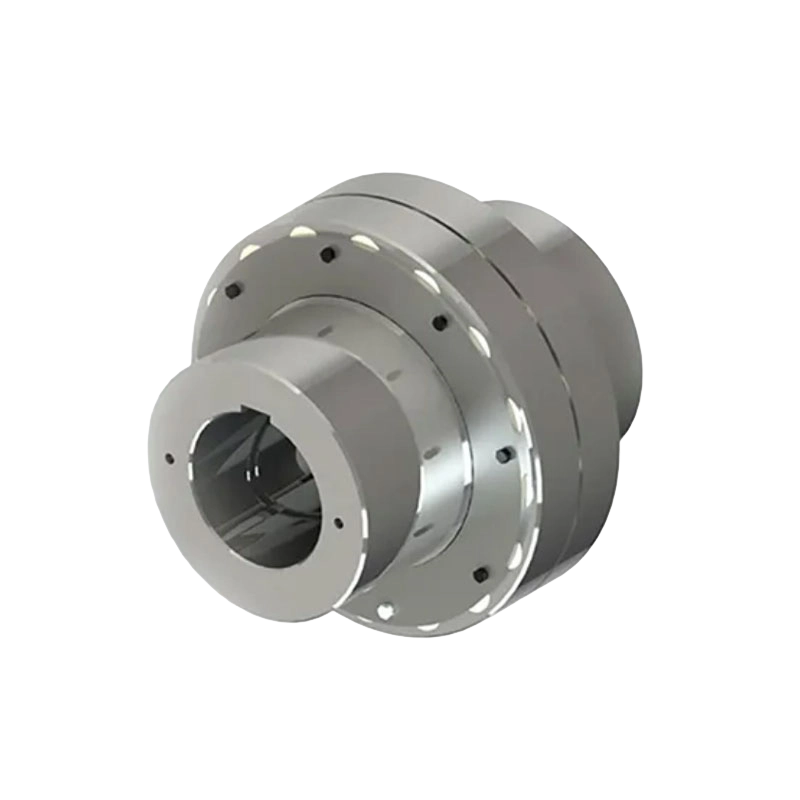 HC type elastic pin coupling(Q/YZ31001X-2018)HC type elastic pin coupling (Q/YZ31001X-2018) is a high-performance flexible coupling that uses non-metallic elastic components and is designed strictly in accordance...View Product →
Gear-type flexible couplings use lubricated gear teeth to allow misalignment. They are compact for their torque capacity but require a continuous oil film; if lubrication is neglected, wear accelerates quickly.
These structural differences are not academic. They directly affect how much torque a coupling can carry at a given speed, how long it will run before service is needed, and what happens when an unexpected overload occurs.
Flexible Coupling vs Diaphragm Coupling: Performance Comparison
The table below summarises how diaphragm couplings compare with two common flexible coupling alternatives in the most important selection criteria.
| Performance Factor | Diaphragm Coupling | Gear (Mechanical Flexible) Coupling | Elastic-element Flexible Coupling |
|---|---|---|---|
| Torque density | High | Very high | Moderate |
| Speed capability | Excellent for high speed | Good, balance-sensitive | Limited by element material |
| Angular misalignment | Good (typically up to 1 degree per pack) | Excellent | Good |
| Parallel misalignment | Moderate | High | Good |
| Backlash | None | Small | None to small |
| Lubrication | Not required | Required | Not required |
| Maintenance | Inspect bolts periodically | Regular lubrication and wear checks | Inspect elastomer for wear |
| Service life | Long, no wear parts | Depends on lubrication | Elastomer replacement needed |
| Temperature range | Very wide | Wide | Limited by elastomer |
| Relative cost | Higher than elastomer types | High, plus maintenance cost | Lower to moderate |
These figures are guidance rather than absolute limits, because the final answer always depends on the specific model, materials and installation conditions. What they highlight are the trade-offs an engineer must balance every day.
Key Differences in Application Scenarios
When a diaphragm coupling is the better choice
Diaphragm couplings are at their best in high-speed, high-precision machinery where lubrication is impractical and downtime is costly. Typical applications include:
- High-speed pumps, fans and compressors
- Turbine and generator drives
- Precision positioning systems and test benches
- Metallurgical rolling mill auxiliary drives that run continuously
A diaphragm coupling is also a strong candidate when the operating environment is hot, oily or dusty, because there is no elastomer to degrade and no grease to wash away.
When another flexible coupling may be preferable
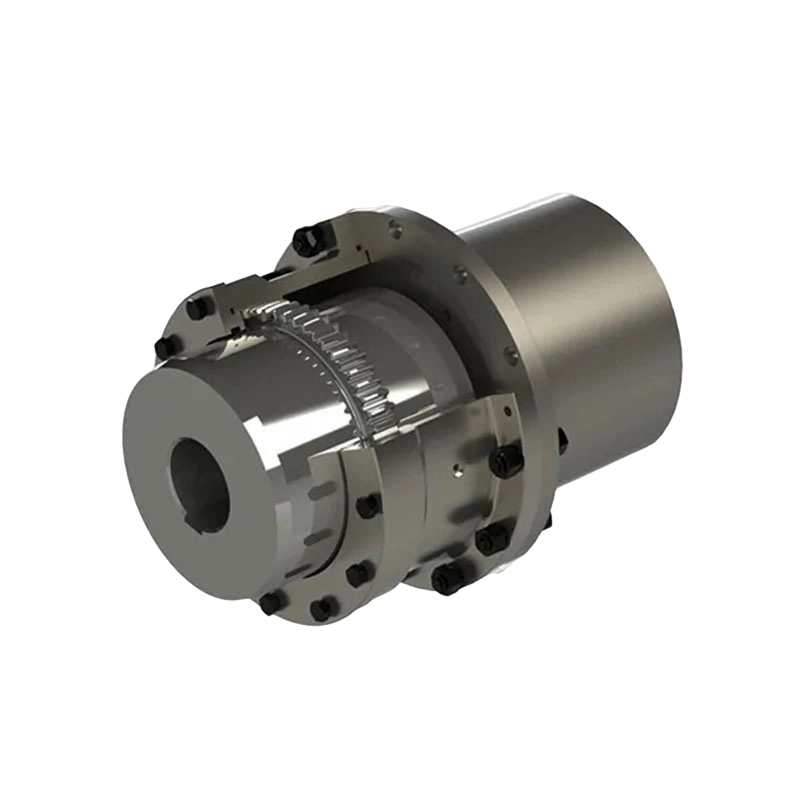
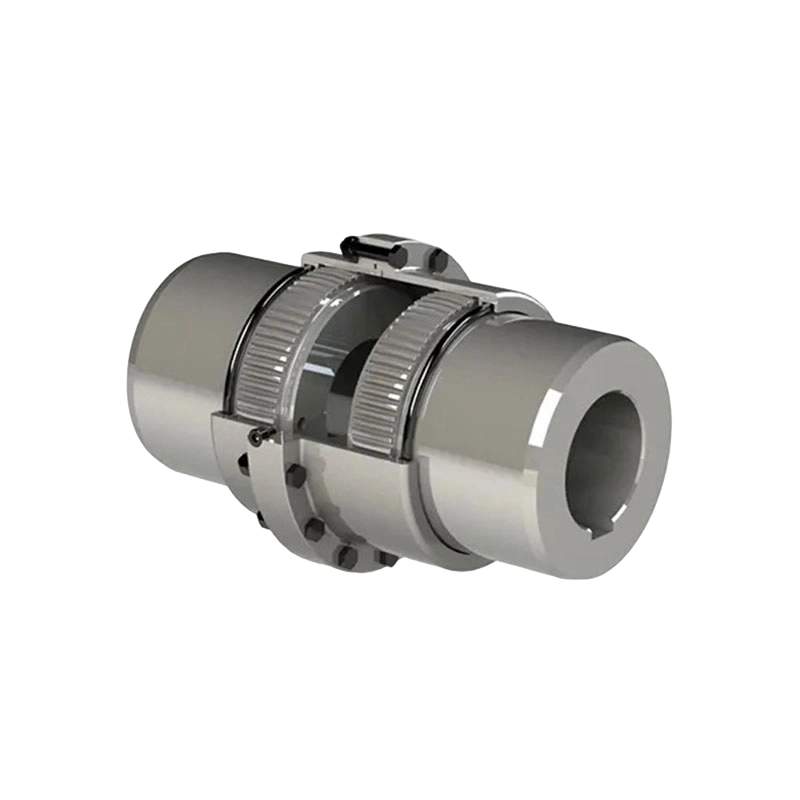
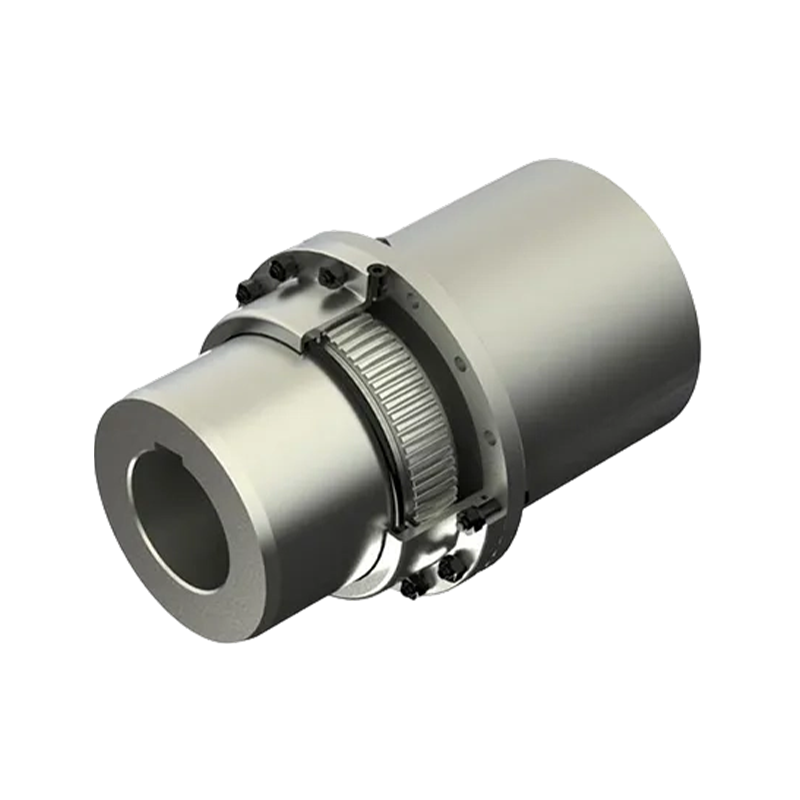
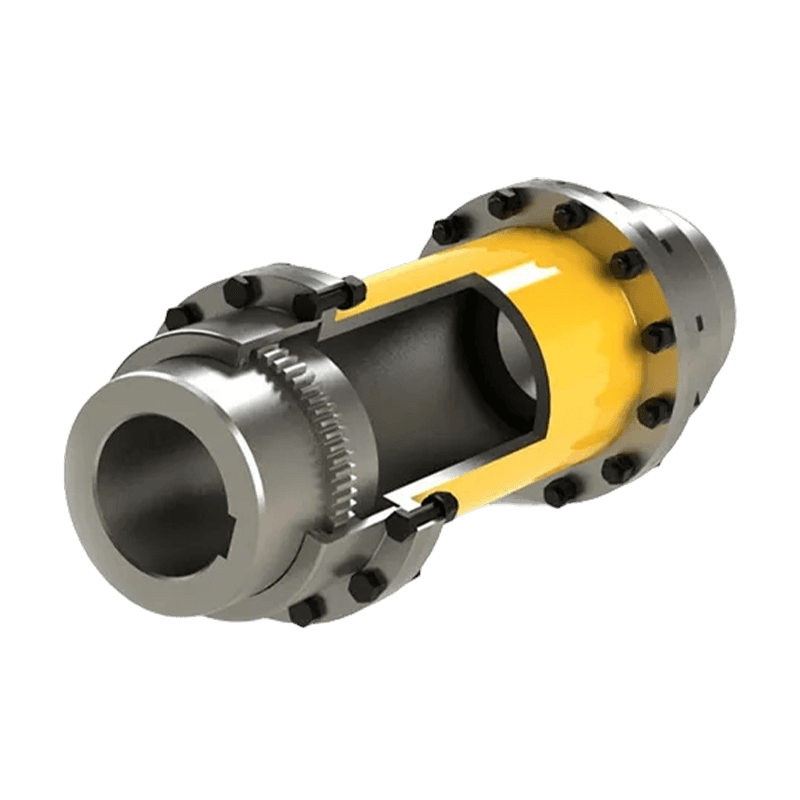
For very heavy torque transmission with large misalignment, a gear-type flexible coupling such as a drum gear coupling often delivers more capacity at a lower cost than a diaphragm design. Drum gear couplings dominate in crane travel drives, conveyor systems and heavy mining machinery, where the priority is robust torque delivery rather than speed precision. The GA-Series drum gear coupling is one of the most widely used models in this group.
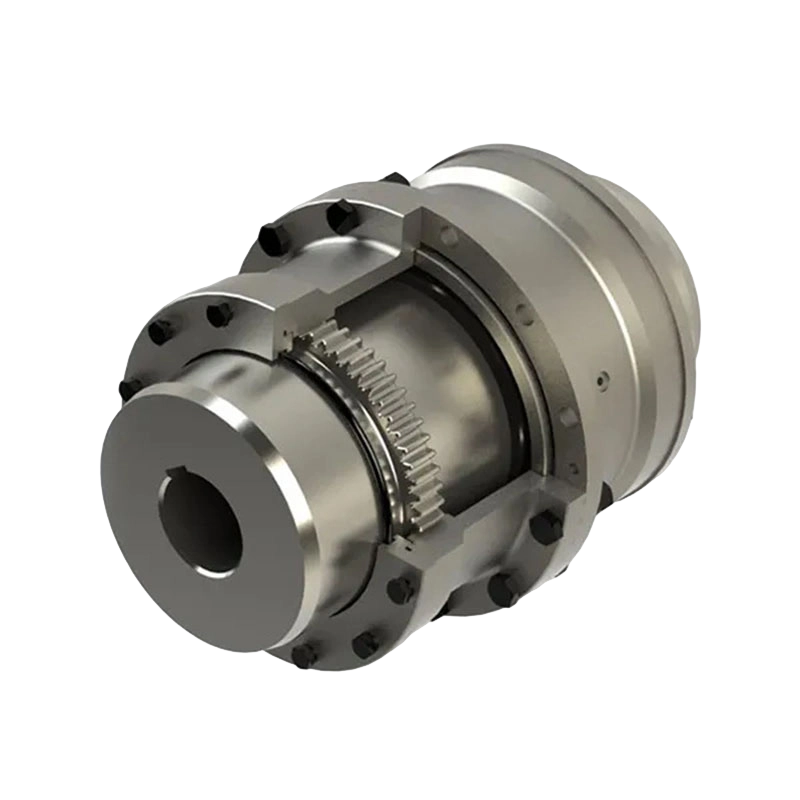 GA Drum gear coupling(Q/YG12006X-2018)Product Structure and Operating Principle: This coupling primarily consists of two gear hubs featuring external teeth and a drum-shaped flexible sleeve component with ...View Product →
If your machine produces shock loads, such as a crusher, a reciprocating compressor or a rolling mill with impact, an elastic pin coupling is often the more economical solution. The elastomer elements absorb spikes and smooth out torsional vibration, protecting the gearbox and driven machine.
Do not overlook installation conditions either. A coupling with a spacer piece may be needed to simplify maintenance, and both diaphragm and gear couplings are available in spacer versions.
How to Choose: A Practical Selection Guide
When choosing between a diaphragm coupling and any other flexible coupling type, we recommend a structured approach. The following steps cover the key decisions:
- Calculate torque and speed. Start with the motor or turbine rated torque, multiply by the service factor of the driven machine, and confirm the maximum operating speed. If the output speed is high, a diaphragm coupling is usually safer than a large elastomer-element coupling.
- Measure expected misalignment. Angular, parallel and axial displacement from thermal expansion, foundation movement or bearing clearances must stay within the coupling's rated capacity. Gear couplings accept more parallel offset, while diaphragm couplings handle moderate misalignment with zero backlash.
- Assess the environment. Ambient temperature above 80 degrees Celsius, contact with oil or chemicals, and washdown requirements all point towards a metal diaphragm design. Elastomer couplings perform well in clean, cool conditions but suffer in hot and oily atmospheres.
- Think about maintenance access. If the coupling is hard to reach, a maintenance-free diaphragm coupling avoids the cost of periodic lubrication. Gear couplings need regular greasing and wear measurement.
- Check space and weight limits. A short span between shaft ends may force a compact design. A diaphragm coupling typically has a smaller envelope than a gear coupling for the same torque at high speed.
- Evaluate total cost of ownership. Purchase price is only the beginning. Include lubricants, replacement elastomer elements, labour for maintenance and lost production. In continuous process plants, diaphragm couplings frequently win on lifecycle cost even when their first price is higher.
Every plant has its own combination of these factors. A coupling that serves well in one application can be a poor fit in another, which is why we always encourage customers to share their full operating data before a final recommendation.
In summary, the "flexible coupling vs diaphragm coupling" decision is really about aligning the strengths of each design with the demands of your drive system. Diaphragm couplings deliver precision, high-speed capability and maintenance-free operation, with a higher initial price but excellent reliability. Other flexible coupling families (gear, elastic-element or mechanical types) offer different combinations of torque density, misalignment capacity, shock absorption and economy.
The right answer depends on torque, speed, misalignment, environment, maintenance access and lifecycle budget. Work through those variables, and the choice becomes much clearer. If you would like help with a specific application, contact our engineering team or review the coupling range we offer at Zhongye.

- Quick Links
- About
- Products
- Our Service
- News & Events
- Contact
- Products Series
- Flexible Couplings with Non-Elastic Elements
- Flexible Couplings with Metal Elastic Elements
- Flexible Couplings with Non-Metallic Elastic Elements
- Safety Coupling
- Rigid Coupling
- Contact Us
- Tel : +86 511 8572 3800 +86 511 8572 3900
- Mobile : +86 15106109009
- Email : sales@couplingzy.com
- Add:No.1 Zhongye Yingbin Avenue, Gaozi Street, Dantu Economic Development Zone, Zhenjiang City, Jiangsu Province, China.


