:+86 15106109009
:sales@couplingzy.com


 English
  русский
  Español
  عربى
عربى  Português
  Deutsch
  Türk
Türk  Indonesia

Elaborate on the installation steps of the diaphragm coupling
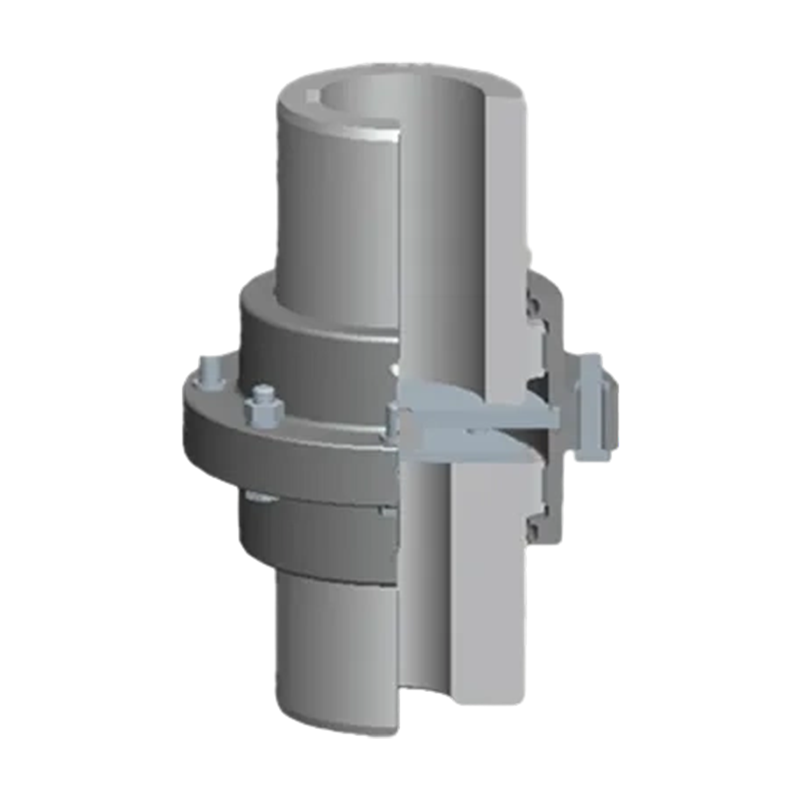
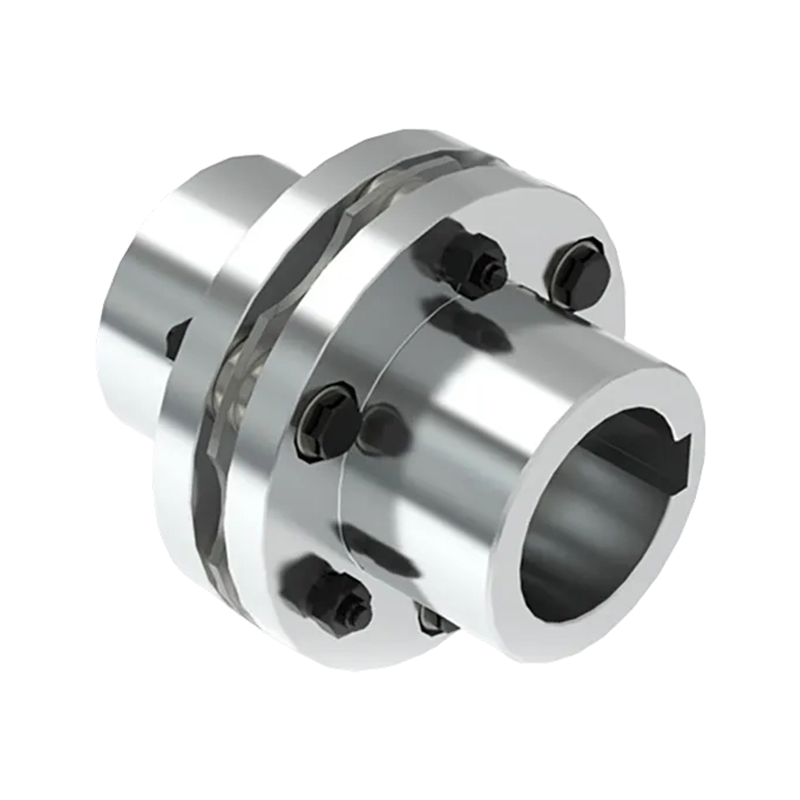
Several groups of diaphragms (thin stainless steel plates) are interlocked with the two halves of the coupling by bolts. Each group of diaphragms is composed of several layers stacked together. The diaphragms are divided into rod-type and different-shaped whole-piece types. The diaphragm coupling compensates for the relative displacement of the two shafts it is connected to through the elastic deformation of the diaphragms. It is a high-performance metal strong element flexible coupling, which does not require lubrication. It has a compact structure, high strength, long service life, no rotational clearance, is not affected by temperature and oil contamination, and has the characteristics of acid and alkali resistance and corrosion resistance. It is suitable for shaft system transmission in high-temperature, high-speed, and corrosive medium working environments.
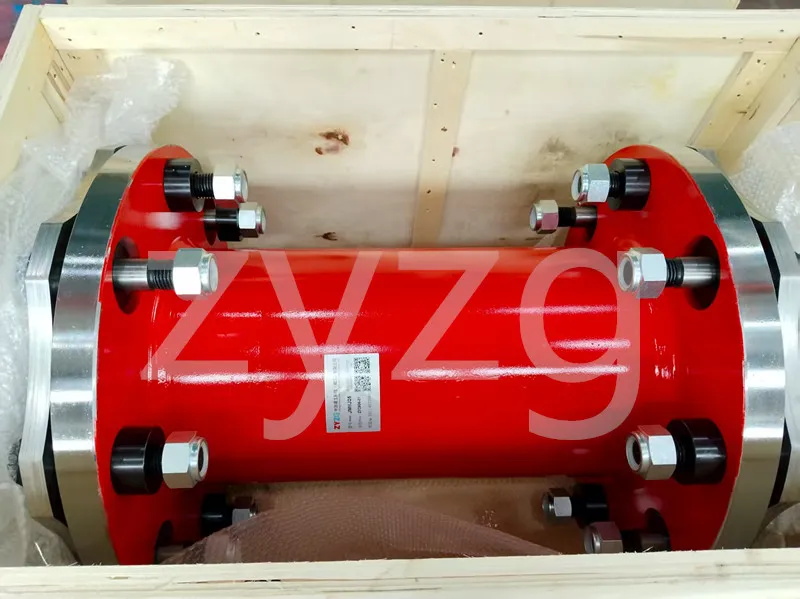
Installation steps for the diaphragm coupling:
1. When installing the coupling at the site, please carefully count all the components to ensure there are no missing parts. One set of the coupling includes one active half coupling, one passive half coupling, one set of six-segment diaphragm assembly, high-strength bolted screws, nuts, and spring washers, totaling six pieces. Before the active and passive halves have been installed onto the corresponding main shaft and aligned properly, please properly store the diaphragm assembly (do not throw, bump, press hard, or hit it) to avoid affecting the accuracy and integrity of the diaphragm.
2. Thoroughly clean the oil stains and paint from the inner hole of the semi-shaft coupling and the outer circle of the flange. Apply oil bath heating or induction heating to the main and passive semi-shafts (the temperature should not exceed 300°C, and it is generally advisable to control it within 160°C to 250°C). Before heating, complete all assembly preparations, check for any dimensional errors in the shaft hole size, length, keyway width, and keyway depth, and whether the main shaft head has severe scratches or dents, to prevent the semi-shafts after heating from not fitting properly during assembly, thereby affecting usage or even causing damage, or due to improper positioning of the product, making it impossible for users to accurately locate during subsequent spare parts installation, thus affecting usage.
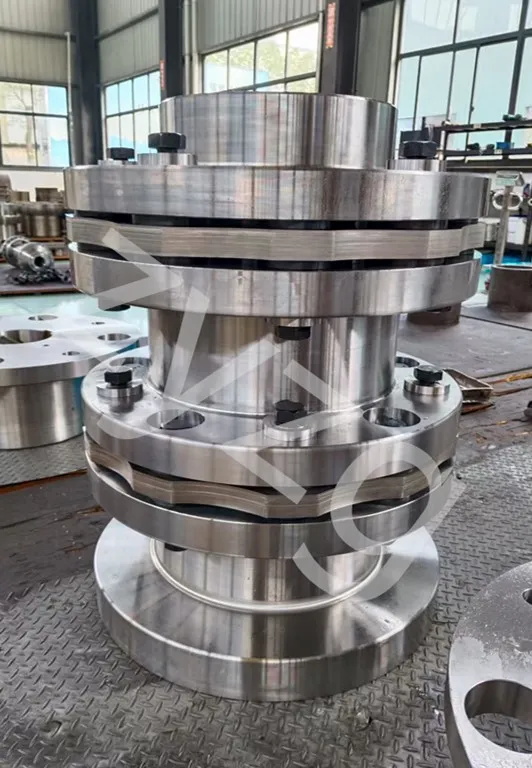
3. The primary and secondary semi-flexible couplings installed on the mainframe will undergo alignment installation through the steps of initial alignment, rough alignment and precise alignment.
(1.) Initial alignment: This process involves using the naked eye as the control method to position the motor and fan in terms of their horizontal orientation, front-back distance, height difference, and axial angle, etc., in order to prepare for the subsequent alignment.
(2.) Rough Alignment: This involves using the simplest methods, such as a ruler or a vernier caliper, as well as a caliper, to ensure that the major planes of the two half coupling devices are parallel to each other, and that the relative spacing conforms to the technical requirement of the gap value t. Generally, the actual value of the gap should be between 0.5mm and 0.8mm greater than the theoretical value. Also, the radial deviations of the upper and lower, as well as the front and rear positions of the outer circles of the flanges of the two half coupling devices should be consistent.
Note: Before use, please strictly follow this installation manual and carefully complete the following items. You will obtain a set of elastic coupling that is maintenance-free, long-lasting, low in failure rate, and highly reliable.
After-sales Service Commitment:
1. Service Philosophy: Fast, decisive, accurate, considerate, thorough
2. Service Goal: Service quality to win user satisfaction
3. Service Efficiency: If the equipment malfunctions during the warranty period or after the warranty period, the supplier will have maintenance personnel arrive at the site within 24 hours and start the repair.
4. Service Principles: The product warranty period is twelve months. During the warranty period, the supplier will repair and replace the components damaged due to quality issues free of charge. After the warranty period, the cost of the spare parts for component damage will be charged only for the cost, and for equipment damage caused by human factors, the repair or spare parts provided by the supplier will be calculated at cost price.
- Quick Links
- About
- Products
- Our Service
- News & Events
- Contact
- Products Series
- Flexible Couplings with Non-Elastic Elements
- Flexible Couplings with Metal Elastic Elements
- Flexible Couplings with Non-Metallic Elastic Elements
- Safety Coupling
- Rigid Coupling
- Contact Us
- Tel : +86 511 8572 3800 +86 511 8572 3900
- Mobile : +86 15106109009
- Email : sales@couplingzy.com
- Add:No.1 Zhongye Yingbin Avenue, Gaozi Street, Dantu Economic Development Zone, Zhenjiang City, Jiangsu Province, China.


