:+86 15106109009
:sales@couplingzy.com


 English
  русский
  Español
  عربى
عربى  Português
  Deutsch
  Türk
Türk  Indonesia

The two shafts of the coupling have a relative offset.
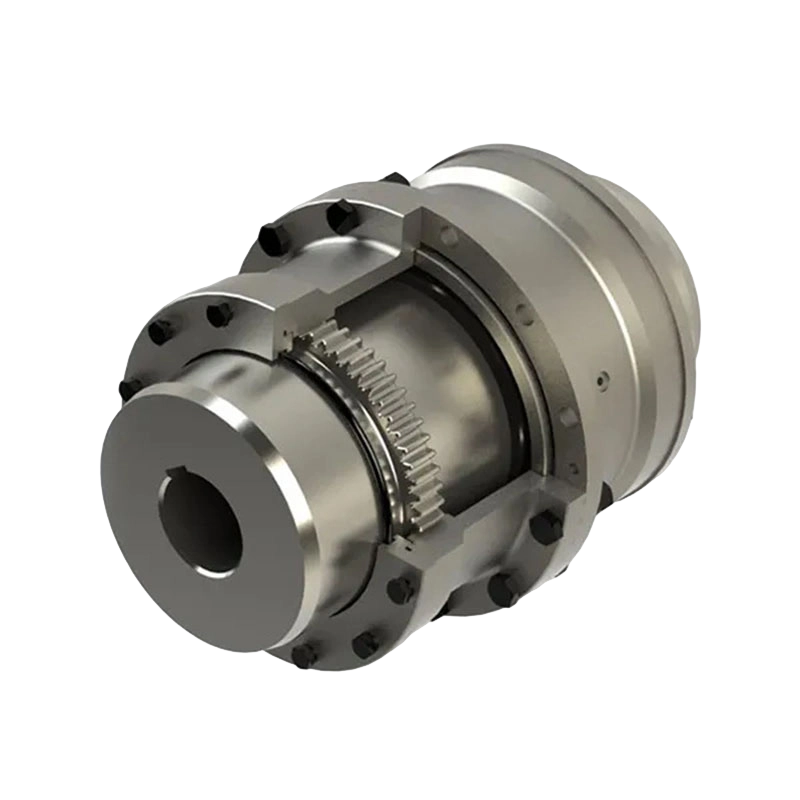
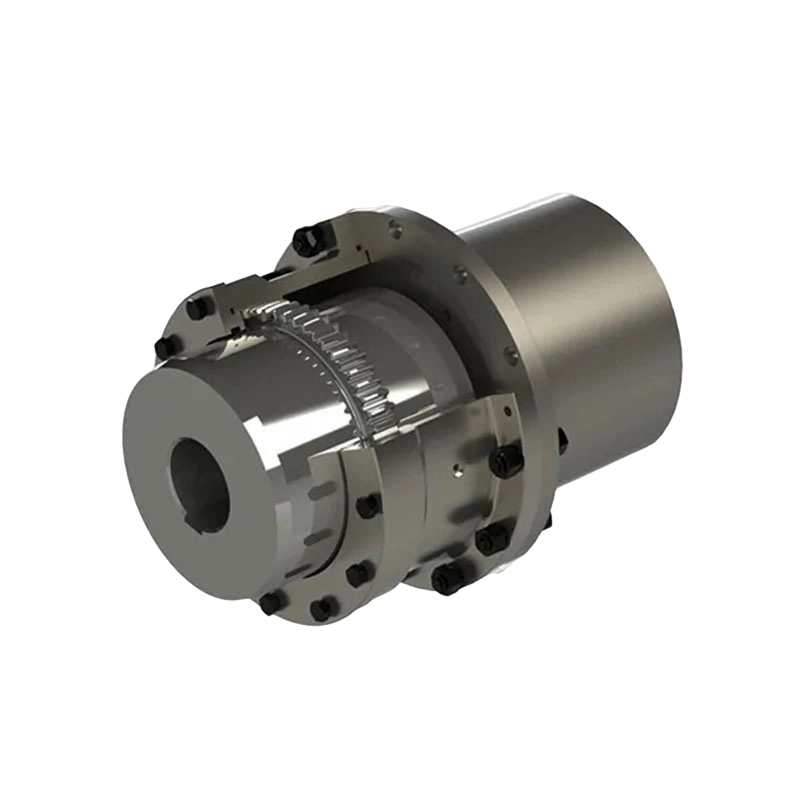
The structure of the protective device for the coupling is cylindrical and divided along the axial direction. At both ends, the protective device is connected to the corresponding equipment in the machine by flanges. One end of the protective device should have a telescopic joint, and an O-ring is installed at the telescopic joint. The main functions of the coupling and the clutch are to connect the shafts and transmit motion and torque, and they can also be used as stabilizing devices and for overload protection.
When the two shafts have a relative offset, the elastic element undergoes corresponding elastic deformation, playing an automatic compensation role. The coupling can compensate for the offset of the connecting parts due to alignment, and transmit motion or torque when there is a large angle between the two shafts. The elastic body is usually composed of engineering plastics or rubber, and the lifespan of the coupling is the lifespan of the elasticity, as the elastic body is under compression and is not prone to tension.
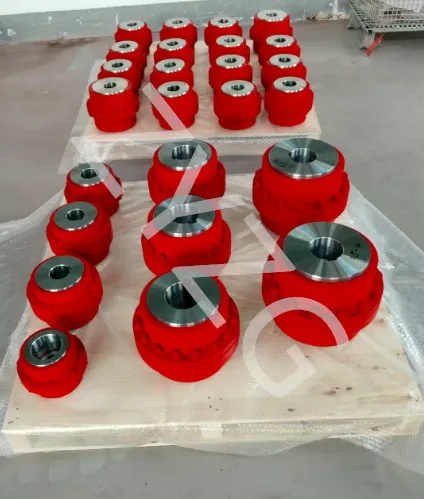
Applying predictable low additional negative forces to the connected devices, compared with similar flexible transmission components, the coupling exerts predictable small forces and torques on the connected devices. It can be disassembled and assembled without interfering with the driving and driven devices, thereby improving equipment utilization. The transmission speed and accuracy are good. It is mainly used in working environments with high and low temperatures, as well as corrosive media containing oil and water.
The coupling is mainly composed of two belts with protruding teeth that are closely meshed through an intermediate gasket, and it withstands radial pressure to transmit torque. The coupling generally cannot be disengaged during machine operation and can only be disconnected after the machine has stopped. The clutch can be engaged or disengaged at any time during machine operation. It is widely used in environments with strong vibrations. The performance of the elastic body's temperature determines the operating temperature of the coupling.
- Quick Links
- About
- Products
- Our Service
- News & Events
- Contact
- Products Series
- Flexible Couplings with Non-Elastic Elements
- Flexible Couplings with Metal Elastic Elements
- Flexible Couplings with Non-Metallic Elastic Elements
- Safety Coupling
- Rigid Coupling
- Contact Us
- Tel : +86 511 8572 3800 +86 511 8572 3900
- Mobile : +86 15106109009
- Email : sales@couplingzy.com
- Add:No.1 Zhongye Yingbin Avenue, Gaozi Street, Dantu Economic Development Zone, Zhenjiang City, Jiangsu Province, China.


