:+86 15106109009
:sales@couplingzy.com


 English
  русский
  Español
  عربى
عربى  Português
  Deutsch
  Türk
Türk  Indonesia

The development prospect of ball cage coupling
Information Summary: The development prospect of ball cage coupling
Unveiling the Evolution:
Ball Cage Couplings, also referred to as universal joints or Cardan joints, have a rich history dating back to ancient times. However, contemporary advancements in materials science, manufacturing techniques, and engineering design have propelled these couplings into a new era of performance and versatility.
Traditionally, universal joints were characterized by their simple design, consisting of two yokes connected by a cross-shaped bearing. While effective, these joints often suffered from limitations such as angular misalignment constraints, vibration transmission, and maintenance issues.
Breaking Barriers with ball and hitch coupler Technology:
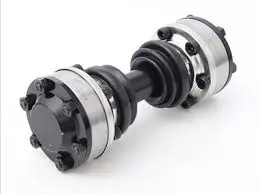
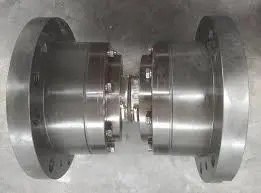
The advent of ball and hitch coupler marks a significant leap forward in addressing these limitations. Unlike conventional designs, Ball Cage Couplings incorporate a unique arrangement of spherical balls contained within a cage-like structure. This configuration allows for greater angular misalignment capabilities, reduced friction, and enhanced durability.
Furthermore, advancements in materials such as high-strength alloys and polymers have enhanced the performance and longevity of Ball Couplings, making them ideal for demanding applications in automotive, aerospace, industrial machinery, and robotics sectors.
Driving Forces of Innovation:
Several factors are driving the rapid adoption and development of Ball Bearing Couplings:
Demand for Efficiency: In an era where efficiency and productivity are paramount, Ball Cage Couplings offer seamless power transmission, minimizing energy losses and maximizing operational performance.
Technological Advancements: Breakthroughs in additive manufacturing, precision engineering, and simulation techniques have empowered engineers to design and produce Ball Cage Couplings with unprecedented accuracy and reliability.
Industry 4.0 Integration: As industries embrace the principles of Industry 4.0, Ball Cage Couplings are playing a pivotal role in enabling interconnected and automated systems, facilitating seamless data exchange and control.
Environmental Sustainability: With a growing emphasis on sustainability, Ball Joint Coupler contribute to reducing carbon emissions and energy consumption through their efficient operation and extended service life.
Charting the Path Forward:
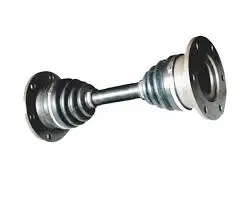
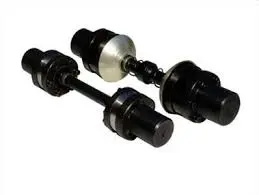
The future of Ball Cage Couplings appears promising, with ongoing research and development efforts focused on enhancing their performance, reducing costs, and expanding application domains. Key areas of innovation include:
Miniaturization: Catering to the burgeoning demand for compact and lightweight solutions in portable electronics, medical devices, and consumer goods.
Smart Integration: Incorporating sensors and IoT capabilities into Ball Cage Couplings to enable real-time monitoring, predictive maintenance, and condition-based diagnostics.
Customization: Tailoring Ball Cage Couplings to meet the unique requirements of specific industries and applications, optimizing performance and reliability.
Cross-Industry Collaboration: Fostering collaboration between academia, industry, and research institutions to accelerate innovation and address emerging challenges.
In conclusion, Ball Cage Couplings stand at the forefront of a transformative era in mechanical engineering, offering unparalleled versatility, efficiency, and reliability. As industries continue to evolve and embrace new technologies, Ball Cage Couplings will remain indispensable components, driving progress and shaping the future of connectivity.
- Quick Links
- About
- Products
- Our Service
- News & Events
- Contact
- Products Series
- Flexible Couplings with Non-Elastic Elements
- Flexible Couplings with Metal Elastic Elements
- Flexible Couplings with Non-Metallic Elastic Elements
- Safety Coupling
- Rigid Coupling
- Contact Us
- Tel : +86 511 8572 3800 +86 511 8572 3900
- Mobile : +86 15106109009
- Email : sales@couplingzy.com
- Add:No.1 Zhongye Yingbin Avenue, Gaozi Street, Dantu Economic Development Zone, Zhenjiang City, Jiangsu Province, China.


