:+86 15106109009
:sales@couplingzy.com


 English
 русский
 Español
 عربى
 Português
 Deutsch
 Türk
 Indonesia


Coupling Shaft Types and Selection: A Practical Guide for Industrial Applications
Content
What Is a Coupling Shaft?
A coupling shaft — in everyday industrial language, the complete shaft coupling assembly — has one essential job: transmitting rotational power from a driving machine to the driven equipment. But anyone who has worked with real machinery knows that a coupling is never just a connector. It also has to absorb misalignment, dampen vibration, tolerate thermal growth, and in many cases protect the connected machines from shock loads.
When engineers talk about a coupling shaft, they usually mean the whole unit: the two hubs that mount on the shaft ends, the connecting element between them, and sometimes an intermediate shaft that spans a longer distance. Getting this assembly right is one of the most cost-effective ways to improve machinery reliability. A well-selected coupling runs quietly and predictably for years, while a mismatched one accelerates wear on bearings, seals, and shafts — and eventually stops production.
Rigid vs. Flexible Coupling Shafts
The first decision in any coupling shaft selection is the same: rigid or flexible?
Rigid coupling shafts lock the two shaft ends into a single, solid unit. They allow zero misalignment and are reserved for systems where alignment is fixed and precise — for example, motor-to-generator sets on a common baseplate. Flange couplings and clamp couplings are the classic examples in this group.
Flexible coupling shafts, by contrast, are designed to work with the imperfections of the real world. Slight shaft misalignment, thermal expansion, and structural deflection under load are inevitable in industrial installations. Flexible designs compensate for these while continuing to transmit torque smoothly.
In practice, flexible couplings are divided into three families:
- Non-elastic flexible couplings, which transmit torque through mechanical engagement of gear teeth, rollers, or universal joints.
- Metal elastic element couplings, which use thin metallic diaphragms or serpentine springs as the flexible element.
- Non-metallic elastic element couplings, which use rubber or polyurethane elements to provide flexibility and damping.
The table below gives a quick comparison of these families.
| Family | Misalignment capacity | Vibration damping | Typical applications |
|---|---|---|---|
| Rigid | None | None | Flanged generator sets, precision-aligned machines |
| Non-elastic flexible | Moderate | Low | Steel mills, cranes, mining, heavy drives |
| Metal elastic | Moderate | Medium | Pumps, compressors, high-speed precision shafts |
| Non-metallic elastic | High | High | General machinery, light and medium industry |
Gear Coupling Shafts: The Heavy-Duty Workhorses
For high torque and large shaft diameters, gear couplings are often the first choice. They transmit power through crowned gear teeth machined on the hub and sleeve, which engage over a large contact area. The crowned tooth profile allows angular misalignment while keeping the load evenly distributed, which is why gear couplings are exceptionally strong and durable in demanding environments.
Because gear couplings have no elastic element, they are torsionally stiff. That makes them the right choice where precise angular transmission matters, such as in rolling mills, crane travel drives, and heavy conveyors. They are also available in many configurations: with brake wheels, brake discs, intermediate shafts, and intermediate sleeves.
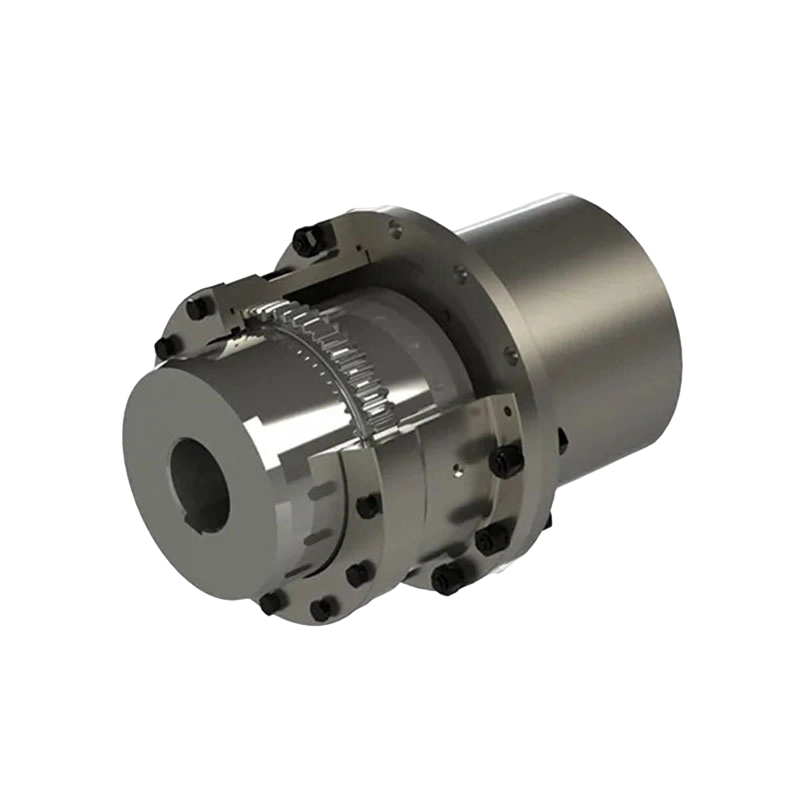
At Zhongye Heavy Industry Technology, we manufacture GA, GB, and GC drum gear couplings as standard products, together with variants such as GAZ and GBZ types with intermediate shafts, GCL types with brake wheels, and GSC through-type designs for large machinery.
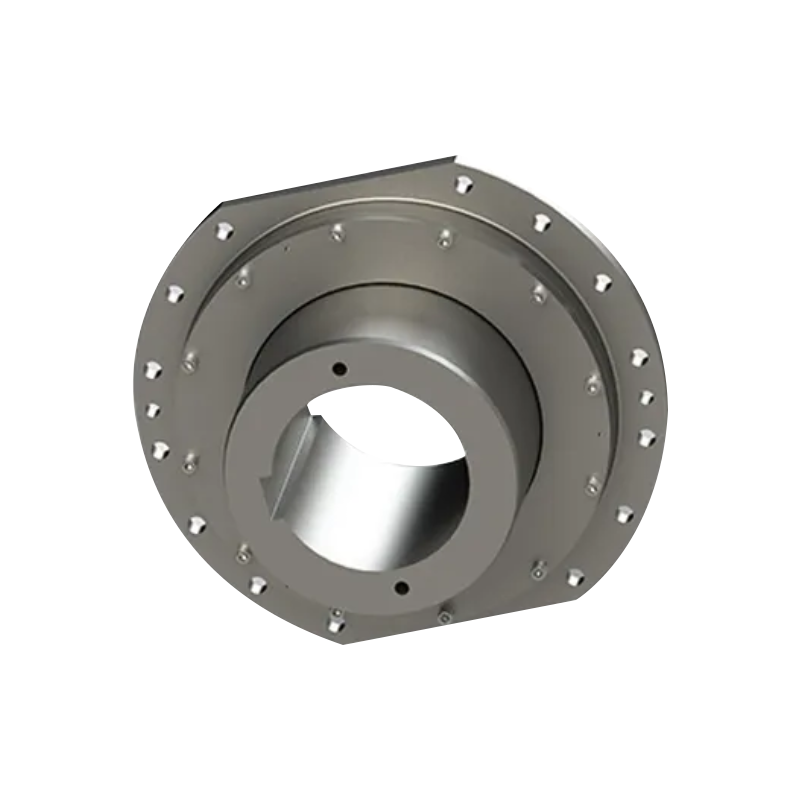
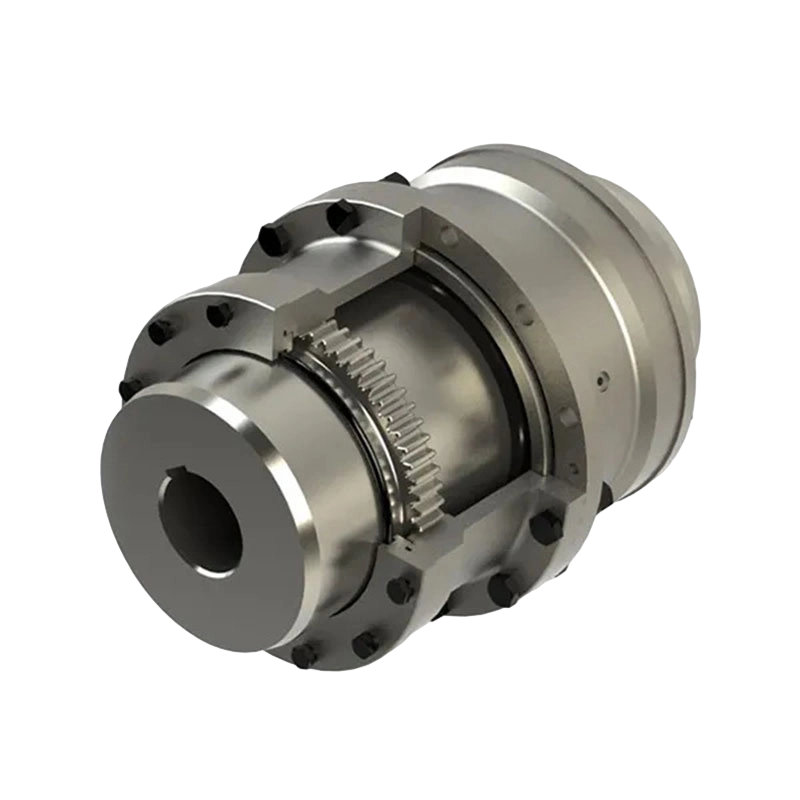 GA Drum Gear Coupling for High-Torque ApplicationsExplore the GA drum gear coupling, offering robust all-steel construction, high torque capacity up to 3,500,000 N·m, and effective misalignment compensation for demanding industrial use.View Product →
For applications that need angular compensation plus the robustness of all-steel construction, a gear coupling shaft is difficult to beat.
Metal Elastic Element Couplings
When a coupling shaft must handle misalignment without mechanical wear, metal elastic element couplings are an elegant solution. Diaphragm couplings, for instance, transmit torque through a set of thin stainless-steel diaphragms, which flex elastically to accommodate angular, parallel, and axial misalignment. Because there are no sliding or wearing parts, they require no lubrication and deliver extremely high reliability in continuous service.
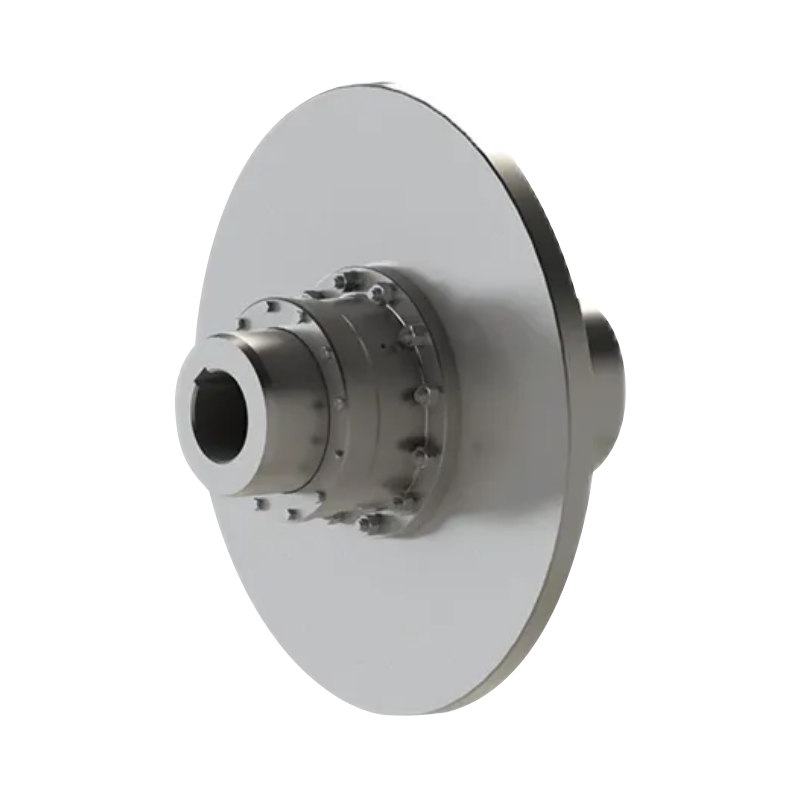
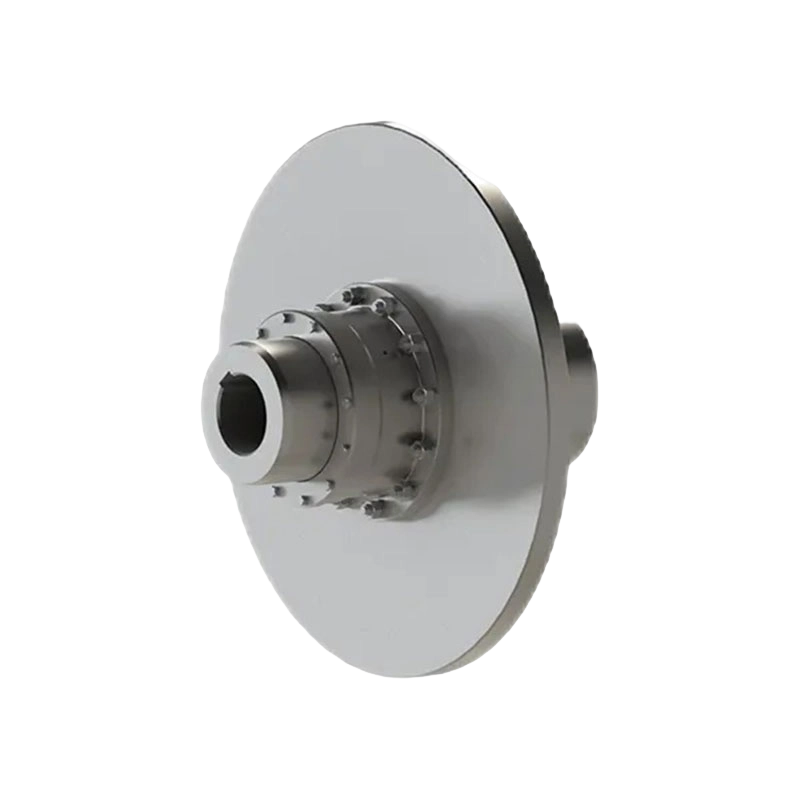
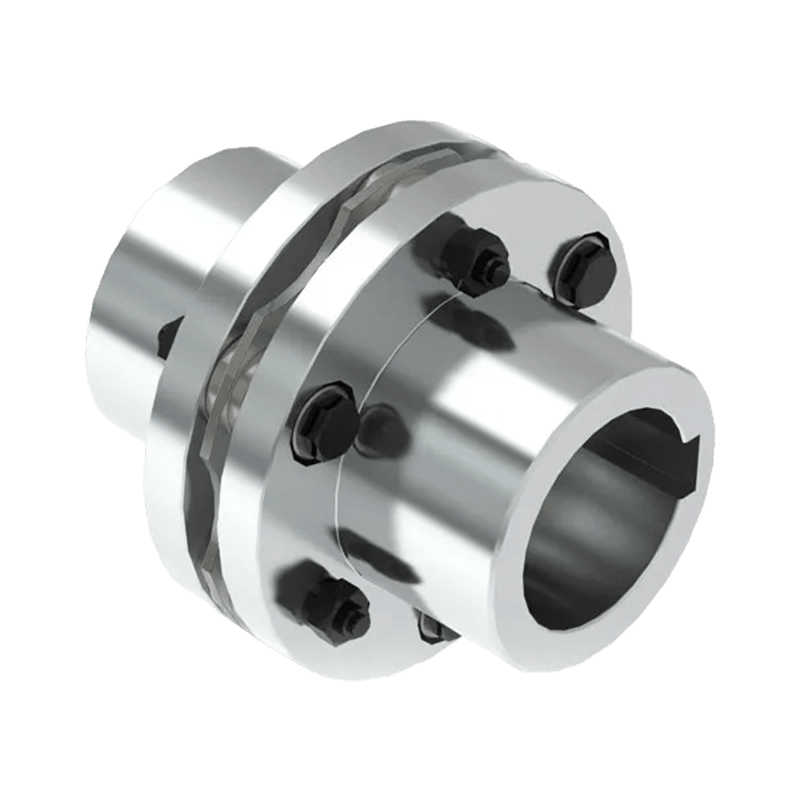 DMA Elastic Diaphragm Coupling with Zero BacklashDiscover the DMA diaphragm coupling, featuring high torsional rigidity, no lubrication, and elastic metal diaphragms for precision applications like servo systems and metallurgical equipment.View Product →
Diaphragm couplings are widely used in high-speed rotating equipment such as turbines, compressors, and precision test stands, where their high torsional stiffness and low inertia are major advantages.
Snake spring couplings, another member of this family, use a serpentine spring strip wrapped around the two hubs. The spring flattens and flexes under load, giving the coupling a soft torsional response. This makes snake spring couplings ideal for shock-loaded equipment like crushers, conveyors, and reciprocating pumps, where they protect both the motor and the driven machine from torque spikes.
Non-Metallic Elastic Element Couplings
When vibration damping and electrical isolation matter more than torsional stiffness, elastomeric couplings are the natural choice. These designs use a rubber or polyurethane insert — a tire-shaped element, a star or plum-shaped spider, or elastic pins — to transmit torque.
The tire coupling, for example, is one of the most forgiving designs available. Its rubber element stretches like a tire under load, accommodating significant misalignment and absorbing heavy shock and vibration. It also has a useful fail-safe characteristic: even if the rubber tears, the coupling can often keep running at reduced capacity until the element is replaced.
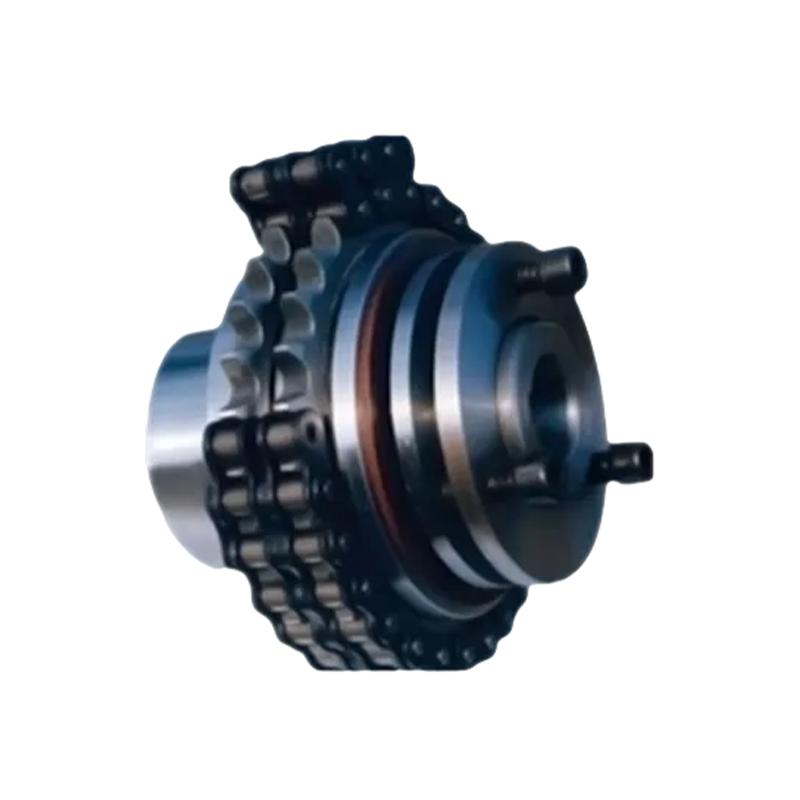
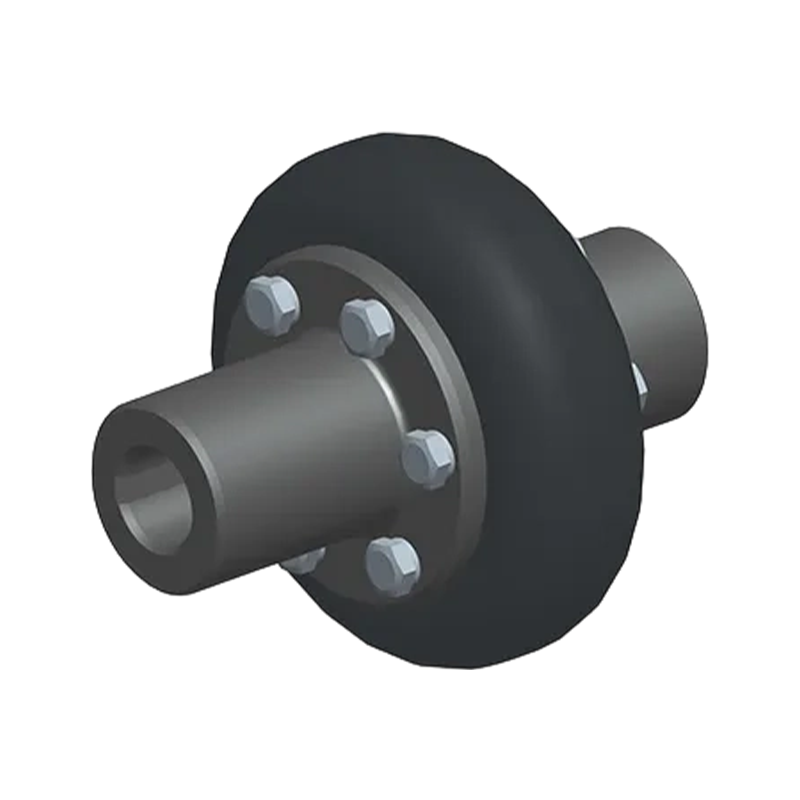 LCA type tire coupling(Q/YC 34009X-2018)LCA tire type coupling (Q/YC 34009X-2018) adopts a frameless radial cut tire body structure, which achieves reliable torque transmission through clamping with pressure...View Product →
Pin-type couplings, plum couplings, and star couplings are common choices in pumps, fans, gearboxes, and general industrial machinery. They are economical, easy to install, and need no lubrication. The elastomeric element is the sacrificial part — it absorbs wear so that the metal hubs and shafts do not have to.
How to Select the Right Coupling Shaft
Selecting the right coupling shaft comes down to knowing the operating conditions. From our experience supporting customers in metallurgy, mining, hoisting, papermaking, and port machinery, the factors that matter most are:
- Torque and service factor. Calculate the rated torque, then apply a service factor that reflects the type of driver, the driven machine, and the duty cycle. Shock loads and frequent starts can double or triple the required capacity.
- Speed. High-speed applications call for couplings with low inertia and good balance, such as diaphragm or high-speed snake spring couplings.
- Misalignment. Consider the initial alignment and the operating deflection. The coupling must accommodate the expected angular, parallel, and axial movement between shafts.
- Space constraints. The available envelope may dictate a compact design, or a coupling with an intermediate shaft to span a longer distance.
- Environment. Temperature, humidity, dust, and chemical exposure affect material selection, especially for elastomeric elements. All-metal couplings are safer for hot and harsh environments.
- Maintenance philosophy. Some plants prefer maintenance-free designs; others are set up to replace elastomeric elements on a fixed schedule. Gear couplings require periodic lubrication, while diaphragm couplings require none.
Writing down these parameters is the right starting point. It is also where the experience of the manufacturer becomes valuable — in-house design, machining, and testing capabilities make it possible to match the coupling to the application rather than forcing the application to fit a stock item.
Choosing a Partner for Your Coupling Shaft Needs
Every coupling shaft application carries its own operating conditions. The best solution usually comes from a conversation that covers torque, speed, misalignment, and the production environment. Whether you need a standard model from stock or a non-standard design developed from scratch, working with a team that has been manufacturing couplings for decades makes the process simpler and the outcome more reliable.
If you are evaluating a coupling shaft for a new machine or replacing a failed coupling, discuss your application with our engineering team. We will help you find the right balance of performance, durability, and cost.
- Quick Links
- About
- Products
- Our Service
- News & Events
- Contact
- Products Series
- Flexible Couplings with Non-Elastic Elements
- Flexible Couplings with Metal Elastic Elements
- Flexible Couplings with Non-Metallic Elastic Elements
- Safety Coupling
- Rigid Coupling
- Contact Us
- Tel : +86 511 8572 3800 +86 511 8572 3900
- Mobile : +86 15106109009
- Email : sales@couplingzy.com
- Add:No.1 Zhongye Yingbin Avenue, Gaozi Street, Dantu Economic Development Zone, Zhenjiang City, Jiangsu Province, China.


