:+86 15106109009
:sales@couplingzy.com


 English
  русский
  Español
  عربى
عربى  Português
  Deutsch
  Türk
Türk  Indonesia

Why Is High-Efficiency Vibration-Damping Coupling Technology the Ultimate Key to Maximizing Industrial Equipment Longevity and Operational Stability?
Content
- 1 Introduction to High-Efficiency Vibration-Damping Industrial Flexible Couplings
- 2 Fundamental Working Principles and Vibration Damping Mechanisms
- 3 Material Selection for Optimal Damping Performance
- 4 Major Coupling Types and Their Damping Characteristics
- 5 Performance Evaluation Criteria and Testing Methods
- 6 Industrial Application Sectors and Use Cases
- 7 Selection Criteria for Industrial Applications
- 8 Energy Efficiency Considerations and System Optimization
- 9 Installation Best Practices and Maintenance Considerations
- 10 Emerging Trends and Future Developments
Introduction to High-Efficiency Vibration-Damping Industrial Flexible Couplings
High-efficiency vibration-damping industrial flexible couplings represent a critical category of mechanical power transmission components designed to connect two shafts while simultaneously absorbing vibration, accommodating misalignment, and protecting connected equipment from damaging shock loads. Unlike rigid couplings, which transmit torque through a direct and unyielding connection, flexible couplings incorporate elastomeric elements, metallic springs, or specially engineered structures that allow controlled movement between the connected components. This flexibility serves a dual purpose, enabling torque transmission while dampening the mechanical vibrations that would otherwise propagate through a drivetrain and accelerate wear on bearings, seals, and other precision components.
Across modern industrial settings, machinery rarely operates under perfectly aligned and vibration free conditions. Thermal expansion, foundation settling, manufacturing tolerances, and dynamic operating loads all contribute to small but persistent misalignments and oscillations within rotating equipment. High-efficiency vibration-damping flexible couplings address these realities directly, providing a buffer zone that absorbs disturbances before they can transfer between connected shafts. This capability has made such couplings indispensable across sectors including manufacturing, energy generation, material handling, and process industries where equipment reliability and operational uptime are paramount concerns.
The growing emphasis on energy efficiency and predictive maintenance within industrial operations has further elevated the importance of selecting the right coupling technology. Poorly performing couplings can silently degrade system efficiency, increase energy consumption through frictional losses, and contribute to premature equipment failure. Consequently, engineers and maintenance professionals increasingly view coupling selection not as a minor mechanical detail but as a strategic decision that directly influences overall system performance and longevity.
Fundamental Working Principles and Vibration Damping Mechanisms
Torsional Flexibility and Energy Dissipation
The core function of a vibration-damping flexible coupling centers on its ability to deform slightly under torsional load while still transmitting rotational power between connected shafts. As torque fluctuations occur, whether from motor startup transients, load variations, or resonance conditions, the flexible element within the coupling absorbs a portion of this energy through controlled deformation. This deformation converts a measure of the disturbing mechanical energy into heat through internal material damping, effectively reducing the amplitude of vibrations that would otherwise reach the connected machinery.
Misalignment Compensation
Beyond pure vibration absorption, these couplings accommodate three primary types of shaft misalignment, namely angular misalignment where shaft centerlines intersect at an angle, parallel misalignment where shaft centerlines remain parallel but offset, and axial misalignment where shafts move toward or away from each other along their common axis. High-efficiency designs are engineered to tolerate combinations of these misalignment types simultaneously, which is particularly valuable in real world installations where perfect alignment is rarely achievable or economically practical to maintain over extended operational periods.
Damping Coefficient and Material Hysteresis
The effectiveness of vibration damping within a coupling is closely tied to the hysteresis properties of its flexible element material. Materials with higher hysteresis loss coefficients dissipate more vibrational energy per cycle, translating into superior damping performance. Engineers quantify this behavior through damping coefficients that describe how much energy a material absorbs relative to the energy it stores during each deformation cycle. Selecting materials with appropriate hysteresis characteristics for specific operating frequencies and temperature ranges represents a central challenge in coupling design optimization.
Material Selection for Optimal Damping Performance
Elastomeric Compounds
Elastomeric materials form the backbone of many high-efficiency vibration-damping couplings due to their inherent flexibility and energy absorption characteristics. Natural rubber compounds offer excellent damping properties and resilience but may suffer performance degradation when exposed to oils, fuels, or extreme temperatures. Synthetic alternatives such as polyurethane, neoprene, and nitrile rubber have been developed to address these limitations, each offering distinct advantages in terms of chemical resistance, temperature tolerance, and long term durability under cyclic loading conditions.
Engineered Composite Materials
Advanced composite materials incorporating fiber reinforcement within polymer matrices have emerged as a sophisticated solution for applications demanding both high torque capacity and superior damping characteristics. These composites can be engineered with directional stiffness properties, allowing designers to fine tune coupling behavior for specific load profiles and vibration frequencies encountered in particular industrial applications.
Metallic Spring Elements
Certain high-efficiency coupling designs utilize metallic spring elements, such as disc springs or specially shaped metal grids, to achieve flexibility without relying on elastomeric components. These metallic designs offer advantages in extreme temperature environments where rubber based materials would degrade rapidly, and they typically provide longer service life under continuous high load conditions, though they generally offer somewhat less inherent damping capacity compared with elastomeric alternatives unless combined with supplementary damping mechanisms.
Hybrid Material Configurations
Many contemporary high-efficiency couplings employ hybrid configurations that combine metallic structural elements with elastomeric damping inserts. This approach allows manufacturers to capture the load capacity and durability benefits of metal construction while still achieving the superior vibration absorption characteristics associated with elastomeric materials, resulting in coupling designs that perform well across a broader range of operating conditions than single material alternatives.
Major Coupling Types and Their Damping Characteristics
| Coupling Type | Primary Damping Mechanism | Typical Application Focus |
|---|---|---|
| Elastomeric Jaw Couplings | Rubber spider element compression and shear | General industrial drives and pumps |
| Tire Type Couplings | Flexible tire shaped rubber element flexion | Heavy duty fans and compressors |
| Disc Pack Couplings | Thin metallic disc flexing with limited damping | High speed precision applications |
| Grid Couplings | Metal grid spring deflection within lubricated housing | Heavy industrial machinery and mills |
| Composite Bushing Couplings | Polymer bushing compression and shear damping | Variable load and shock prone equipment |
Elastomeric Jaw Couplings
Jaw couplings utilize a star shaped or spider shaped elastomeric insert positioned between two hubs with interlocking jaws. This design provides reliable vibration damping while accommodating moderate misalignment, making it a popular choice across general industrial drive applications including pumps, fans, and conveyor systems where cost effectiveness and ease of maintenance are important considerations.
Tire Type Couplings
Tire type couplings feature a continuous rubber element shaped somewhat like a tire that connects the two coupling hubs. This configuration excels at absorbing torsional vibrations and accommodating relatively large degrees of misalignment, making it well suited for heavy duty applications involving fans, blowers, and compressors that experience significant operational shock loading.
Disc Pack Couplings
Disc pack couplings employ thin metallic discs that flex slightly to accommodate misalignment while transmitting torque with minimal backlash. Although their inherent damping capacity tends to be lower than elastomeric designs, their precision and torsional stiffness make them valuable in high speed applications where positioning accuracy and minimal torsional windup are critical performance requirements.
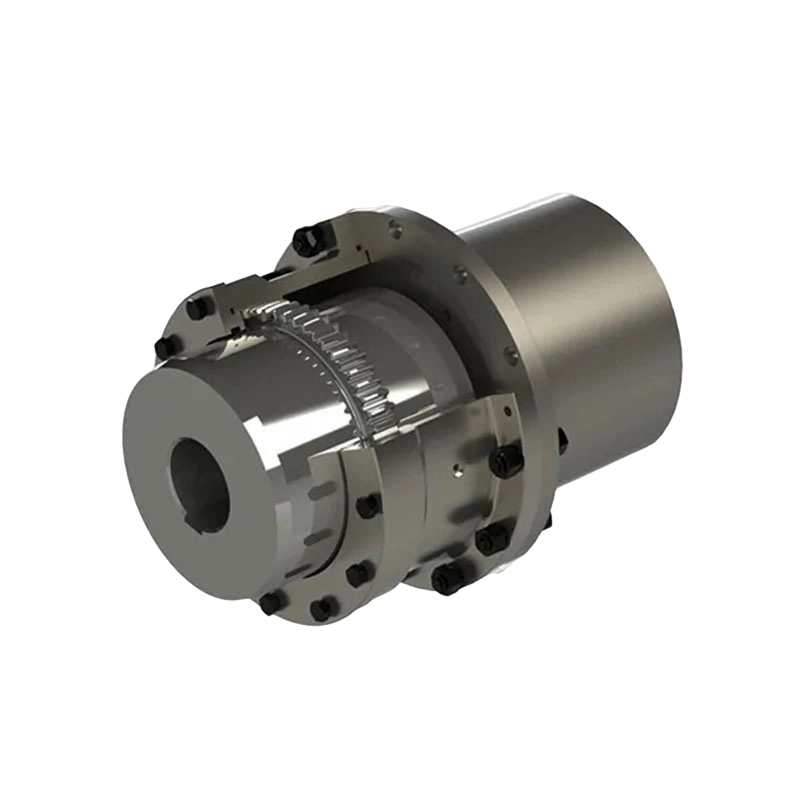
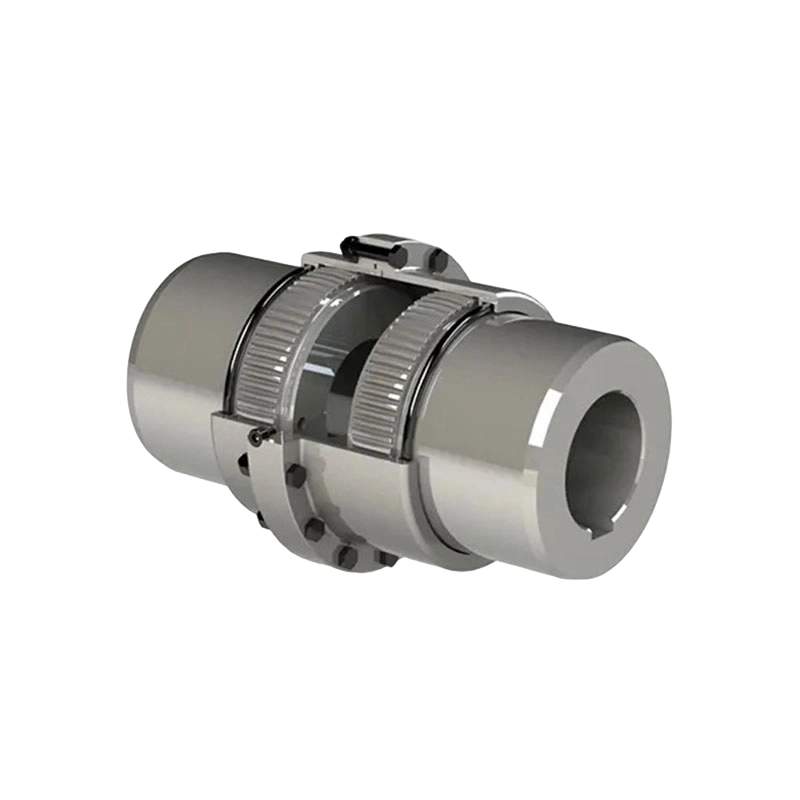
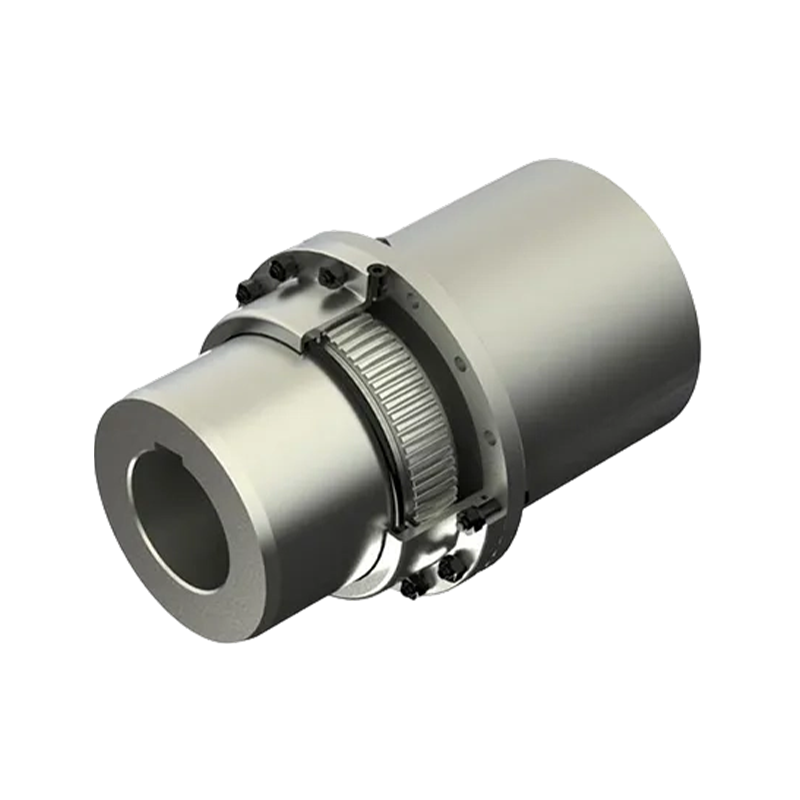
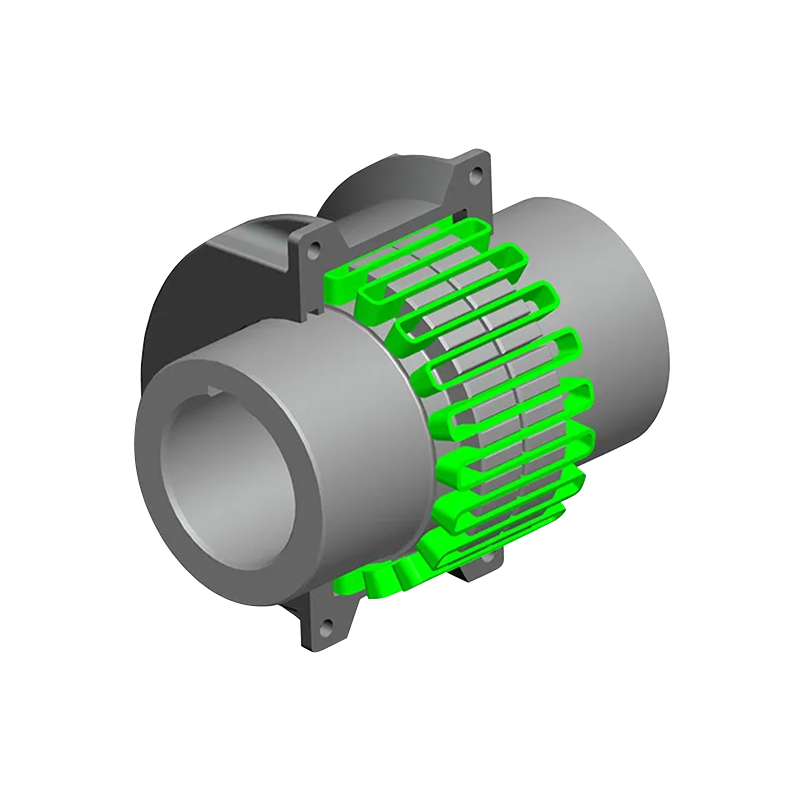
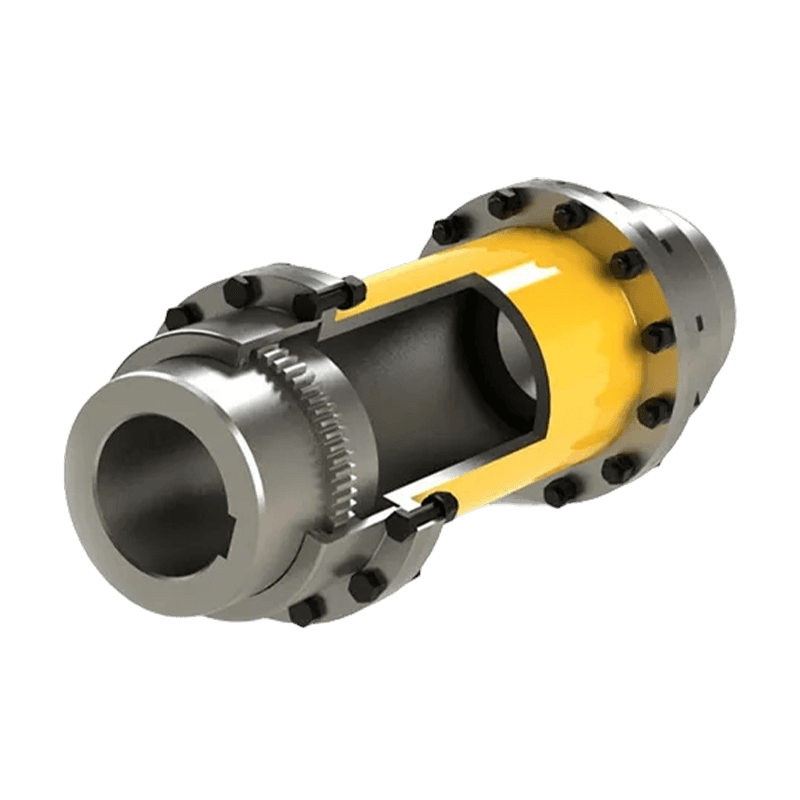
Grid Couplings
Grid couplings utilize a serpentine metal spring grid that flexes within a lubricated housing, providing moderate damping alongside substantial torque capacity and durability. These couplings have historically found extensive use in heavy industrial settings such as steel mills and mining operations, where robustness under extreme loading conditions takes priority.
Composite Bushing Couplings
Composite bushing couplings incorporate replaceable polymer bushings that provide significant vibration damping alongside straightforward maintenance, since the bushings can typically be replaced without disturbing the connected machinery alignment. This design has gained popularity in applications subject to frequent shock loading or variable torque demands.
Performance Evaluation Criteria and Testing Methods
Torsional Stiffness Measurement
Engineers evaluate coupling performance partly through torsional stiffness measurements, which quantify the relationship between applied torque and resulting angular deflection within the flexible element. Lower torsional stiffness generally correlates with greater vibration isolation capability, though excessively low stiffness can introduce unwanted torsional resonance issues within certain drivetrain configurations, necessitating careful balance during the design process.
Damping Ratio Analysis
Damping ratio testing involves subjecting coupling samples to controlled vibrational inputs across various frequencies and measuring the resulting energy dissipation. This data allows engineers to construct frequency response curves that reveal how effectively a particular coupling design suppresses vibrations across the operational speed range anticipated for a given application, helping avoid problematic resonance conditions during actual service.
Fatigue Life Testing
Since vibration-damping couplings experience continuous cyclic loading throughout their operational life, fatigue testing under simulated long term conditions provides essential data regarding expected service life. These tests typically subject coupling samples to millions of load cycles under controlled temperature and load conditions, allowing manufacturers to establish reliable service life predictions and maintenance interval recommendations for end users.
Temperature Performance Profiling
Because damping material properties shift considerably with temperature, comprehensive testing protocols evaluate coupling performance across the full anticipated operating temperature range for target applications. This testing reveals how damping effectiveness, torsional stiffness, and material durability change under temperature extremes, information that proves essential for applications operating in challenging thermal environments such as outdoor installations or high temperature process equipment.
Industrial Application Sectors and Use Cases
Manufacturing and Production Machinery
Within manufacturing environments, high-efficiency vibration-damping flexible couplings play essential roles connecting motors to gearboxes, conveyors, and various production line machinery. The vibration isolation these couplings provide helps protect sensitive manufacturing equipment from drivetrain disturbances, contributing to improved product quality and reduced unplanned downtime across automated production systems.
Energy Generation and Power Plants
Power generation facilities rely heavily on flexible couplings to connect turbines, generators, and auxiliary equipment where precise alignment maintenance proves challenging due to thermal expansion and load variations inherent to power plant operations. Vibration damping capability becomes particularly critical in these settings since uncontrolled vibrations can lead to catastrophic equipment failures with severe safety and economic consequences.
Material Handling and Bulk Processing
Conveyor systems, crushers, and bulk material handling equipment frequently experience irregular and shock prone loading conditions as materials of varying size and density pass through processing equipment. Flexible couplings with robust damping characteristics protect drivetrain components from these unpredictable loading events, extending equipment life and reducing maintenance frequency across mining, aggregate processing, and agricultural handling operations.
Marine and Offshore Applications
Marine propulsion systems and offshore equipment face unique challenges including constant vibration from engine operation, exposure to harsh environmental conditions, and the need for reliable performance under demanding operational schedules. Specialized vibration-damping couplings designed for marine applications often incorporate corrosion resistant materials alongside enhanced damping characteristics suited to the specific vibration frequencies generated by marine diesel engines and propulsion machinery.
Pumping and Fluid Transfer Systems
Pump applications across water treatment, chemical processing, and oil and gas industries depend on flexible couplings to accommodate the misalignment that frequently develops between pump and motor units over extended operational periods, while simultaneously dampening vibrations associated with fluid pulsation and cavitation phenomena that can otherwise accelerate seal and bearing wear.
Selection Criteria for Industrial Applications
Torque and Speed Requirements
Selecting an appropriately sized coupling begins with careful analysis of the torque demands and operating speed range anticipated for the application. Engineers must account not only for steady state operating conditions but also for peak torque events that may occur during startup, sudden load changes, or fault conditions, ensuring the selected coupling maintains adequate safety margins across all anticipated operational scenarios.
Misalignment Tolerance Assessment
Realistic assessment of expected installation misalignment helps determine the appropriate coupling type and flexible element design. Applications where precise alignment cannot be guaranteed throughout the equipment service life, due to foundation settling or thermal growth for example, generally benefit from coupling designs offering greater misalignment accommodation capacity.
Environmental Operating Conditions
Temperature extremes, exposure to chemicals, moisture, or particulate contamination, and other environmental factors significantly influence material selection for the flexible coupling element. Applications operating in harsh environments typically require specialized material formulations or protective housing designs to maintain reliable performance throughout the expected service interval.
Maintenance Accessibility and Lifecycle Costs
Practical considerations regarding maintenance accessibility and replacement procedures should factor into coupling selection decisions, particularly for installations where equipment downtime carries substantial economic consequences. Coupling designs that allow flexible element replacement without complete disassembly of connected equipment can significantly reduce maintenance related downtime over the equipment operational lifetime.
Vibration Frequency Matching
Understanding the dominant vibration frequencies present within a specific drivetrain configuration allows engineers to select coupling designs with damping characteristics optimized for those particular frequencies. This frequency matching exercise helps avoid resonance conditions where coupling natural frequencies align unfavorably with operational vibration sources, a scenario that can dramatically amplify rather than dampen system vibrations.
Energy Efficiency Considerations and System Optimization
High-efficiency vibration-damping couplings contribute to overall system energy efficiency through several interconnected mechanisms. By reducing vibration transmission throughout connected drivetrain components, these couplings minimize parasitic energy losses that would otherwise occur through unnecessary mechanical stress and friction within bearings, seals, and other rotating components. Reduced vibration also translates into lower noise emissions, contributing to improved workplace conditions while indirectly indicating reduced mechanical stress within the broader system.
System designers increasingly approach coupling selection as part of a holistic drivetrain optimization strategy rather than viewing it as an isolated component decision. This integrated perspective considers how coupling characteristics interact with motor performance, gearbox efficiency, and the dynamic behavior of connected equipment to identify configurations that minimize overall energy consumption while maintaining reliable operation across the full range of anticipated operating conditions.
Predictive maintenance technologies have further enhanced the value proposition of high-efficiency couplings by enabling continuous monitoring of vibration signatures throughout equipment operation. Vibration sensors positioned near coupling installations can detect subtle changes in vibration patterns that may indicate developing misalignment, bearing wear, or coupling degradation, allowing maintenance teams to address issues proactively before they escalate into more significant equipment failures or unplanned production interruptions.
Installation Best Practices and Maintenance Considerations
Proper Alignment Procedures
Although flexible couplings accommodate certain degrees of misalignment, installation procedures should still strive for the most accurate alignment practically achievable, since reducing initial misalignment extends coupling service life and minimizes unnecessary stress on connected bearings and seals. Laser alignment tools have become standard practice across many industrial maintenance operations, offering precision far exceeding traditional dial indicator methods.
Torque Specification Compliance
Installation procedures must carefully follow manufacturer specified torque values for fastening hardware, since improper torque application can compromise coupling performance or lead to premature failure. Over tightening can introduce unwanted stress concentrations within coupling components, while under tightening may allow excessive movement that accelerates wear or compromises torque transmission reliability.
Periodic Inspection Protocols
Establishing regular inspection schedules helps identify developing issues before they result in unplanned equipment downtime. Visual inspection of elastomeric elements for cracking, deformation, or material degradation, combined with vibration monitoring and temperature checks, provides comprehensive insight into coupling condition throughout its operational life.
Replacement Element Sourcing
Maintaining appropriate inventory of replacement flexible elements specific to installed coupling models helps minimize downtime when scheduled or unscheduled maintenance becomes necessary. Working with reputable manufacturers who maintain consistent material formulations and quality standards across production runs helps ensure replacement components perform consistently with original installations.
Emerging Trends and Future Developments
The continued evolution of high-efficiency vibration-damping coupling technology reflects broader industrial trends toward improved reliability, reduced maintenance requirements, and enhanced data integration capabilities. Manufacturers are increasingly incorporating embedded sensor technology directly within coupling assemblies, enabling real time monitoring of operating conditions including temperature, vibration amplitude, and rotational speed without requiring separate external monitoring equipment installation.
Advanced material science research continues to yield new elastomeric and composite formulations offering improved damping characteristics across wider temperature ranges while maintaining the durability and chemical resistance necessary for demanding industrial environments. These material innovations promise coupling designs capable of delivering superior performance in applications previously considered too challenging for conventional flexible coupling technology.
Digital simulation tools have also transformed the coupling design and selection process, allowing engineers to model dynamic system behavior with greater accuracy before physical prototyping begins. This capability reduces development timelines for custom coupling solutions while improving confidence that selected designs will perform as intended within specific application contexts, ultimately contributing to more reliable and efficient industrial power transmission systems across diverse sectors.
High-efficiency vibration-damping industrial flexible couplings serve as foundational components within modern mechanical power transmission systems, providing essential protection against misalignment, shock loading, and vibration transmission that would otherwise compromise equipment reliability and operational efficiency. Through careful attention to material selection, design configuration, and application specific requirements, these couplings deliver substantial value across diverse industrial sectors ranging from manufacturing and energy generation to marine propulsion and fluid handling systems.
As industrial operations continue prioritizing equipment reliability, energy efficiency, and predictive maintenance capabilities, the strategic importance of selecting appropriate coupling technology will only continue growing. Organizations that invest in thorough coupling selection processes, proper installation practices, and ongoing maintenance protocols position themselves to realize the full performance and longevity benefits that high-efficiency vibration-damping coupling technology offers, ultimately supporting more reliable and cost effective industrial operations across the equipment service lifetime.

- Quick Links
- About
- Products
- Our Service
- News & Events
- Contact
- Products Series
- Flexible Couplings with Non-Elastic Elements
- Flexible Couplings with Metal Elastic Elements
- Flexible Couplings with Non-Metallic Elastic Elements
- Safety Coupling
- Rigid Coupling
- Contact Us
- Tel : +86 511 8572 3800 +86 511 8572 3900
- Mobile : +86 15106109009
- Email : sales@couplingzy.com
- Add:No.1 Zhongye Yingbin Avenue, Gaozi Street, Dantu Economic Development Zone, Zhenjiang City, Jiangsu Province, China.


