:+86 15106109009
:sales@couplingzy.com


 English
  русский
  Español
  عربى
عربى  Português
  Deutsch
  Türk
Türk  Indonesia

What Makes Grid Couplings a Common Choice for Industrial Shaft Alignment?
Content
- 1 The Direct Answer: A Flexible Steel Grid Absorbs Misalignment
- 2 How the Grid Spring Element Transfers Torque
- 3 Material Properties Behind High Temperature and Load Tolerance
- 4 Comparing Grid Couplings to Other Flexible Coupling Types
- 5 Common Industrial Applications for Grid Coupling Designs
- 6 Maintenance and Installation Factors That Affect Performance
The Direct Answer: A Flexible Steel Grid Absorbs Misalignment
Grid couplings are chosen for industrial shaft alignment work mainly because the flexible steel grid element sitting between the two hubs can flex slightly to accommodate small amounts of angular, parallel, and axial misalignment without transmitting that stress directly into connected bearings or shafts. This flexing action is what separates a grid coupling from a rigid coupling, since even carefully aligned equipment tends to drift out of true alignment over time due to thermal expansion, foundation settling, or normal wear, and the grid spring absorbs that movement while still transferring torque between the driving and driven shafts. Because the grid element also compresses slightly under load, it provides a degree of shock absorption and vibration dampening that helps protect gearboxes, motors, and pumps from sudden torque spikes during startup or uneven loading conditions.
How the Grid Spring Element Transfers Torque
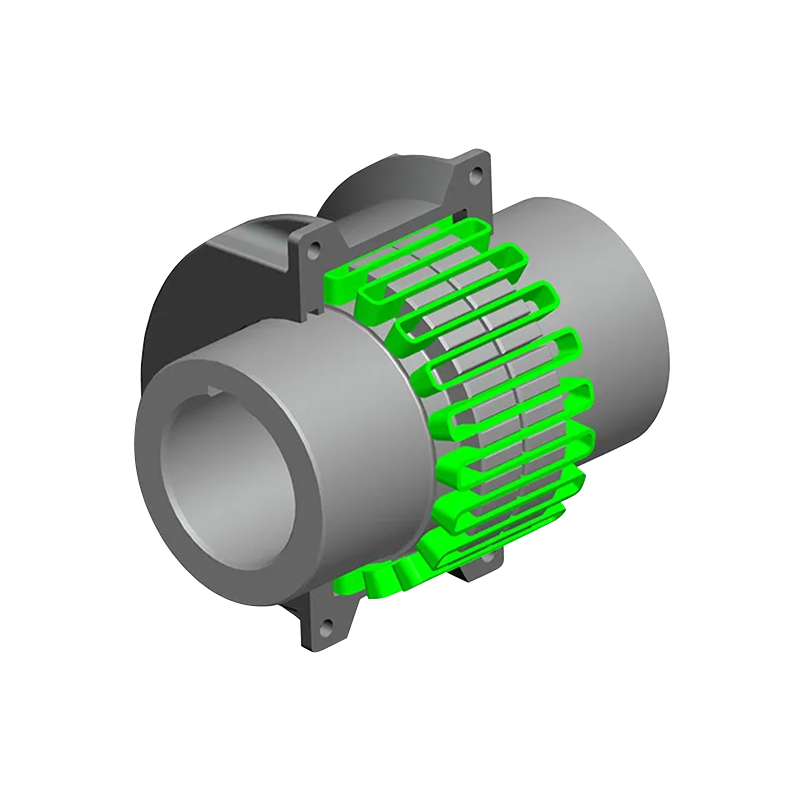
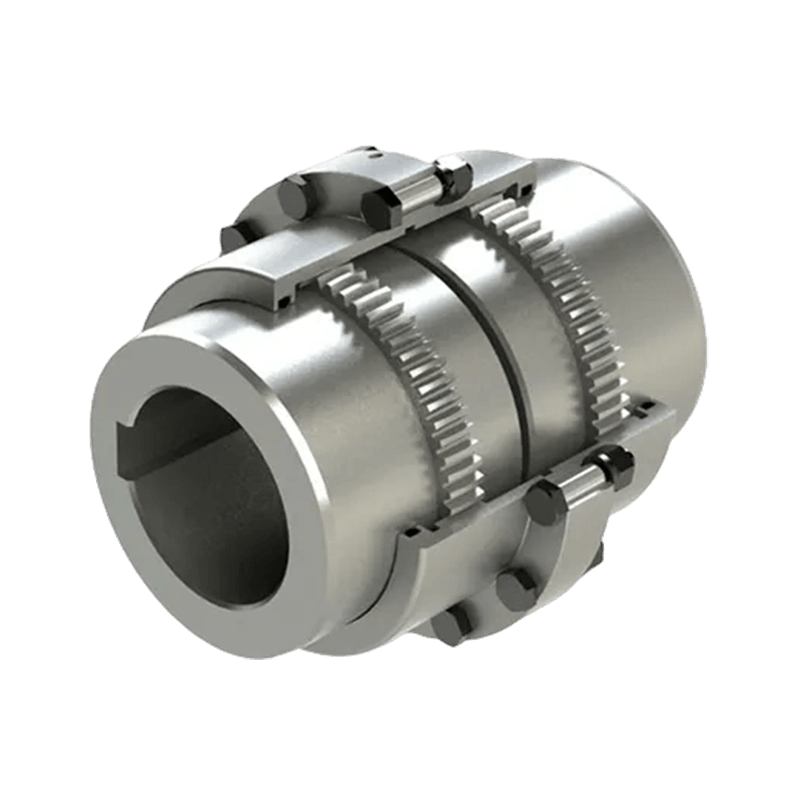
The working principle of a grid coupling centers on a serpentine or zigzag-shaped steel spring that winds through slots machined into two opposing hub flanges. As torque passes from one hub to the other, the grid spring compresses and flexes within these slots, allowing a small range of relative motion between the two shafts while still maintaining continuous power transmission. This flexing behavior is what allows the coupling to tolerate parallel offset and angular misalignment between connected shafts, conditions that would cause a solid, rigid coupling to bind or generate excessive stress on bearings. A surrounding cover housing typically encloses the grid element and is packed with lubricating grease, both to reduce friction as the spring flexes and to keep contaminants away from the moving metal surfaces.
Why Metal Springs Behave Differently From Elastomeric Elements
Unlike couplings that rely on rubber or polymer elements to provide flexibility, a metal grid spring offers minimal elastic delay, meaning the output shaft responds to input motion with very little lag or backlash. This characteristic makes grid-type designs a reasonable option in applications where consistent transmission ratios matter, though the tradeoff is that metal springs generally provide less vibration dampening than a soft elastomeric insert, so alignment accuracy during installation remains more important than it would be with a rubber-based coupling.
Material Properties Behind High Temperature and Load Tolerance
Grid couplings rely on hardened alloy steel for the grid spring itself, a material choice that allows the component to flex repeatedly under cyclic loading without fatigue cracking over extended service periods. Because the spring is metal rather than a polymer compound, it tends to hold up well under elevated operating temperatures and higher rotational speeds, conditions that can cause rubber-based couplings to soften, harden, or degrade prematurely. The hub bodies are typically machined from cast iron or steel, precision-cut with grooves that match the grid spring's serpentine path, and the entire assembly is enclosed in a two-piece housing that retains lubricant and shields the flexing element from dust, moisture, and debris in the surrounding environment.
Comparing Grid Couplings to Other Flexible Coupling Types
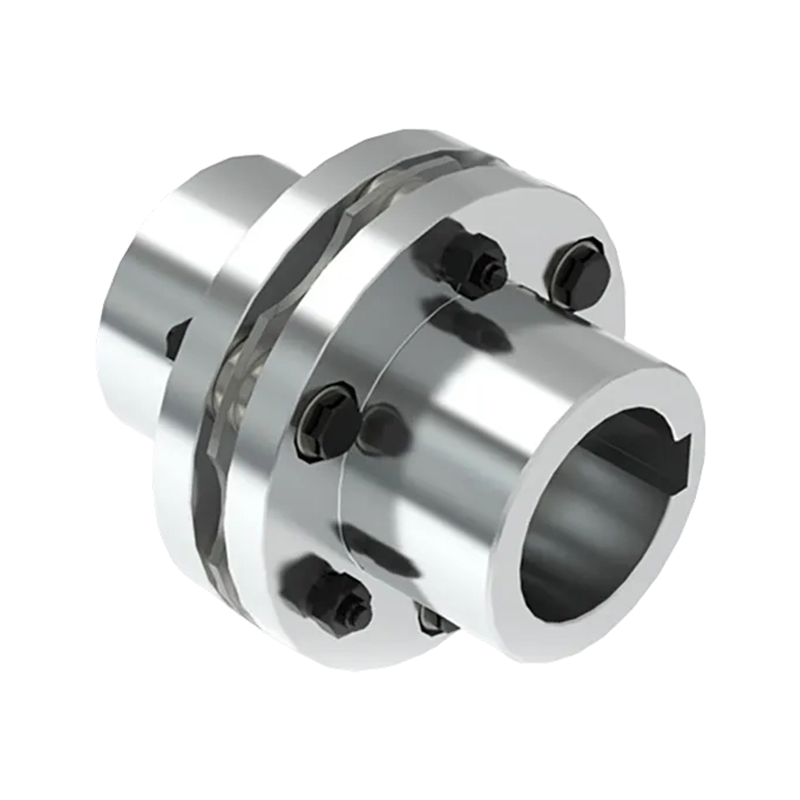
Within the broader category of flexible couplings that use metal elastic elements, grid couplings sit alongside diaphragm and disc-type designs, each suited to somewhat different operating conditions. Diaphragm couplings, which rely on thin metal discs rather than a wound spring, tend to offer zero backlash and are often selected for precision or servo-driven applications where positional accuracy matters more than shock absorption. Grid couplings, by comparison, provide moderate buffering capacity while still maintaining the high strength and torque capacity associated with metal elastic elements, making them a practical middle ground between rigid couplings and softer elastomeric designs for general industrial rotating equipment.
| Coupling Type | Flexing Element | Typical Strength |
|---|---|---|
| Grid coupling | Serpentine steel spring | Moderate shock absorption |
| Diaphragm coupling | Thin flexible metal disc | Minimal backlash, precise control |
| Disc coupling | Stacked metal disc pack | High torsional stiffness |
Common Industrial Applications for Grid Coupling Designs
Grid couplings appear frequently in equipment where moderate misalignment tolerance and shock absorption both matter, such as connections between electric motors and pumps, compressors, fans, and various types of industrial gearboxes. Their ability to handle torque spikes during motor startup makes them a reasonable fit for conveyor drive systems and crushing or grinding equipment, where sudden load changes are common during normal operation. In heavier processing environments such as mining, cement production, and material handling, grid couplings are often paired with equipment subject to variable loading, since the spring element helps cushion abrupt torque changes that would otherwise place additional stress on connected shafts and bearings.
Maintenance and Installation Factors That Affect Performance
Because the metal grid spring offers comparatively weak buffering next to non-metallic elastic couplings, achieving accurate shaft alignment during installation remains important even though the coupling itself can tolerate minor deviations during operation. Periodic inspection of the grease packed inside the cover housing helps ensure the grid spring continues flexing smoothly without excessive friction or wear at the contact points between the spring and hub grooves. Over time, grid springs can experience fatigue if operating conditions regularly exceed their rated torque capacity, so matching coupling size to the actual load and speed requirements of the connected equipment plays a meaningful role in extending service intervals and avoiding premature replacement.
- Quick Links
- About
- Products
- Our Service
- News & Events
- Contact
- Products Series
- Flexible Couplings with Non-Elastic Elements
- Flexible Couplings with Metal Elastic Elements
- Flexible Couplings with Non-Metallic Elastic Elements
- Safety Coupling
- Rigid Coupling
- Contact Us
- Tel : +86 511 8572 3800 +86 511 8572 3900
- Mobile : +86 15106109009
- Email : sales@couplingzy.com
- Add:No.1 Zhongye Yingbin Avenue, Gaozi Street, Dantu Economic Development Zone, Zhenjiang City, Jiangsu Province, China.


