:+86 15106109009
:sales@couplingzy.com


 English
  русский
  Español
  عربى
عربى  Português
  Deutsch
  Türk
Türk  Indonesia

Grid Coupling Guide: How It Works, Key Selection Tips, and Industrial Applications
Content
A steel plant in eastern China was replacing gear couplings on a finishing mill auxiliary drive every three or four months. The couplings showed heavy tooth wear, and the millwrights blamed misalignment that could not be eliminated in a hot environment. Maintenance records told a slightly different story: normal angular misalignment plus frequent torque spikes at start-up. This is the classic situation where a grid coupling changes the outcome. It absorbs the shock, tolerates the misalignment, and keeps the drive line running far longer than a stiffer coupling can. This article explains how a grid coupling works, which selection parameters matter, where it fits in industrial equipment, and what installation and maintenance habits keep it reliable.
What Is a Grid Coupling and How Does It Work?
A grid coupling, also called a snake spring coupling, is a flexible shaft coupling that transmits torque through a serpentine spring steel grid. Two grooved hubs face each other on the connected shafts, and the spring grid is woven through the grooves of both hubs. A two-part metal cover encloses the assembly and keeps lubricant around the grid.
Torque flows from the driving hub into the grid, then into the driven hub. Under light load, only a small portion of the grid carries torque, which gives the coupling relatively low torsional stiffness. As load increases, more of the grid contacts the hub grooves, stiffness rises progressively, and the coupling works like a torsional shock absorber. This variable-stiffness behavior is the main reason grid couplings handle start-up peaks, reversing loads, and process upsets better than many other flexible designs.
The same grid also flexes across directions, allowing radial offset, angular misalignment, and limited axial float. The cover and lubricant protect the spring steel from dirt and moisture, and this protection is what determines service life in severe environments.
Key Characteristics to Consider Before Selecting a Grid Coupling
Before choosing any coupling, a useful early step is to compare the drive's steady torque, peak torque, speed, and the misalignment that will exist at installation and under load. A grid coupling offers a practical middle ground. Its progressive stiffness absorbs shock without transmitting a high spike to the driven machine, while its misalignment capacity protects bearings and seals from unnecessary stress.
Key values to collect:
- Service torque: motor or turbine torque multiplied by the application service factor.
- Speed range: standard grid couplings cover general speeds; balanced high-speed versions are for continuous rotating machines.
- Misalignment capacity: radial, angular, and axial values vary with coupling size and cover style.
- Shaft fit: bore diameter, keyway size, and whether a taper bore or custom bore is needed.
- Envelope: outside diameter and overall length must fit the existing space.
To show how a grid coupling fits into a drive line, it helps to compare it with two common alternatives.
| Coupling Type | Impact Absorption | Misalignment Capacity | Stiffness Behavior | Maintenance |
|---|---|---|---|---|
| Grid coupling | Excellent | Good radial, angular, axial | Progressive, increases with load | Periodic grease and seal inspection |
| Diaphragm coupling | Moderate | Excellent, especially angular | Near-constant | Low maintenance |
| Gear coupling | Good | Good at high torque density | Constant and high | Requires controlled lubrication |
The grid type gives a notably forgiving response to shock, which is why it appears in drives where torque measurement is difficult but peaks are likely. Diaphragm couplings suit high-speed, high-precision lines where backlash and weight matter more. Gear couplings handle very high torque in a small package but tolerate less abuse in dirty conditions.
Typical Industrial Applications of Grid Couplings
Grid couplings are common in metallurgical equipment such as rolling mill auxiliary drives, table rollers, and continuous casting machines, where heat and impact make a forgiving connection valuable. In mining and aggregate plants they appear on crushers, conveyors, and feeders, where material feed variations produce frequent torque spikes. Port handling machines and paper machines use similar drive arrangements, usually with high shock absorption and misalignment tolerance in mind.
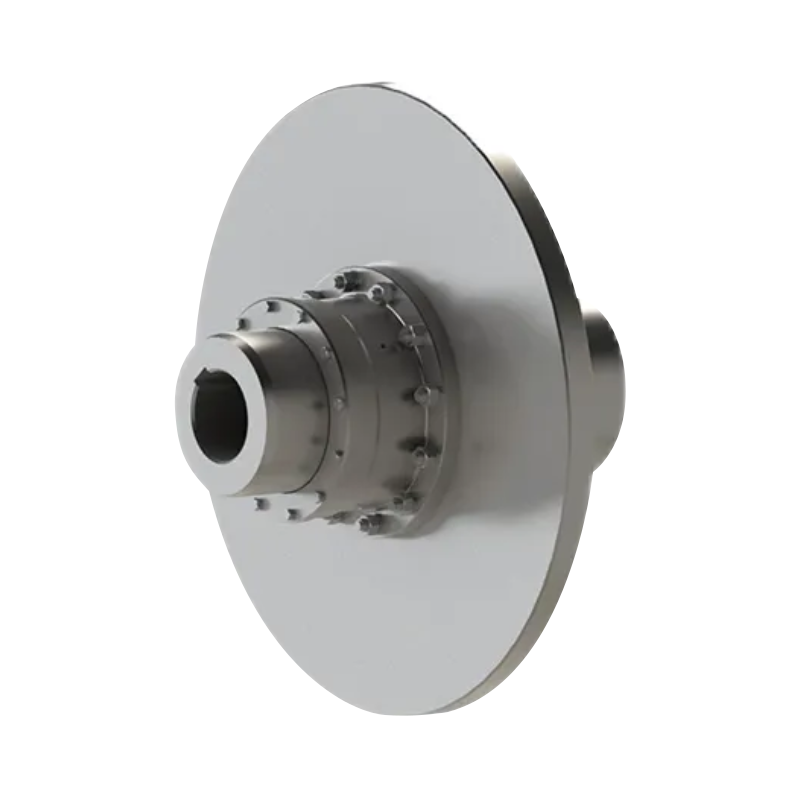
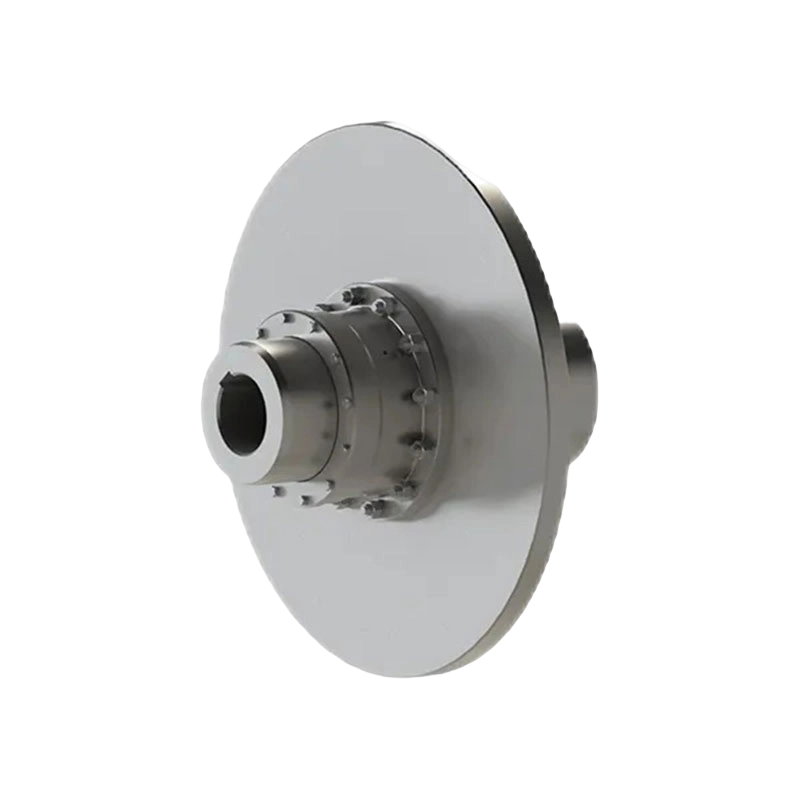
Lifting equipment is another classic field. Crane hoist mechanisms, trolley travel drives, and boom slew drives all see repeated starting, stopping, and occasional overload peaks. A grid coupling handles these conditions while a brake-friendly variant such as the T63 snake spring coupling with brake disc eliminates the extra shaft assembly used on frequently braked hoists. Detailed examples of lifting-duty selection are covered in the industry note on couplings in lifting machinery.
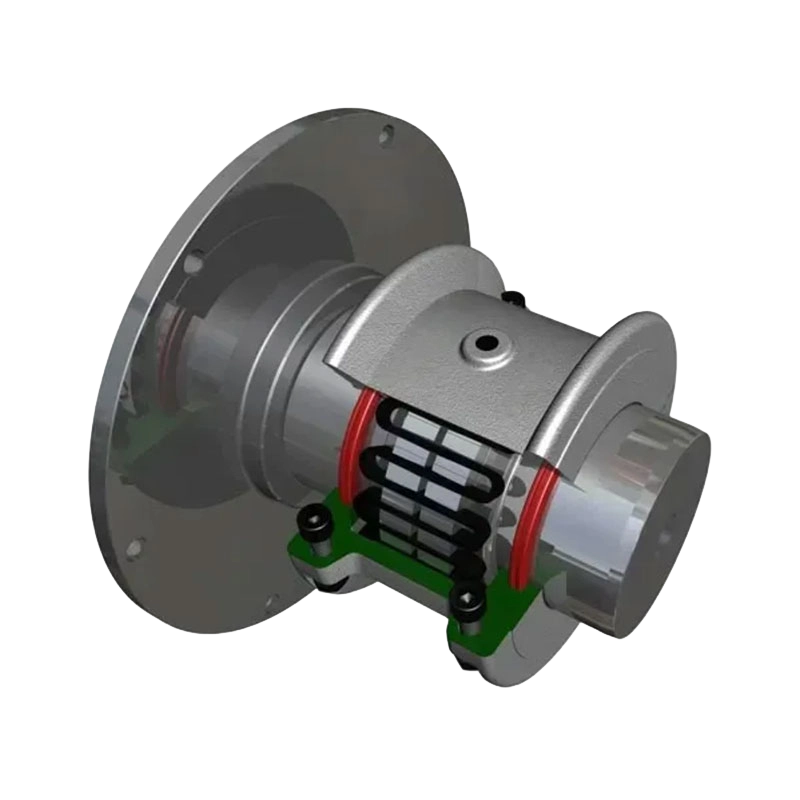 Wholesale T63 snake spring coupling with brake disc Manufacturers, Suppliers - ZZhongye Heavy Industry Technology (Zhenjiang) Co., Ltd is top China T63 snake spring coupling with brake disc manufacturers and suppliers...View Product →
Installation and Maintenance Practices That Keep Grid Couplings Reliable
Correct installation has a large effect on how long a grid coupling lasts. The sequence below follows common industrial practice and applies to many standard grid coupling sizes:
- Inspect the hubs and the spring grid for damage, corrosion, or wear before assembly.
- Clean the hub bores, keys, and shaft surfaces; remove burrs and residual lubricant.
- Apply a light coat of grease to the seals and to the hub grooves, then mount the hubs and install the keys.
- Set the gap between the hub faces to the value specified in the coupling data sheet. The gap controls the axial float available to the grid.
- Pack the grid area with the recommended grease and fit the two-piece cover, aligning the cover bolts correctly.
- Rotate the assembled coupling by hand to confirm free movement, then run a short no-load check.
After commissioning, a key habit is lubrication. Grease loses its protective properties over time, especially in hot or dusty plants, so re-greasing at the manufacturer's interval is not optional. The hub-and-grid interface also wears slowly in normal service; loose cover bolts, abnormal noise, or a sudden vibration spike are warning signs that the grid needs inspection before a failure shuts down the line.
How to Match a Grid Coupling to Your Drive System
Selection starts with a torque calculation: multiply the motor rated torque by the service factor for the application. Then compare the required speed, shaft diameters, and predicted misalignment against the coupling data sheet. If the drive has frequent start-stop cycles or occasional process jams, the progressive stiffness of a grid design is a clear advantage.
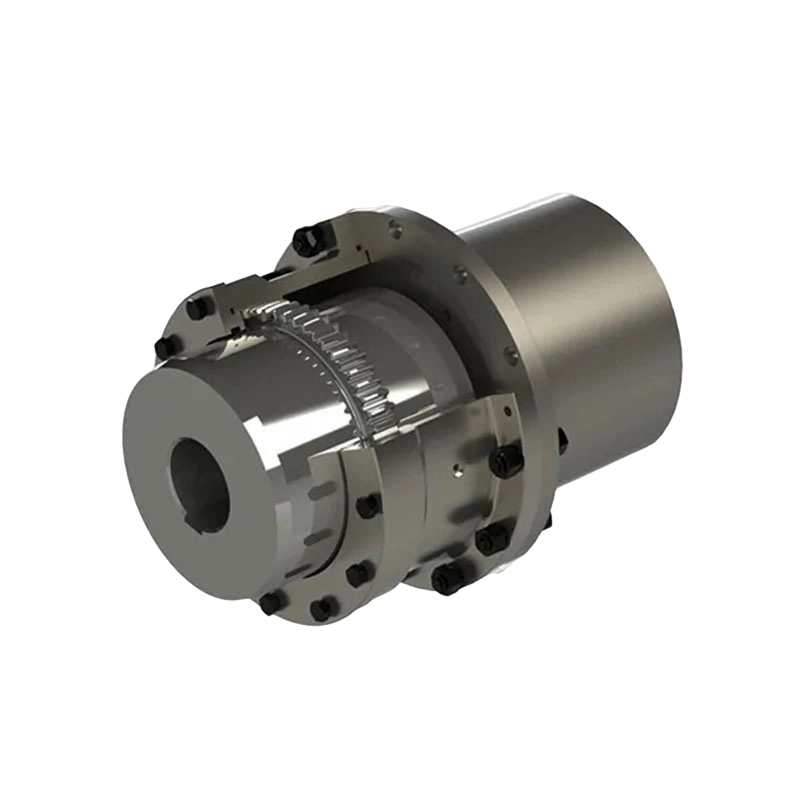
For general industrial loads, the SC-type snake spring coupling is a practical starting point because it covers a wide torque range and is configured for standard steel-plant and mining duty. Check the bore range against your shaft sizes, and confirm that the cover allows the planned radial travel.
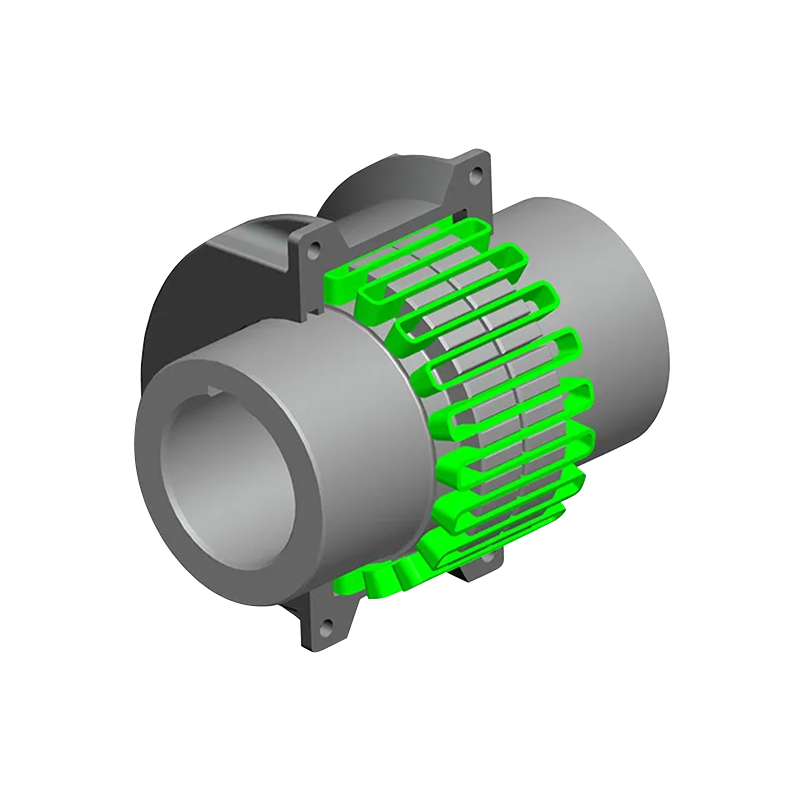 Wholesale SC Type Snake Spring Coupling / Grid Coupling (Q/YS 23006X-2018) ManufZhongye Heavy Industry Technology (Zhenjiang) Co., Ltd is top China SC Type Snake Spring Coupling / Grid Coupling (Q/YS 23006X-2018) manu...View Product →
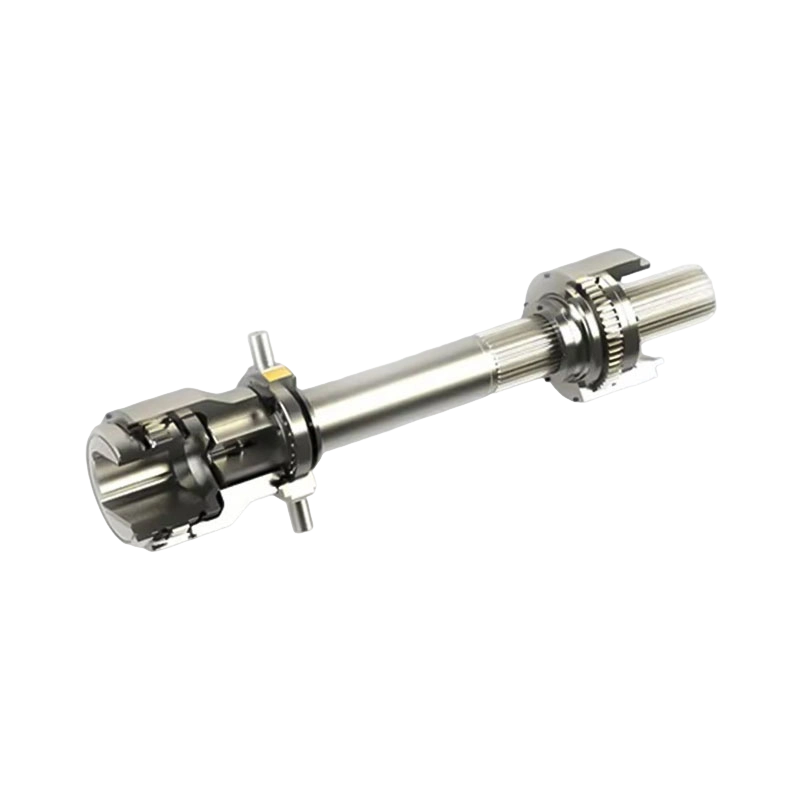
High-speed or continuous process machines need more care. When running speeds exceed the range of a standard grid coupling, a balanced version such as the T20 high-speed snake spring coupling keeps vibration within suitable limits without giving up the damping benefit. Confirm the top rated speed, the balance grade, and the lubrication requirements for that speed class.
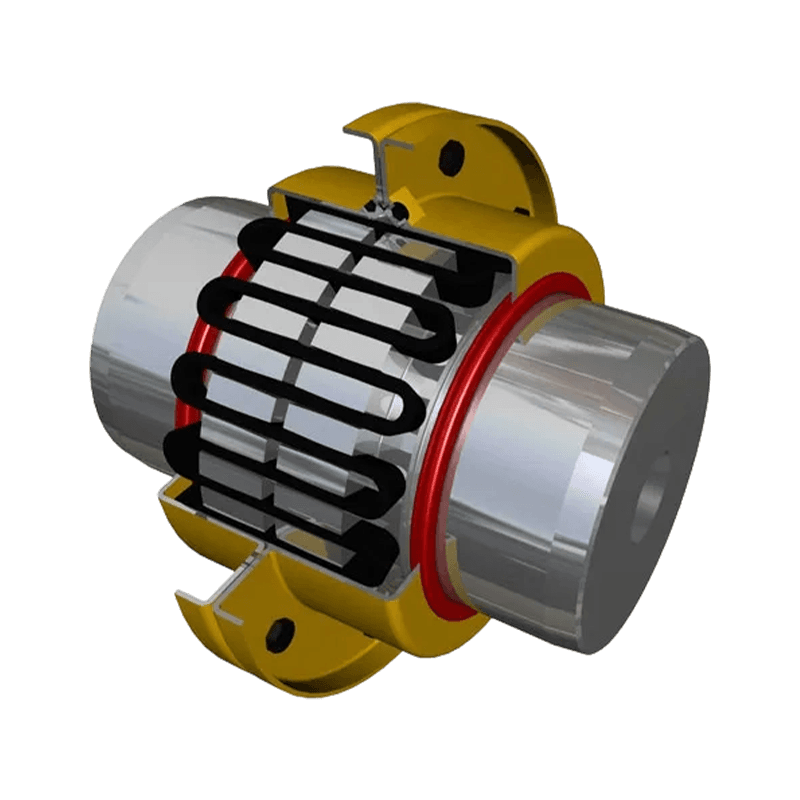 Wholesale T20 high speed snake spring coupling Manufacturers, Suppliers - ZhongyZhongye Heavy Industry Technology (Zhenjiang) Co., Ltd is top China T20 high speed snake spring coupling manufacturers and suppliers,T20 ...View Product →
Beyond standard models, real installations often require a connecting shaft, an intermediate sleeve, a special bore, or a different hub arrangement. A supplier that can deliver non-standard designs is a practical advantage in this situation. Zhongye Heavy Industry Technology manufactures standard grid couplings and also customizes designs for specific shaft dimensions and operating conditions; the advantage page provides an overview of their production and testing capability.
Grid couplings are not the answer for every shaft connection. Drives with zero-backlash requirements or very high continuous speed may still demand a diaphragm coupling or another precision design. But when shock loads, reversing duty, or unavoidable misalignment are the main concerns, a grid coupling offers a dependable, serviceable, and cost-effective solution. Verify the torque and misalignment numbers against the manufacturer's data, set the hub gap correctly, keep the lubrication schedule, and the coupling will often outlast the equipment it serves.

- Quick Links
- About
- Products
- Our Service
- News & Events
- Contact
- Products Series
- Flexible Couplings with Non-Elastic Elements
- Flexible Couplings with Metal Elastic Elements
- Flexible Couplings with Non-Metallic Elastic Elements
- Safety Coupling
- Rigid Coupling
- Contact Us
- Tel : +86 511 8572 3800 +86 511 8572 3900
- Mobile : +86 15106109009
- Email : sales@couplingzy.com
- Add:No.1 Zhongye Yingbin Avenue, Gaozi Street, Dantu Economic Development Zone, Zhenjiang City, Jiangsu Province, China.


