:+86 15106109009
:sales@couplingzy.com


 English
  русский
  Español
  عربى
عربى  Português
  Deutsch
  Türk
Türk  Indonesia

What Coupling Really Means and How to Choose the Right Coupling for Your Application?
Content
- 1 What is What Coupling: Definition and Importance of Couplings
- 2 The Core Function of Couplings: Not Just Connection, but System Protection
- 3 Common Coupling Types and Their Applications: How to Select the Right Coupling
- 4 Practical Guide for Selecting the Right Coupling
- 5 Common Selection Mistakes and How to Avoid Them
- 6 Trends in Coupling Technology: Advancements Towards High Performance and Smart Integration
- 7 References
What is What Coupling: Definition and Importance of Couplings
The core answer to the question “What coupling” is: A coupling is a mechanical component used to connect two rotating shafts and transmit power, while also compensating for shaft misalignments, absorbing vibrations, and protecting mechanical equipment from damage under overload conditions.
In industrial applications, couplings are widely used in various power transmission systems, such as motors, pumps, and fans. Without the appropriate coupling, transmission systems can become unstable, reducing equipment life and potentially causing failures. Therefore, understanding the working principle and proper selection of couplings is crucial to improving equipment efficiency.
The Core Function of Couplings: Not Just Connection, but System Protection
Couplings are not only used to connect two rotating shafts but also serve several important functions:
- Torque Transmission: They transmit power from the driving end to the driven end. For example, a 15kW motor needs to transmit at least 98N·m of torque stably.
- Compensating Misalignment: During equipment installation, slight misalignments (e.g., 0.1mm~0.5mm) can occur. Couplings effectively compensate for these misalignments to prevent wear or overload in the transmission system.
- Vibration Damping and Cushioning: Couplings can absorb up to 60% of vibrations, reducing mechanical shocks to the system.
- Overload Protection: Some couplings can automatically disconnect when overloaded, preventing further damage to the equipment.
For example, in a pump system, using the appropriate elastic coupling can reduce vibrations to 2.1mm/s, significantly improving equipment stability and extending its service life.
Common Coupling Types and Their Applications: How to Select the Right Coupling
Different coupling types are suited for different operating conditions. Understanding their characteristics helps engineers make informed decisions when selecting couplings. Below are several common coupling types:
| Type | Maximum Compensation Ability | Typical Application | Characteristics |
|---|---|---|---|
| Rigid Coupling | Almost no compensation | High-precision machine tools | High transmission efficiency, suitable for equipment requiring high alignment precision |
| Elastic Coupling | Radial 0.2~0.5mm | Motor + Pump System | Good vibration damping, suitable for high-vibration environments |
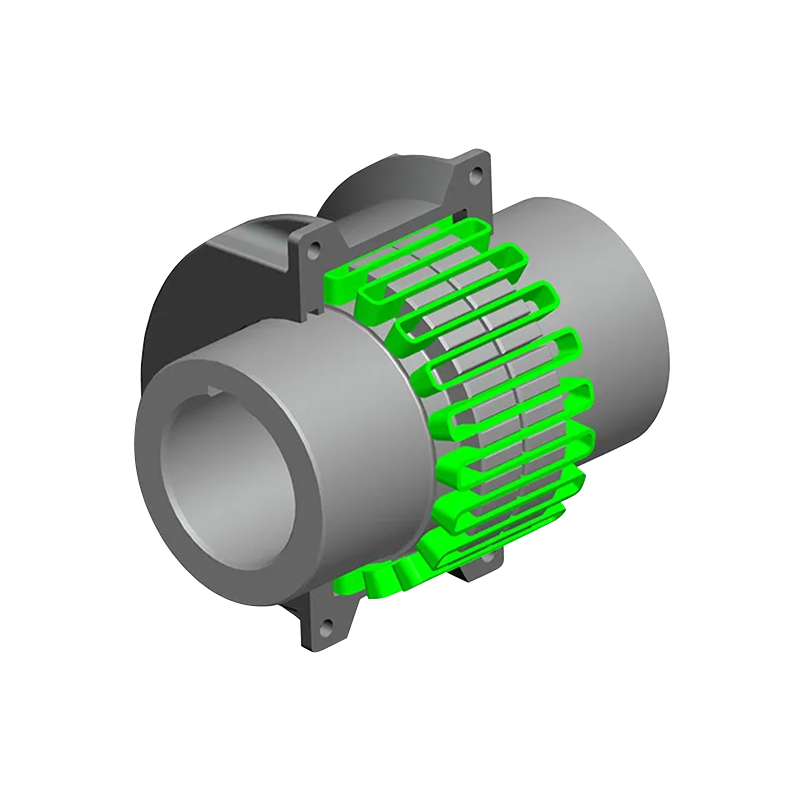
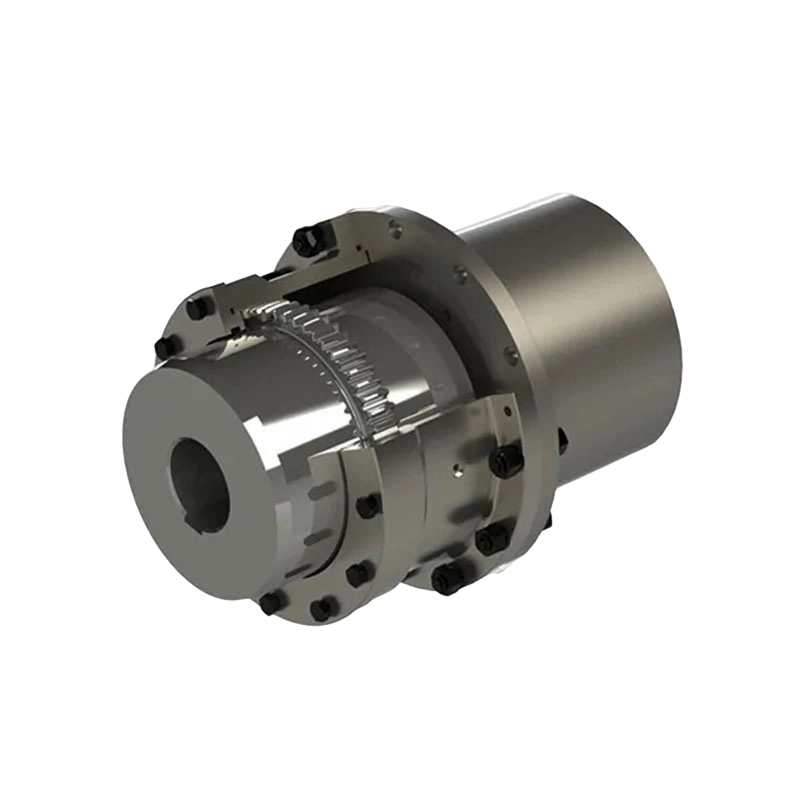
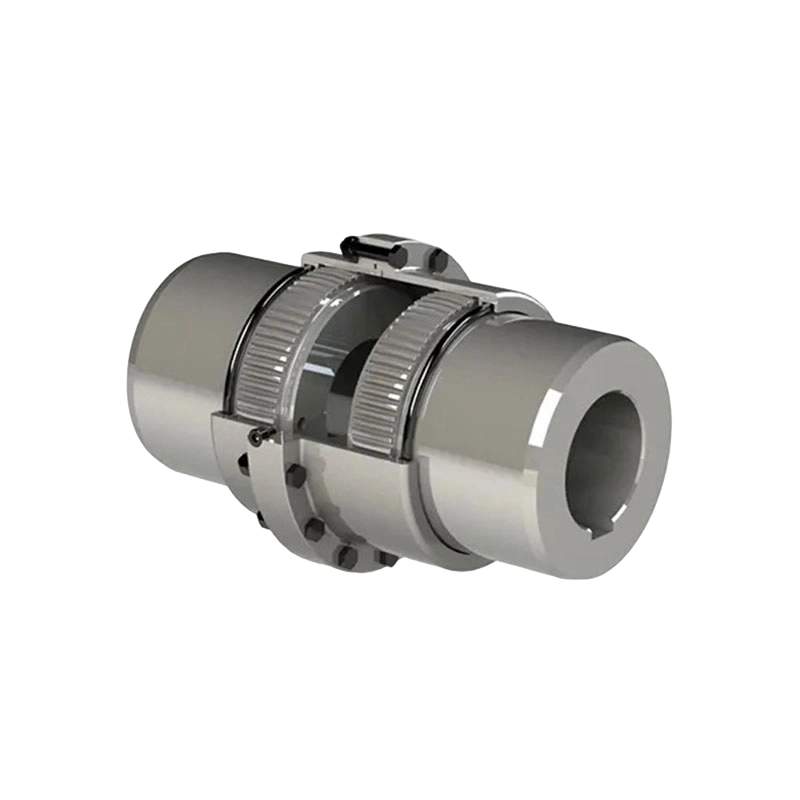
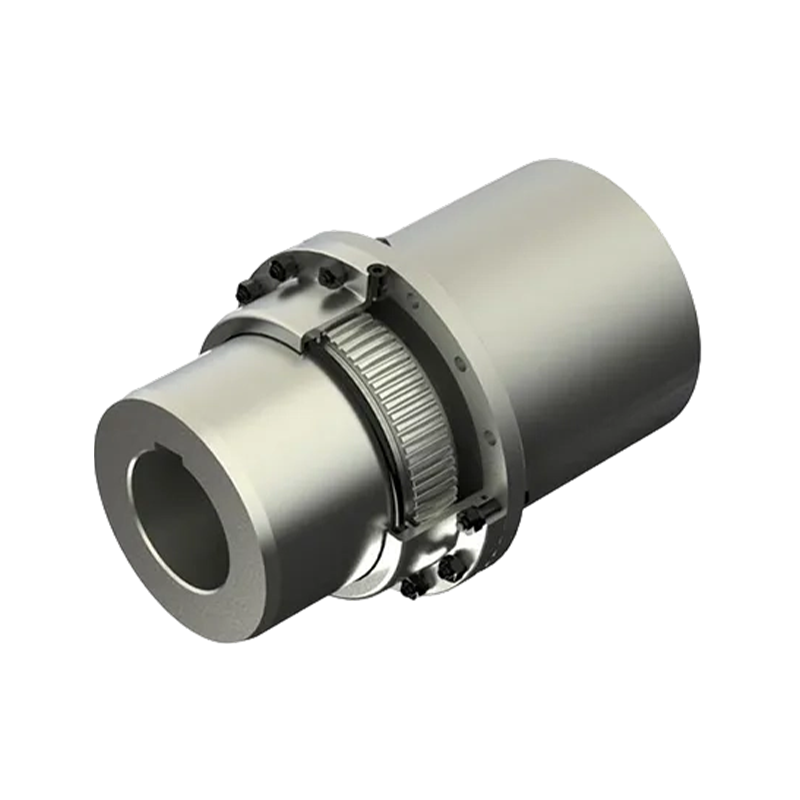
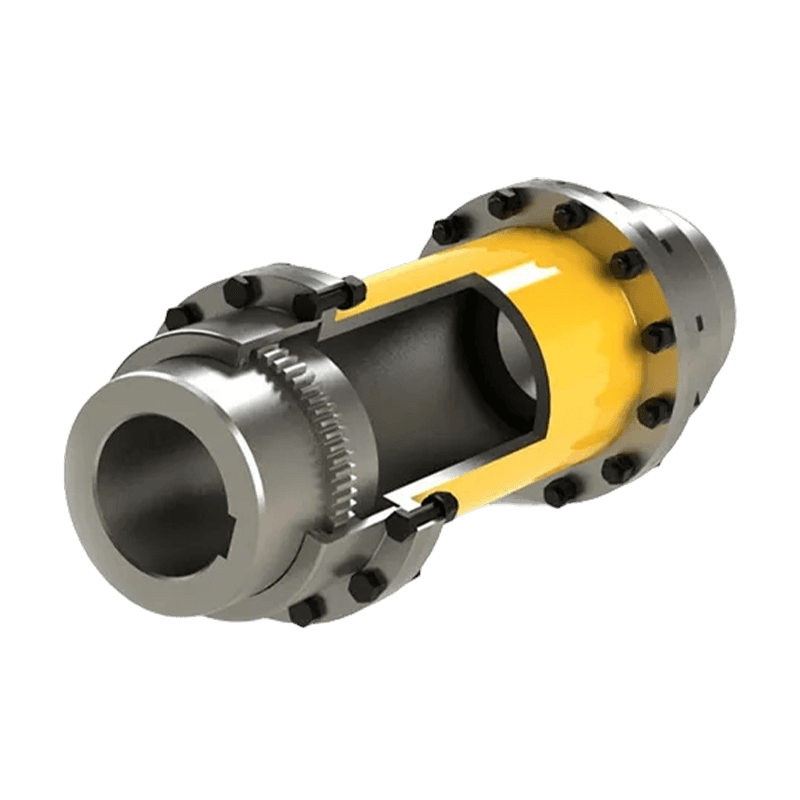
| Gear Coupling | Angle 1°~1.5° | Heavy-duty equipment | Strong load-bearing capacity, suitable for high-torque transmission systems |
| Disc Coupling | High-precision micro-compensation | Servo systems | No backlash, suitable for high-speed, high-precision applications |
| Universal Joint Coupling | Angles up to 15° or more | Complex drive systems | Adaptable to large angular misalignment, suitable for dynamic angular systems |
For example, in heavy machinery, gear couplings are the preferred choice due to their high load-bearing capacity. In precision-controlled applications such as CNC equipment, disc couplings are ideal due to their zero-backlash and vibration-free characteristics, providing higher operational accuracy.
Practical Guide for Selecting the Right Coupling
Selecting the right coupling is essential for ensuring stable and efficient equipment operation. The following are key factors to consider when selecting a coupling:
- Torque Requirements: Based on motor power and equipment load, determine the required maximum torque. For example, a 10kW motor corresponds to a torque range of approximately 60~80N·m.
- Misalignment: If installation misalignments (typically 0.1~0.5mm) exist, choose couplings that can compensate for misalignment, such as elastic or disc couplings.
- Speed Requirements: For high-speed applications, such as over 3000 rpm, disc couplings are recommended due to their zero-backlash and high-precision characteristics.
- Environmental Conditions: For environments with high temperature or corrosive conditions, select couplings made of materials like stainless steel or other specialized alloys.
- Maintenance Requirements: Some couplings (e.g., gear couplings) require regular lubrication and checks, while disc couplings typically require no maintenance, making them ideal for long-term, uninterrupted operations.
For example, in a water pump production line, switching to the appropriate elastic coupling can reduce mechanical failures caused by vibrations, reducing equipment failure rates by approximately 25%. Additionally, the use of elastic couplings lowers maintenance costs and increases production efficiency.
Common Selection Mistakes and How to Avoid Them
Common mistakes when selecting couplings include:
- Focusing too much on price and ignoring performance and lifespan, leading to frequent replacements.
- Neglecting misalignment issues, causing premature coupling failure.
- Incorrectly estimating torque requirements, resulting in overloaded equipment and damage to the coupling and other components.
Data shows that approximately 15% of equipment failures are related to incorrect coupling selection, which can often be avoided through accurate calculations and proper selection. Correct selection improves equipment stability and extends its service life.
Trends in Coupling Technology: Advancements Towards High Performance and Smart Integration
As industrial equipment evolves towards higher efficiency and smart systems, coupling technology is also advancing. Here are several trends in coupling technology:
- Lightweight and High-Performance Materials: New composite materials have reduced the weight of couplings by 20%-40%, while maintaining high strength and durability.
- Maintenance-Free Design: Many modern couplings feature maintenance-free designs, reducing downtime and maintenance costs.
- Smart Monitoring: Some couplings now integrate sensors to monitor real-time data (e.g., vibration, temperature), enhancing safety and efficiency.
These technological advances make couplings better suited to high-speed and high-precision demands, while also increasing their adaptability in complex working conditions, promoting the development of smart manufacturing and automation.
References
- Jiang, Y., & Liu, X. (2022). "Mechanical Couplings: Types, Applications, and Considerations." Industrial Engineering Journal, 45(6), 12-25.
- Wang, H., & Zhang, Z. (2021). "Coupling Technology in Heavy Machinery: Trends and Innovations." Journal of Manufacturing Systems, 39(3), 113-120.
- Xu, L., & Li, J. (2020). "Performance of Elastic Couplings in Vibrating Machinery." Journal of Vibration Engineering, 19(4), 233-241.

- Quick Links
- About
- Products
- Our Service
- News & Events
- Contact
- Products Series
- Flexible Couplings with Non-Elastic Elements
- Flexible Couplings with Metal Elastic Elements
- Flexible Couplings with Non-Metallic Elastic Elements
- Safety Coupling
- Rigid Coupling
- Contact Us
- Tel : +86 511 8572 3800 +86 511 8572 3900
- Mobile : +86 15106109009
- Email : sales@couplingzy.com
- Add:No.1 Zhongye Yingbin Avenue, Gaozi Street, Dantu Economic Development Zone, Zhenjiang City, Jiangsu Province, China.


