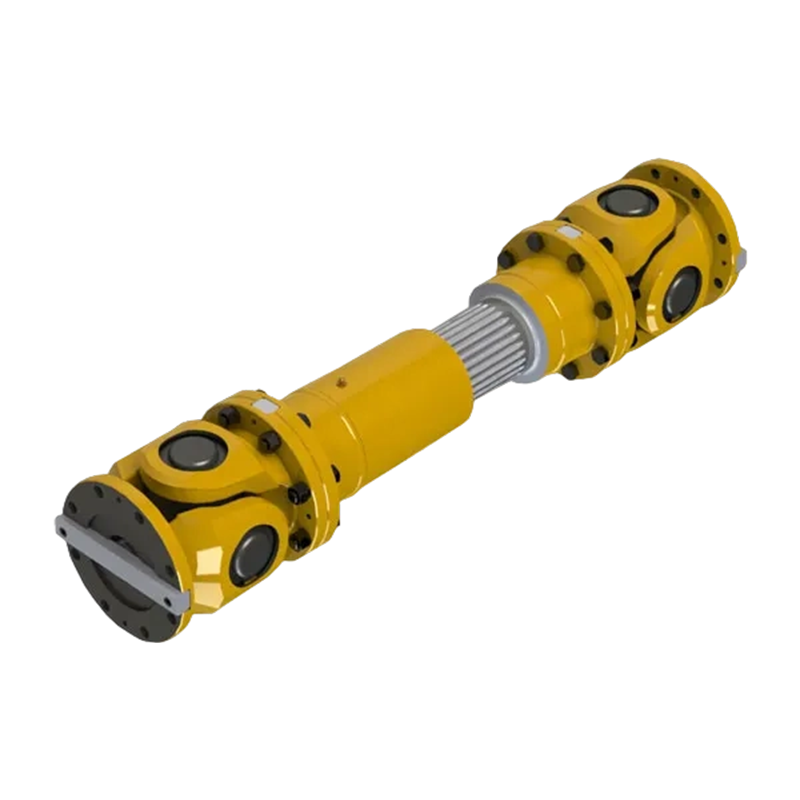
How Does Gear Coupling Work In Mechanical Power Transmission Systems?
Gear Coupling Torque Transmission Mechanism
The Gear Coupling functions as a mechanical device designed to transmit torque between two rotating shafts while accommodating a certain degree of misalignment. In mechanical power transmission systems, the torque produced by a prime mover such as an electric motor, turbine, or engine must be transferred efficiently to driven equipment such as pumps, compressors, conveyors, and industrial fans. Gear coupling technology allows this transfer to occur with high torque capacity and mechanical reliability.
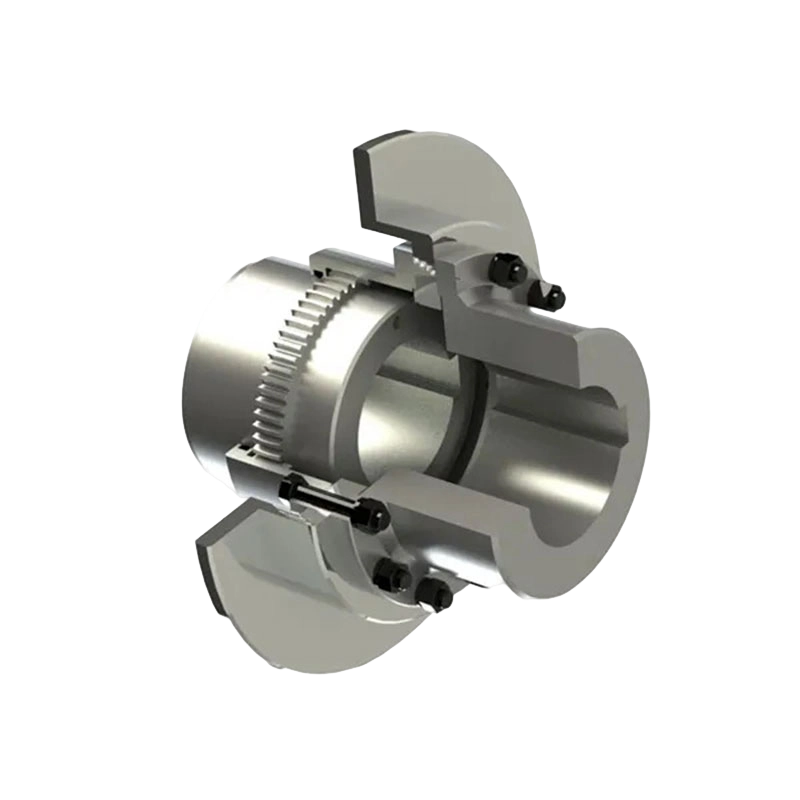
The working mechanism of a gear coupling is based on the interaction between external gear teeth on the hub and internal gear teeth inside a sleeve. These gear teeth mesh together in a similar way to conventional gears, but their primary function is not to change rotational speed or direction. Instead, they create a flexible mechanical connection capable of transmitting rotational force while allowing limited movement between connected shafts.
When the driving shaft rotates, the torque is transmitted through the hub that is mounted on the shaft. The hub contains external gear teeth that engage with the internal teeth of the coupling sleeve. As the hub rotates, the meshing gear teeth transfer torque to the sleeve. The sleeve then transfers the rotational energy to the hub connected to the driven shaft. This continuous engagement of gear teeth allows torque to pass from the input shaft to the output shaft with minimal energy loss.
The efficiency of torque transmission in gear couplings is influenced by several design characteristics, including tooth geometry, surface hardness, lubrication conditions, and contact area. Crowned gear teeth are commonly used to enhance performance and reduce localized stress concentrations. The crown shape allows the teeth to maintain proper contact even when slight shaft misalignment occurs.
Because the load is distributed across multiple gear teeth simultaneously, gear couplings are capable of transmitting very high torque values compared to many other flexible coupling types. The multi-tooth contact reduces the load carried by any single tooth, improving durability and extending service life. This design principle is particularly advantageous in heavy industrial applications where high torque and shock loads are common.
Another important factor in torque transmission is lubrication. Gear couplings typically operate with grease or oil lubrication to reduce friction between the meshing gear teeth. Proper lubrication minimizes wear, prevents overheating, and ensures smooth rotational movement. Without adequate lubrication, the gear teeth may experience accelerated wear, pitting, or scuffing, which can compromise the coupling's performance.
The torque capacity of a gear coupling can be described by the mechanical relationship between torque, force, and radius.
T = F × r, In this relationship, torque is generated when a tangential force is applied at a certain radius from the center of rotation. In gear couplings, the gear teeth provide the contact surfaces where this tangential force is transmitted from one rotating component to another.
In high-performance power transmission systems, gear couplings are engineered to handle not only steady torque but also fluctuating loads, reversing rotation, and transient shock forces. Their robust construction and large contact area make them particularly suitable for applications where reliability and durability are critical.
Gear Coupling Misalignment Compensation Principle
One of the defining features of a gear coupling is its ability to accommodate shaft misalignment while maintaining efficient torque transmission. In real-world mechanical systems, perfect shaft alignment is rarely achievable due to installation tolerances, thermal expansion, structural deflection, and dynamic loads during operation. Gear couplings are specifically designed to compensate for these conditions.
Misalignment in rotating machinery generally occurs in three primary forms: angular misalignment, parallel misalignment, and axial displacement. Gear couplings can accommodate angular misalignment through the geometry of their crowned gear teeth. The crowned profile allows the teeth to maintain contact even when the shafts are not perfectly aligned. Instead of contacting across the full tooth surface, the load shifts across the crown, maintaining engagement while reducing edge loading.
Parallel misalignment, also known as offset misalignment, occurs when the centerlines of two shafts are parallel but not collinear. While gear couplings are more tolerant of angular misalignment than parallel misalignment, they can still accommodate moderate offset through the movement of the sleeve relative to the hubs.
Axial displacement occurs when the distance between the two shafts changes during operation. Thermal expansion, for example, can cause shafts to lengthen as temperatures increase. Gear couplings allow limited axial movement within the sleeve to accommodate these changes without transferring excessive axial forces to the connected equipment.
The crowned gear tooth design is critical to the misalignment compensation capability of gear couplings. The crown shape reduces the risk of tooth edge loading, which could otherwise lead to premature wear or failure. By distributing the load across the curved tooth surface, the coupling maintains smooth torque transmission even when minor misalignment occurs.
Another factor contributing to misalignment compensation is the clearance between the hub teeth and sleeve teeth. This clearance provides the necessary freedom for relative movement while still maintaining adequate tooth engagement. Engineers carefully balance clearance and contact area to achieve both flexibility and high torque capacity.
Misalignment compensation also reduces stress on connected machinery components such as bearings and shafts. Without a flexible coupling mechanism, misalignment forces would be directly transferred into the mechanical system, potentially causing vibration, bearing wear, and shaft fatigue. Gear couplings act as a mechanical buffer that absorbs and redistributes these stresses.
In many heavy industrial environments, misalignment conditions change dynamically due to load variations and temperature fluctuations. Gear couplings can adapt to these changes continuously during operation, ensuring consistent performance even under demanding conditions.
Gear Coupling Load Distribution and Tooth Contact Behavior
The load distribution characteristics of gear couplings play a critical role in their ability to transmit high torque efficiently. When torque is applied to the coupling, multiple gear teeth engage simultaneously, sharing the load across the entire circumference of the coupling interface. This multi-tooth contact significantly reduces the stress experienced by individual teeth.
The load path begins at the driving hub, where torque is applied from the rotating shaft. The gear teeth on the hub engage with the internal teeth of the sleeve. As rotational force is applied, the teeth transmit tangential forces along the pitch circle of the coupling. Because several teeth are engaged at the same time, the total load is distributed rather than concentrated.
The contact behavior between gear teeth is influenced by factors such as tooth profile accuracy, surface finish, material hardness, and lubrication quality. Precision machining ensures that the gear teeth mesh smoothly without excessive backlash or interference. High-quality surface finishes reduce friction and improve the efficiency of torque transmission.
In addition to tangential forces, gear teeth also experience radial and axial forces during operation. Radial forces result from the contact pressure between the meshing teeth, while axial forces may arise from misalignment or axial movement of the shafts. The structural design of the coupling must accommodate these forces without causing excessive deformation or wear.
Material selection is another important factor affecting load distribution. Gear coupling components are typically manufactured from high-strength alloy steels that undergo heat treatment processes such as carburizing or induction hardening. These treatments increase surface hardness while maintaining core toughness, enabling the teeth to withstand repeated stress cycles.
Surface contact patterns are carefully analyzed during the design and testing stages of gear coupling development. Engineers examine the distribution of contact across the tooth surface to ensure that the load is evenly distributed. Uneven contact patterns could indicate misalignment, manufacturing errors, or insufficient lubrication.
Dynamic loading conditions further influence tooth contact behavior. In applications such as rolling mills, mining equipment, and marine propulsion systems, torque loads may fluctuate rapidly. Gear couplings are designed to handle these dynamic conditions by maintaining stable tooth engagement even when torque varies significantly.
The interaction between gear teeth also produces sliding motion along the contact surfaces. This sliding action requires effective lubrication to prevent metal-to-metal contact. Grease or oil lubricants form a protective film that reduces friction and dissipates heat generated during operation.
The combination of multi-tooth engagement, hardened materials, and controlled lubrication enables gear couplings to achieve exceptional torque capacity and long operational life. Their ability to distribute loads effectively makes them one of the most reliable coupling solutions for demanding industrial environments.
Gear Coupling Dynamic Performance In Rotating Machinery
Gear couplings operate within complex rotating machinery systems where dynamic forces influence overall performance. As rotational speed increases, centrifugal forces, vibration, and dynamic misalignment become more significant factors affecting coupling behavior.
At higher rotational speeds, centrifugal force acts on the coupling components, particularly the sleeve and lubrication medium. This force can redistribute lubricant within the coupling housing, potentially affecting lubrication effectiveness. Proper sealing and lubrication design ensure that the lubricant remains evenly distributed across the gear teeth.
Rotational dynamics also introduce vibration into the system. Vibration may originate from imbalance in rotating components, misalignment, or fluctuating torque loads. Gear couplings must maintain stable tooth engagement despite these dynamic conditions. The crowned tooth design helps accommodate slight movement while maintaining consistent torque transmission.
The mass and inertia of the coupling also influence system dynamics. Larger couplings with greater mass may affect the natural frequency of the rotating system. Engineers must consider these factors when selecting a coupling to avoid resonance conditions that could lead to excessive vibration.
Thermal effects further contribute to dynamic performance. As machinery operates, friction and environmental conditions generate heat within the coupling. Thermal expansion can alter shaft alignment and coupling dimensions. Gear couplings accommodate these changes through their flexible tooth engagement and axial movement capability.
In heavy-duty applications such as steel mills, power plants, and marine propulsion systems, gear couplings are often subjected to shock loads and sudden torque reversals. Their robust design allows them to absorb these forces without structural damage. The distributed load path across multiple teeth helps prevent localized overstressing.
The dynamic behavior of gear couplings is often evaluated using advanced simulation tools such as finite element analysis and dynamic modeling. These analyses help engineers predict stress distribution, vibration characteristics, and fatigue life under various operating conditions.
Gear couplings therefore play a critical role in maintaining stability within mechanical power transmission systems. Their ability to operate reliably under dynamic conditions ensures that industrial machinery can perform efficiently even in demanding environments.
What Are The Main Components Of Gear Coupling And How Do They Function?
A Gear Coupling is a mechanical device used to connect two rotating shafts in order to transmit torque efficiently in industrial machinery. The structure of a gear coupling is engineered to withstand high torque loads, accommodate shaft misalignment, and maintain stable power transmission in demanding operating conditions. The internal architecture of a gear coupling consists of several precision-engineered components that interact with each other to ensure reliable torque transfer, controlled flexibility, and long-term durability in heavy-duty mechanical systems.
Each component of a gear coupling performs a distinct mechanical function within the power transmission assembly. The combination of hubs, sleeves, gear teeth, seals, lubrication systems, and fasteners creates a robust coupling mechanism capable of operating under high loads, fluctuating torque, and continuous rotational movement. The design of these components is influenced by factors such as torque capacity, shaft size, rotational speed, misalignment tolerance, lubrication requirements, and environmental conditions commonly encountered in industrial equipment.
Gear Coupling Hub Structure And Mechanical Role
The hub is one of the primary structural elements of a gear coupling. It serves as the direct connection between the rotating shaft and the coupling assembly. Each gear coupling typically includes two hubs, with one hub mounted on the driving shaft and the other mounted on the driven shaft. These hubs are responsible for transmitting rotational motion from the shafts into the coupling mechanism.
The outer surface of the hub contains external gear teeth, which are precisely machined to engage with the internal gear teeth of the coupling sleeve. These gear teeth form the primary torque transmission interface within the coupling system. When the driving shaft rotates, the hub rotates simultaneously, and the external gear teeth transmit torque through their contact with the internal sleeve teeth.
Gear coupling hubs are commonly manufactured from high-strength alloy steels that are capable of withstanding high mechanical loads and repeated stress cycles. Heat treatment processes such as carburizing, induction hardening, or nitriding are often applied to improve surface hardness and wear resistance. These treatments increase the durability of the gear teeth while maintaining sufficient toughness in the hub core to resist cracking or fatigue failure.
The hub bore is machined to match the shaft diameter and may include a keyway, spline interface, or interference fit depending on the design requirements. A keyed connection is one of the most common methods used to secure the hub to the shaft. The key transmits torque between the shaft and the hub while preventing relative rotation.
Proper alignment and secure mounting of the hub are critical to the performance of the entire gear coupling system. Any looseness or improper fit between the hub and shaft may lead to vibration, uneven load distribution, or premature component wear. For this reason, installation procedures typically involve precise shaft preparation, accurate key fitting, and controlled torque tightening of retaining elements.
In heavy-duty industrial applications such as mining conveyors, rolling mills, marine propulsion systems, and power generation equipment, gear coupling hubs must handle extremely high torque loads while maintaining stable mechanical engagement with the shaft.
Gear Coupling Sleeve And Internal Gear Interface
The sleeve, sometimes referred to as the gear coupling sleeve or coupling shell, is the central component that connects the two hubs within the coupling assembly. The internal surface of the sleeve contains internal gear teeth that mesh with the external teeth on each hub.
The sleeve functions as the torque transfer bridge between the driving hub and the driven hub. When the driving hub rotates, its gear teeth engage with the internal teeth of the sleeve, causing the sleeve to rotate. The rotating sleeve then transmits torque to the second hub, which drives the connected shaft.
The internal gear teeth of the sleeve are typically designed with a slightly larger profile than the external hub teeth to allow proper meshing and controlled clearance. This clearance is necessary to accommodate shaft misalignment and axial movement during operation.
Gear coupling sleeves are often manufactured as a two-piece assembly or a single-piece sleeve depending on the coupling design. Two-piece sleeves allow easier installation and maintenance, particularly in large industrial systems where disassembling connected machinery may be difficult. The split sleeve design enables technicians to remove or replace the sleeve without disturbing the hub mounting on the shafts.
In high-performance gear couplings, the internal gear teeth are precision-machined to ensure accurate contact patterns and smooth rotational movement. Surface finishing processes such as grinding or honing may be applied to improve tooth geometry and reduce friction between meshing surfaces.
The sleeve must also withstand significant radial and tangential forces generated by torque transmission. As torque increases, the contact pressure between the hub teeth and sleeve teeth also increases. Therefore, the sleeve is typically constructed from hardened alloy steel capable of resisting wear, deformation, and fatigue under continuous load conditions.
In many gear coupling designs, the sleeve also serves as the lubrication chamber. Lubricating grease or oil is contained within the sleeve cavity to ensure that the meshing gear teeth remain properly lubricated during operation. The internal volume of the sleeve allows the lubricant to circulate across the gear tooth surfaces as the coupling rotates.
Gear Coupling Crowned Gear Teeth Geometry
The geometry of the gear teeth plays a crucial role in the mechanical performance of a gear coupling. Unlike standard gear systems used for speed reduction or motion transmission, gear coupling teeth are specifically designed to accommodate shaft misalignment while maintaining consistent torque transfer.
The external teeth on the hubs are typically designed with a crowned profile, meaning that the tooth surface has a slightly curved shape along its axial length. This crown shape allows the gear teeth to maintain contact even when the shafts are not perfectly aligned.
When angular misalignment occurs between the two shafts, the crowned gear teeth shift their contact point along the curved surface rather than concentrating stress at the edges of the teeth. This design reduces localized stress concentrations and prevents edge loading that could lead to tooth damage.
The crowned tooth design also allows the coupling to accommodate minor axial movement between shafts. Thermal expansion, load variations, and structural deflection can cause shafts to move slightly during operation. The curved tooth geometry enables the gear teeth to slide along each other while maintaining torque transmission.
Tooth contact behavior within a gear coupling is influenced by several engineering factors including pitch diameter, pressure angle, tooth module, and surface finish. These parameters are carefully selected to ensure optimal load distribution across the gear teeth.
The relationship between transmitted torque and the forces acting on the gear teeth can be represented by the following mechanical relationship.
In this expression, torque is generated by a tangential force acting at a certain radius from the center of rotation. Within a gear coupling, the gear teeth provide the contact surfaces where this tangential force is transferred between rotating components.
Proper tooth geometry ensures that the tangential force is distributed across multiple teeth simultaneously. This multi-tooth engagement allows gear couplings to transmit significantly higher torque compared with many other flexible coupling designs.
Gear Coupling Seals And Lubrication Containment System
Lubrication plays a critical role in the operation of gear couplings because the meshing gear teeth experience both rolling and sliding motion during rotation. Without effective lubrication, friction between the gear teeth could cause excessive wear, overheating, and premature failure.
To maintain proper lubrication, gear couplings are equipped with sealing systems that retain grease or oil inside the coupling assembly while preventing contaminants from entering. These seals are typically installed at the interface between the sleeve and the hubs.
Common seal types used in gear couplings include rubber lip seals, O-ring seals, labyrinth seals, and metal retaining rings. Each sealing method is selected based on operating conditions such as rotational speed, temperature range, environmental exposure, and maintenance intervals.
Rubber lip seals are widely used in medium-speed industrial equipment because they provide reliable lubrication retention and effective contamination protection. In high-temperature or heavy-duty applications, specialized sealing materials may be used to resist chemical exposure or thermal degradation.
The lubrication system inside the gear coupling ensures that a protective film of lubricant remains between the contacting gear tooth surfaces. This lubricant film reduces friction and dissipates heat generated during torque transmission.
Grease lubrication is commonly used for low-to-medium speed couplings because it is easier to retain within the coupling housing. Oil lubrication may be used in high-speed gear couplings where improved heat dissipation and fluid circulation are required.
Periodic lubrication maintenance is necessary to ensure consistent gear coupling performance. Over time, lubricants may degrade due to temperature exposure, contamination, or mechanical breakdown. Replenishing or replacing the lubricant helps maintain optimal operating conditions for the gear teeth.
What Are The Key Advantages Of Gear Coupling Compared With Other Couplings?
In industrial power transmission systems, selecting the correct coupling type directly affects equipment efficiency, reliability, and operational lifespan. A Gear Coupling is widely recognized as one of the most robust and high-performance coupling solutions for heavy-duty applications. Gear couplings are designed to connect two rotating shafts while transmitting high torque loads, compensating for shaft misalignment, and maintaining stable mechanical performance under demanding operating conditions.
Compared with many other coupling types used in industrial machinery—such as Jaw Coupling, Grid Coupling, and Flange Coupling—gear couplings offer several engineering advantages related to torque capacity, load distribution, misalignment tolerance, durability, and mechanical reliability. These advantages make gear couplings particularly suitable for heavy industrial environments such as mining equipment, steel mills, marine propulsion systems, power generation plants, and large compressor drives.
High Torque Transmission Capacity Of Gear Coupling
One of the most significant advantages of a gear coupling is its exceptional torque transmission capacity. Gear couplings are specifically engineered to handle extremely high torque loads compared with many other flexible coupling types used in mechanical power transmission systems.
The torque transmission capability of a coupling is largely determined by the contact area through which rotational force is transferred. In a gear coupling, torque is transmitted through the meshing interaction of multiple gear teeth between the hubs and the sleeve. Unlike elastomeric couplings or simple rigid couplings, gear couplings distribute the transmitted load across several gear teeth simultaneously. This multi-tooth engagement dramatically increases the load-bearing capacity of the coupling.
The mechanical relationship between transmitted torque and tangential force can be represented as:
In this relationship, torque is generated when a tangential force acts at a certain radius from the axis of rotation. Within a gear coupling assembly, this tangential force is transmitted through the gear tooth contact surfaces located around the pitch diameter of the coupling.
Because several gear teeth share the load simultaneously, the stress acting on each individual tooth is significantly reduced. This distributed load path enables gear couplings to transmit much higher torque levels without exceeding the allowable stress limits of the material. As a result, gear couplings are commonly used in high-power drive systems where torque loads are substantial and continuous operation is required.
Large industrial motors, steam turbines, and heavy-duty pumps often rely on gear couplings to connect the driving equipment with driven machinery. In these applications, torque levels may reach thousands or even millions of Newton-meters. The structural strength of the gear coupling components allows them to maintain reliable performance under these extreme mechanical loads.
In contrast, elastomer-based couplings such as jaw couplings rely on flexible rubber elements to transmit torque. While these couplings provide excellent vibration damping, their torque capacity is limited by the mechanical properties of the elastomer material. High torque loads may cause elastomer deformation or failure, making them unsuitable for heavy-duty applications.
Rigid couplings like flange couplings can transmit high torque but cannot tolerate misalignment between shafts. Any misalignment may introduce significant stress into the shafts and bearings. Gear couplings offer both high torque capacity and controlled flexibility, making them more suitable for complex industrial systems.
Superior Misalignment Compensation Capability Of Gear Coupling
Another key advantage of gear couplings is their ability to accommodate shaft misalignment while maintaining efficient torque transmission. In real industrial installations, achieving perfect alignment between two rotating shafts is extremely difficult due to installation tolerances, foundation settling, thermal expansion, and structural deflection.
Gear couplings are designed with crowned gear teeth, which allow the coupling to compensate for angular misalignment between the connected shafts. The crown-shaped tooth profile enables the contact point between meshing teeth to shift along the curved surface when the shafts deviate from perfect alignment. This geometry prevents edge loading and ensures that torque continues to be transmitted smoothly.
Angular misalignment occurs when the axes of two shafts intersect at a slight angle rather than forming a perfectly straight line. Gear couplings can typically accommodate angular misalignment ranging from approximately 0.5 degrees to 1.5 degrees depending on the specific design and size of the coupling.
In addition to angular misalignment, gear couplings can also tolerate limited amounts of parallel misalignment and axial displacement. Parallel misalignment occurs when the shafts remain parallel but their centerlines are offset. Axial displacement occurs when the distance between shafts changes during operation due to thermal expansion or load variation.
Many industrial machines experience continuous thermal fluctuations during operation. As temperatures rise, shafts expand and the relative position of connected equipment may shift slightly. Gear couplings allow this movement to occur without transmitting excessive stress to the connected machinery.
Flexible couplings such as Grid Coupling also accommodate misalignment to some extent, but their misalignment tolerance may be lower than that of gear couplings when transmitting high torque loads. Grid couplings rely on spring elements that flex under load, whereas gear couplings maintain rigid mechanical contact through hardened gear teeth.
Rigid couplings such as Flange Coupling cannot tolerate misalignment at all. Even minor misalignment in a rigid coupling may cause excessive bearing loads, shaft bending, vibration, and premature equipment failure. Gear couplings eliminate many of these risks by providing controlled mechanical flexibility.
Long Service Life And High Mechanical Durability Of Gear Coupling
Gear couplings are designed for long operational life in heavy industrial environments. Their durability is largely attributed to the materials used in their construction, the heat treatment processes applied to the gear teeth, and the lubrication systems that protect the contacting surfaces.
Most gear coupling components are manufactured from high-strength alloy steels such as chromium-molybdenum steel or nickel alloy steel. These materials offer excellent mechanical strength, fatigue resistance, and wear resistance. After machining, the gear teeth are typically heat treated using processes such as carburizing or induction hardening. These treatments create a hardened surface layer that resists wear while maintaining a tough interior core that absorbs mechanical shock.
During operation, the meshing gear teeth experience both rolling and sliding contact. Lubrication plays a crucial role in preventing excessive friction between these surfaces. Gear couplings are equipped with lubrication chambers that contain grease or oil to maintain a protective film between the gear teeth.
The lubricant reduces friction, dissipates heat, and prevents metal-to-metal contact that could cause surface damage such as scoring, pitting, or galling. Proper lubrication significantly extends the service life of the gear coupling components.
Compared with elastomeric couplings, which rely on flexible polymer materials that degrade over time, gear couplings maintain consistent mechanical properties throughout their lifespan. Elastomer elements may harden, crack, or lose elasticity due to temperature exposure, chemical contamination, or mechanical fatigue. Gear couplings do not rely on elastomer components for torque transmission, allowing them to operate reliably in harsh industrial environments.
Heavy industrial sectors such as steel production, mining operations, and marine propulsion systems often involve continuous operation under high loads. In these environments, equipment downtime can be extremely costly. The long service life and durability of gear couplings make them a preferred solution for maintaining reliable operation in such demanding conditions.
Efficient Load Distribution And Shock Load Resistance Of Gear Coupling
Another important advantage of gear couplings is their ability to distribute loads efficiently across multiple contact points. When torque is transmitted through the coupling, several gear teeth engage simultaneously along the circumference of the coupling interface. This multi-point load distribution reduces the stress experienced by each individual tooth.
The even distribution of mechanical load helps prevent localized stress concentrations that could lead to premature component failure. By sharing the transmitted force across multiple gear teeth, the coupling can safely handle both steady loads and sudden shock loads.
Shock loads occur when sudden changes in torque are introduced into the system. These loads may result from rapid acceleration, sudden braking, impact forces, or process disturbances within the driven machinery. Gear couplings are capable of absorbing these loads without structural damage due to the strength of the gear teeth and the distributed load path.
Industrial equipment such as crushers, rolling mills, and reciprocating compressors frequently generate fluctuating torque loads. The mechanical robustness of gear couplings allows them to maintain stable performance under these dynamic conditions.
In contrast, elastomeric couplings absorb shock loads by deforming flexible elements. While this approach provides vibration damping, repeated shock loading may cause fatigue or tearing of the elastomer material. Gear couplings rely on hardened metal components that can withstand repeated stress cycles without significant degradation.
The combination of strong materials, multi-tooth load distribution, and controlled lubrication allows gear couplings to operate reliably under both steady-state and dynamic loading conditions. This capability is particularly valuable in heavy industrial machinery where load fluctuations are common and mechanical reliability is essential.
Where Is Gear Coupling Commonly Used In Industrial Applications?
The Gear Coupling is widely used across numerous industrial sectors where high torque transmission, shaft misalignment accommodation, and long operational durability are required. In modern industrial power transmission systems, rotating machinery frequently operates under heavy loads, fluctuating torque, and harsh environmental conditions. Gear couplings provide a robust mechanical connection between driving equipment and driven machinery while maintaining efficient power transfer.
Industrial applications often involve large electric motors, turbines, diesel engines, and hydraulic drives that transmit power to compressors, pumps, conveyors, crushers, and various process equipment. Gear couplings serve as the interface that connects these machines while ensuring stable mechanical operation. Their design allows them to withstand large torque loads, accommodate minor shaft misalignment, and operate reliably in high-temperature, high-vibration, or dusty environments.
Because of these characteristics, gear couplings are commonly found in industries such as steel manufacturing, mining operations, power generation, marine propulsion, cement production, and petrochemical processing. Each of these industries presents unique mechanical challenges that require coupling solutions capable of maintaining consistent torque transmission and mechanical stability.
Gear Coupling Applications In Steel And Metallurgical Industries
The steel and metallurgical industries represent one of the most demanding operating environments for mechanical power transmission systems. Steel production facilities rely on large-scale machinery such as rolling mills, blast furnace equipment, continuous casting machines, and slab handling conveyors. These machines operate under extremely high loads and often experience significant torque fluctuations during production processes.
Gear couplings are frequently used to connect heavy-duty electric motors or turbines to rolling mill drives. Rolling mills require precise torque control while processing steel slabs at high temperatures and high mechanical pressure. The mechanical loads experienced during rolling operations can be extremely high, and the coupling connecting the motor to the rolling mill gearbox must transmit this torque without failure.
In a rolling mill system, a large motor drives a reduction gearbox that transfers rotational motion to the rolling cylinders. Gear couplings are commonly installed between the motor and gearbox as well as between the gearbox and the rolling equipment. Their high torque capacity allows them to transmit the power required to deform steel billets or slabs while maintaining stable mechanical engagement.
The environment inside steel plants often includes elevated temperatures, metal dust, and continuous vibration generated by heavy machinery. Gear couplings are designed with hardened steel gear teeth and sealed lubrication systems that allow them to operate reliably in such conditions. The internal lubrication chamber protects the gear tooth surfaces from excessive wear, while the sealed structure prevents contaminants from entering the coupling assembly.
Continuous casting machines used in steel production also rely on gear couplings to connect multiple drive units. These machines transport molten steel through controlled cooling zones to form solid slabs. The mechanical drive systems that control conveyor rollers must maintain synchronized movement to ensure consistent casting quality. Gear couplings provide the reliable torque transmission required for this synchronized operation.
In addition to rolling mills and casting machines, gear couplings are also used in steel plant conveyors, furnace charging equipment, and slag handling systems. These machines often experience heavy shock loads when handling raw materials or finished steel products, making gear couplings a suitable choice due to their ability to distribute loads across multiple gear teeth.
Gear Coupling Applications In Mining And Mineral Processing Equipment
Mining operations involve large mechanical systems designed to extract, transport, and process raw mineral materials. The equipment used in mining environments often operates under extremely heavy loads while being exposed to dust, vibration, moisture, and abrasive particles.
Gear couplings are commonly installed in mining machinery such as crushers, grinding mills, bucket wheel excavators, and conveyor drive systems. These machines require coupling solutions that can handle high torque loads and frequent shock loading conditions.
Crushing equipment used in mining operations breaks large rocks into smaller fragments for further processing. Crushers generate high impact forces as they compress and fracture rock materials. The drive systems powering crushers typically include large electric motors connected to gearboxes through gear couplings. These couplings must transmit high torque while absorbing mechanical shock generated during crushing cycles.
The mechanical torque required to drive grinding mills can be extremely large, especially in large-scale mining operations. Gear couplings provide the high torque capacity necessary to connect the mill motor to the gearbox or pinion gear system that drives the mill rotation.
Mining environments are typically characterized by high levels of dust and abrasive particles. Gear couplings used in these environments often include advanced sealing systems that prevent contaminants from entering the lubrication chamber. This sealing protection helps extend the service life of the coupling components and reduces maintenance requirements.
References / Sources
-
Lovejoy, Inc. Gear Couplings Technical Guide. Downers Grove, IL: Lovejoy Engineering Documentation, 2022.
-
Rexnord Corporation. Gear Coupling Selection and Application Guide. Milwaukee, WI: Rexnord Industrial Power Transmission, 2021.
-
Dodge Industrial. Mechanical Power Transmission Handbook. Greenville, SC: Dodge Industrial Engineering Publications, 2020.
-
Budynas, R. G., & Nisbett, J. K. Shigley’s Mechanical Engineering Design. 11th ed. New York: McGraw-Hill Education, 2020.
-
Bloch, H. P., & Geitner, F. K. Machinery Failure Analysis and Troubleshooting. 4th ed. Houston: Gulf Professional Publishing, 2012.



 English
  русский
  Español
  عربى
عربى  Português
  Deutsch
  Türk
Türk  Indonesia