:+86 15106109009
:sales@couplingzy.com


 English
  русский
  Español
  عربى
عربى  Português
  Deutsch
  Türk
Türk  Indonesia

The Stability of Metal Flexible Couplings in Extreme Temperature Environments
Content
- 1 What Defines a Metal Elastic Coupling
- 2 Thermal Effects on Metallic Elastic Elements
- 3 Behaviour in High-Temperature Environments
- 4 Behaviour in Cryogenic Environments
- 5 Thermal Cycling: Cumulative Effects and Fatigue Interaction
- 6 Comparative Performance of Metal Elastic Coupling Types in Extreme Temperature Service
- 7 Design Considerations for Extreme-Temperature Coupling Systems
- 8 Maintenance Practices for Thermally Demanding Applications
Metal elastic couplings occupy a distinct position in mechanical power transmission: unlike polymer-based flexible couplings whose performance is tightly bound to a narrow thermal window, metal elastic couplings derive their compliance from the controlled deformation of metallic elements — disc springs, leaf springs, diaphragms, bellows, or serpentine flexures. This all-metal construction gives them a fundamental thermal advantage. However, temperature extremes impose complex and often competing demands on material properties, dimensional stability, fatigue behaviour, and surface condition. Understanding how metal elastic couplings respond to these demands is essential for engineers specifying drive systems in aerospace, cryogenic processing, steel production, gas turbines, and any application where ambient conditions deviate substantially from the standard room-temperature design baseline.
What Defines a Metal Elastic Coupling
A metal elastic coupling transmits torque between a driving shaft and a driven shaft through the elastic deformation of one or more metallic flexible elements rather than through rigid mechanical contact or a polymer insert. The elastic element simultaneously performs three functions: it carries the transmitted torque, it accommodates relative shaft misalignment through controlled flexure, and it provides a degree of torsional compliance that filters speed fluctuations and attenuates dynamic loading.
The principal metal elastic coupling families encountered in industrial and aerospace practice are:
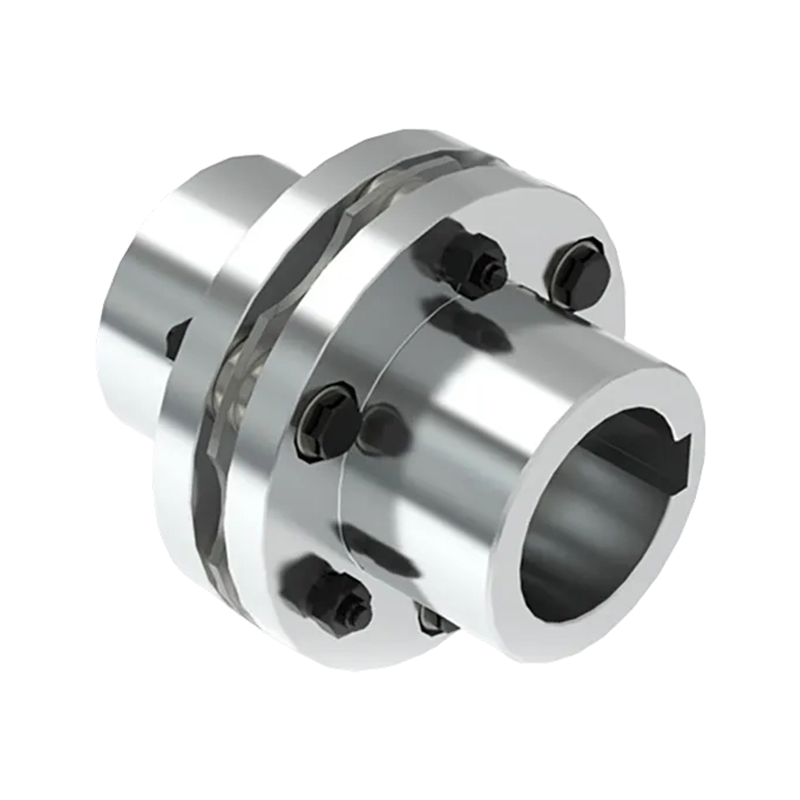
- Disc-pack couplings: Thin circular laminated discs, typically of stainless steel or precipitation-hardened alloy, bolted alternately to the driving and driven flanges. Flexure occurs in the disc pack as it accommodates angular and axial misalignment.
- Diaphragm couplings: One or more contoured annular diaphragms, often of titanium alloy or high-alloy steel, that flex to accommodate misalignment while transmitting high torque with very low backlash. Widely used in turbomachinery and high-speed compressor trains.
- Bellows couplings: A thin-walled, corrugated metallic tube — typically austenitic stainless steel or Inconel — that provides torsional rigidity for torque transmission while flexing axially and laterally to compensate misalignment. Common in precision servo and encoder applications.
- Leaf-spring (serpentine) couplings: Sinusoidal or serpentine metal strips interleaved between two hub flanges. The spring strips flex under load, providing torsional compliance and misalignment accommodation.
All of these designs share the defining characteristic that their performance depends on the mechanical behaviour of a metallic elastic element — a dependency that makes temperature-induced changes in material properties the central concern in extreme-environment applications.
Thermal Effects on Metallic Elastic Elements
Temperature influences the behaviour of a metal elastic coupling through several simultaneous and interacting mechanisms. Understanding each mechanism individually is a prerequisite for evaluating overall coupling stability across a wide thermal range.
Changes in Elastic Modulus
The elastic modulus of a metal — the ratio of stress to strain in the linear elastic region — decreases as temperature rises and increases as temperature falls. For austenitic stainless steels commonly used in disc and bellows couplings, the modulus of elasticity at 500°C is typically 15–18% lower than at room temperature, while at –200°C it may be 10–12% higher. This shift directly affects the torsional stiffness of the coupling: a disc pack or diaphragm that delivers a defined angular stiffness at 20°C will be measurably softer at elevated temperature and stiffer in cryogenic service.
The practical consequence is a shift in the torsional natural frequency of the drive system. If the system has been tuned at room temperature to place its resonant frequency safely away from operating excitation frequencies, a significant modulus change at service temperature may bring that resonance closer to an operating speed, with potentially damaging consequences. Thermal correction of torsional natural frequency calculations is therefore mandatory for systems operating well outside the ambient temperature range.
Thermal Expansion and Dimensional Change
Metallic components expand on heating and contract on cooling in proportion to their coefficient of thermal expansion (CTE) and the temperature change experienced. In a metal elastic coupling, this affects:
- Bore and shaft fits: An interference fit sized at room temperature may loosen at elevated temperature if the shaft and hub expand at different rates — a critical concern when dissimilar metals are combined, such as a titanium diaphragm hub on a steel shaft.
- Bolt preload: If the flexible element and the bolts that clamp it are of different materials with different CTEs, thermal cycling can alter bolt preload, either reducing clamping force (risking slip under torque) or increasing it to levels that stress the flange or disc.
- Axial position of connected machinery: Thermal growth of long shafts and housings generates axial displacement that the coupling must accommodate. The axial capacity of the flexible element must be verified against the actual thermal growth over the full operating temperature range.
When a coupling assembly spans a significant temperature gradient — for example, a coupling connecting a hot turbine shaft to a cooler gearbox — differential thermal expansion along the coupling axis creates sustained axial loading that superimposes on the dynamic loads from torque transmission and misalignment compensation.
Yield Strength and Fatigue Properties
The fatigue life of a metal elastic element is governed by the cyclic stress amplitude relative to the endurance limit of the material. Both the yield strength and the fatigue endurance limit of structural metals are temperature-dependent:
- At elevated temperatures, yield strength and endurance limit decrease. A disc pack designed with a comfortable fatigue margin at room temperature may experience cyclic stresses that approach or exceed the endurance limit of the material at the intended operating temperature, reducing service life significantly.
- At cryogenic temperatures, most high-alloy steels and titanium alloys retain or slightly improve their tensile and yield strength. However, some materials — particularly carbon steels and certain ferritic stainless steels — undergo a ductile-to-brittle transition below a critical temperature, after which fracture can occur at stress levels well below the nominal yield strength. Selection of materials with good cryogenic toughness (high Charpy impact energy at the minimum service temperature) is a fundamental design requirement for couplings in low-temperature service.
Creep and Stress Relaxation
At temperatures above approximately 30–40% of a metal's absolute melting point (the creep threshold), sustained stress causes slow, time-dependent plastic deformation known as creep. For steels, creep becomes practically significant above approximately 400–450°C; for nickel superalloys, the threshold is considerably higher.
In a metal elastic coupling operating at elevated temperature, creep in the flexible element or in clamping bolts leads to stress relaxation — a gradual reduction in the elastic stress that was present at assembly. Bolt joints may lose preload; disc packs may take a permanent set; diaphragms may exhibit a permanent angular offset. The result is a coupling that no longer performs as designed, with altered stiffness, reduced fatigue life, and potentially compromised torque capacity. For applications above the creep threshold of standard alloys, coupling materials must be selected from high-temperature grades with demonstrated creep resistance, such as precipitation-hardened Inconel or Waspaloy.
Oxidation and Surface Degradation
At high temperatures in oxidising atmospheres, the surface of metal elastic elements can form oxide scales. For most stainless steels and nickel alloys, a protective adherent oxide layer forms that limits further oxidation. However, repeated thermal cycling can cause this layer to spall, exposing fresh metal and causing progressive surface degradation. Surface pitting, scale formation, and intergranular oxidation reduce the effective cross-section of thin disc or bellows elements and act as stress concentration sites that initiate fatigue cracks. Coatings, surface treatments, or the use of inherently oxidation-resistant alloys are important protective measures for couplings exposed to high-temperature oxidising environments.
Behaviour in High-Temperature Environments
High-temperature applications for metal elastic couplings include gas turbine engine accessory drives, steam turbine generator couplings, hot rolling mill main drives, industrial furnace conveyor drives, and petrochemical compressor trains. In these environments, the coupling may be exposed to sustained temperatures from 250°C to well above 600°C, with thermal cycling superimposed during startup and shutdown.
Material Selection for High-Temperature Service
The choice of flexible element material is the most critical design decision for a high-temperature coupling. Materials are evaluated against several criteria:
- Precipitation-hardened stainless steels (17-4 PH, 15-5 PH): Offer a good combination of strength, moderate temperature capability (to approximately 300–350°C), and corrosion resistance. Widely used in disc-pack couplings for compressor and pump applications.
- Austenitic stainless steels (316L, 321, 347): Better high-temperature oxidation resistance than precipitation-hardened grades, with usable strength to approximately 500–550°C. The 321 and 347 stabilised grades resist sensitisation and intergranular corrosion after prolonged high-temperature exposure.
- Nickel-base superalloys (Inconel 718, Waspaloy): Retain high strength and creep resistance to 650°C and above. Used in the most demanding high-temperature turbomachinery couplings where standard stainless steels are insufficient.
- Titanium alloys (Ti-6Al-4V): Offer high specific strength and good elevated-temperature capability to approximately 300°C, combined with low density that minimises rotational inertia. Applied in aerospace and high-speed turbomachinery diaphragm couplings where weight is a constraint.
Lubrication Considerations at High Temperature
Metal elastic couplings are generally designed to operate without lubrication at the flexible element — the flexure is intended to be a clean elastic deformation, not a sliding contact. However, the hub bores, keyways, and fastener threads in high-temperature couplings require anti-seize compounds or high-temperature thread lubricants to prevent galling and to ensure that the coupling can be disassembled for inspection without damaging the mating surfaces. Standard molybdenum disulfide (MoS₂) paste is widely used up to approximately 450°C; copper-based anti-seize compounds extend protection to higher temperatures.
Thermal Barrier and Insulation Strategies
Where a coupling connects a very hot machine to one at ambient temperature, heat conduction along the shaft and through the coupling can raise the temperature of downstream components above their design limits. Thermal barriers — typically a short section of low-conductivity alloy or a ceramic-coated spacer tube — can be incorporated in the coupling spacer to limit heat flow. In some installations, forced-air or water-cooled coupling guards are used to maintain the coupling itself within its operating temperature range.
Behaviour in Cryogenic Environments
Cryogenic applications for metal elastic couplings include liquid natural gas (LNG) plant compressor drives, liquid oxygen and liquid nitrogen pump drives, superconducting magnet systems, aerospace propellant pump drives, and cryogenic wind tunnel test rigs. Operating temperatures in these environments range from –50°C down to –269°C (liquid helium temperature).
Material Toughness and Ductile-to-Brittle Transition
The overriding material concern in cryogenic coupling design is fracture toughness. Carbon steels and standard ferritic stainless steels undergo a transition from ductile to brittle fracture behaviour at low temperatures. Below the transition temperature, these materials can fail suddenly at stress levels far below their nominal yield strength. Austenitic stainless steels (304L, 316L) and most nickel-base alloys do not exhibit this transition — they remain tough and ductile down to liquid helium temperatures, making them the standard material choices for cryogenic flexible elements.
Titanium alloys also retain adequate toughness at cryogenic temperatures, though they must be evaluated for hydrogen embrittlement in applications involving liquid hydrogen.
Increased Stiffness at Low Temperature
As noted above, the elastic modulus of metallic materials increases at cryogenic temperatures. A bellows or disc pack coupling that has been designed for a specific torsional stiffness at room temperature will be measurably stiffer at –196°C. This stiffness increase shifts the torsional natural frequency of the drive system upward and alters the dynamic load distribution in the system. Drive train torsional analysis should be performed at both the warm and cold operating conditions to confirm that no critical resonances are introduced across the full thermal operating range.
Thermal Contraction and Fit Management
Metallic components contract at cryogenic temperatures. For a hub bore fitted to a shaft by interference, the contraction is in the direction that increases the interference — cryogenic conditions generally tighten shaft fits rather than loosening them. However, when dissimilar metals with different coefficients of thermal expansion are combined, the differential contraction can produce very high interface stresses. Careful selection of fit dimensions and material combinations, verified by thermal stress calculations, is required to ensure that neither loosening nor yielding of the interference fit occurs across the operating temperature range.
Elimination of Lubrication Requirements
A significant operational advantage of metal elastic couplings in cryogenic service is their inherent freedom from lubrication requirements at the flexible element. Conventional grease-lubricated couplings — such as gear couplings — cannot be used in cryogenic environments because lubricants solidify at low temperatures, causing seizure. The all-metal, lubrication-free flexure of disc, diaphragm, or bellows couplings is therefore a practical necessity in many cryogenic drive applications, in addition to being a performance advantage.
Thermal Cycling: Cumulative Effects and Fatigue Interaction
Many extreme-temperature applications do not involve sustained steady-state operation at a single temperature — instead, the coupling experiences repeated thermal cycles as the system starts up from cold, reaches operating temperature, and shuts down again. Each thermal cycle superimposes a cycle of thermal stress on the existing mechanical stress state of the flexible element.
Thermal fatigue — crack initiation and propagation driven by cyclic thermal stresses — is distinct from mechanical fatigue but interacts with it. The total fatigue damage accumulated by the flexible element is the sum of contributions from mechanical load cycles (torque fluctuations, misalignment-induced bending cycles) and thermal stress cycles. In applications with frequent thermal cycling, the thermal fatigue contribution can be comparable to or greater than the mechanical fatigue contribution, and both must be included in the service life assessment.
Thermal cycling also drives progressive dimensional change through ratcheting — the accumulation of small increments of plastic deformation with each cycle — and through differential expansion and contraction of bolted joints, which can alter preload over time. Periodic re-torquing of fasteners and inspection for permanent deformation of flexible elements are therefore standard maintenance practices for couplings in thermally cyclic service.
Comparative Performance of Metal Elastic Coupling Types in Extreme Temperature Service
The table below summarises the suitability of the four principal metal elastic coupling types for high-temperature and cryogenic service, along with their key temperature-related performance characteristics.
| Coupling Type | Typical Flex Element Material | High-Temp Limit (Approx.) | Cryogenic Suitability | Lubrication at Flex Element | Primary Temperature Concern |
|---|---|---|---|---|---|
| Disc-Pack Coupling | 17-4 PH SS, 316L SS, Inconel 718 | 300–600°C (material-dependent) | Good (austenitic grades) | None required | Disc fatigue at reduced endurance limit; bolt preload loss |
| Diaphragm Coupling | Ti-6Al-4V, 15-5 PH SS, Waspaloy | 300–650°C (material-dependent) | Good (Ti alloy, austenitic SS) | None required | Creep in diaphragm at high temp; stiffness increase at low temp |
| Bellows Coupling | 316L SS, Inconel 625 | 450–600°C | Excellent (austenitic SS, Inconel) | None required | Wall thinning from oxidation; cyclic stress concentration at corrugations |
| Leaf-Spring (Serpentine) Coupling | Spring steel, 17-7 PH SS | 250–350°C | Moderate (check for brittle transition) | None required | Spring set at elevated temperature; reduced fatigue life |
Design Considerations for Extreme-Temperature Coupling Systems
Specifying a metal elastic coupling for service in a thermally challenging environment requires a structured engineering approach that extends well beyond standard room-temperature torque and misalignment calculations.
Temperature-Corrected Torsional Analysis
The torsional stiffness of the coupling and the torsional natural frequency of the complete drive train must be calculated at the actual service temperature, accounting for the modulus change of the flexible element material. If the drive system passes through a speed range during startup while the coupling is still cold, the natural frequency at cold conditions must also be checked to confirm that critical resonances are not excited during the startup transient.
Fatigue Life Assessment at Service Temperature
The cyclic stress amplitude in the flexible element must be evaluated against the endurance limit of the material at the operating temperature, not at room temperature. Published fatigue data for candidate materials at the intended service temperature should be obtained from the material supplier or from established design references. A fatigue safety factor of at least 1.5 to 2.0 on stress amplitude, referenced to the high-temperature endurance limit, is a commonly applied design criterion.
Thermal Growth and Axial Capacity Verification
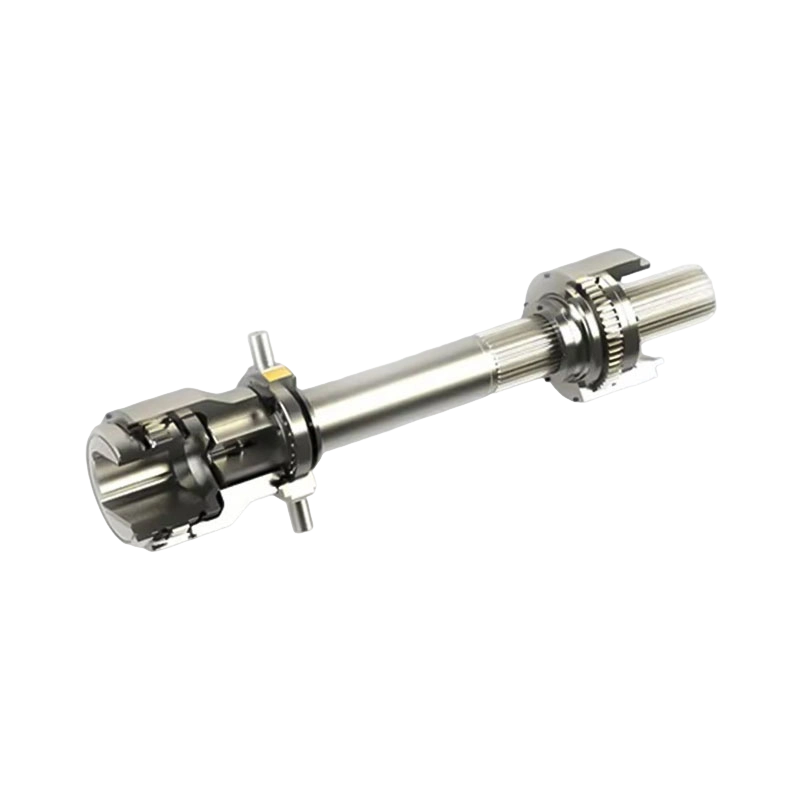
The total axial displacement that the coupling must accommodate should be calculated from the thermal growth of each connected machine over its full operating temperature range. The axial capacity of the flexible element must exceed this calculated displacement with an appropriate margin. Where thermal growth is large, a floating-shaft (spacer) coupling with two flexible elements — one at each end — may be necessary to distribute the axial and angular demands between two flex planes.
Material and Fastener Compatibility
All materials in the coupling assembly — hub, flexible element, bolts, and any spacer components — should be evaluated for compatibility in the thermal environment. Particular attention should be given to:
- Coefficient of thermal expansion matching between hub and flexible element to avoid excessive differential growth at operating temperature.
- Fastener material selection to maintain adequate bolt preload across the thermal range; high-alloy bolting materials (A286, Inconel 718) are used in high-temperature applications to minimise preload loss.
- Galvanic compatibility when dissimilar metals are in contact in the presence of moisture at intermediate temperatures.
Inspection and Monitoring Strategy
Metal elastic couplings in extreme thermal service should be subject to a defined inspection protocol. Key inspection activities include:
- Visual and dimensional inspection of flexible elements at each major overhaul for signs of permanent deformation, surface cracking, oxidation damage, or corrosion.
- Non-destructive examination (dye penetrant or magnetic particle inspection for ferrous materials; fluorescent penetrant for non-ferrous) of highly stressed flexible element zones, particularly disc bolt holes and diaphragm bore transitions.
- Fastener preload verification by torque-check or bolt elongation measurement after the first thermal cycle and subsequently at defined intervals.
- Vibration signature monitoring during operation to detect changes in torsional natural frequency that may indicate altered coupling stiffness due to material degradation or permanent set.
Maintenance Practices for Thermally Demanding Applications
The service life of a metal elastic coupling in an extreme-temperature environment is strongly influenced by the quality and consistency of the maintenance programme applied to it. The following practices are recommended as part of a structured maintenance plan:
- Establish a thermal cycle log: Record the number of thermal cycles (startups and shutdowns) accumulated by each coupling in high-cycle-count applications such as gas turbine peaking units. Use this data to track accumulated fatigue consumption against the design life of the flexible element.
- Apply anti-seize compounds to all fasteners: Use a compound rated for the maximum expected service temperature. Re-apply at each disassembly to prevent galling and to ensure that fastener torque-tension relationships remain predictable.
- Verify coupling alignment at operating temperature: Where possible, check shaft alignment with the machine at its normal operating temperature, since thermal growth of casings and supports may introduce misalignment that is not present in the cold-aligned condition.
- Replace flexible elements on a condition-based or life-limited schedule: For safety-critical applications, establish a retirement life for flexible elements based on accumulated operating hours and thermal cycles, and retire them before that limit regardless of apparent condition.
- Store replacement flexible elements correctly: Disc packs, diaphragms, and bellows assemblies should be stored in dry, clean conditions free from mechanical damage. Even minor surface scratches or dents on thin flexible elements can act as fatigue initiation sites and should be cause for rejection before installation.
- Quick Links
- About
- Products
- Our Service
- News & Events
- Contact
- Products Series
- Flexible Couplings with Non-Elastic Elements
- Flexible Couplings with Metal Elastic Elements
- Flexible Couplings with Non-Metallic Elastic Elements
- Safety Coupling
- Rigid Coupling
- Contact Us
- Tel : +86 511 8572 3800 +86 511 8572 3900
- Mobile : +86 15106109009
- Email : sales@couplingzy.com
- Add:No.1 Zhongye Yingbin Avenue, Gaozi Street, Dantu Economic Development Zone, Zhenjiang City, Jiangsu Province, China.


