:+86 15106109009
:sales@couplingzy.com


 English
  русский
  Español
  عربى
عربى  Português
  Deutsch
  Türk
Türk  Indonesia

What Exactly Are Flexible Couplings with Non-Elastic Elements and How Do They Differ?
Content
- 1 What Are Flexible Couplings with Non-Elastic Elements?
- 2 How Do Non-Elastic Flexible Couplings Work?
- 2.1 Core Operating Mechanism: Flexibility Through Metal Behavior
- 2.2 Bending Slightly Under Load
- 2.3 Sliding or Articulating Through Precision-Machined Interfaces
- 2.4 Even Stress Distribution Across Metal Components
- 2.5 Compensation for Different Types of Misalignment
- 2.6 Maintaining High Torsional Rigidity
- 2.7 Summary of Working Principles
- 3 Key Characteristics of Flexible Couplings with Non-Elastic Elements
- 4 How Do Non-Elastic Flexible Couplings Differ from Elastic (Elastomeric) Couplings?
- 5 Typical Applications of Flexible Couplings with Non-Elastic Elements
- 6 When Should You Choose a Non-Elastic Flexible Coupling?
- 6.1 When High Positioning Accuracy Is Required
- 6.2 When Zero or Very Low Backlash Is Essential
- 6.3 When Stable Performance at High Speed or Temperature Is Needed
- 6.4 When Resistance to Chemicals, Oils, or UV Exposure Is Required
- 6.5 When Long-Term Reliability and Predictable Performance Matter
- 6.6 When an Elastic Coupling May Be the Better Option
- 6.7 Decision-Making Overview
- 7 Frequently Asked Questions (FAQ)
- 7.1 What is a non-elastic flexible coupling?
- 7.2 How do non-elastic flexible couplings accommodate misalignment?
- 7.3 What types of misalignment can they handle?
- 7.4 Why are non-elastic couplings considered high-precision components?
- 7.5 Do non-elastic flexible couplings absorb shock and vibration?
- 7.6 Are non-elastic flexible couplings suitable for high-speed applications?
- 7.7 How do non-elastic couplings perform in high-temperature environments?
- 7.8 What are the maintenance requirements for non-elastic flexible couplings?
- 7.9 In what environments are non-elastic couplings preferred?
- 7.10 When should an elastic coupling be chosen instead?
- 7.11 How do non-elastic and elastic couplings differ in lifespan?
- 8 References
What Are Flexible Couplings with Non-Elastic Elements?
Flexible couplings with non-elastic elements are a specialized type of mechanical shaft coupling that achieve flexibility through the controlled deformation or mechanical interaction of metal components, rather than through elastic materials such as rubber, polyurethane, or other polymers. This design philosophy makes them fundamentally different from traditional elastomeric couplings and gives them unique advantages in terms of precision, durability, and environmental adaptability.
Unlike elastic couplings, which rely on the compression or shear of soft materials to accommodate misalignment and absorb vibration, non-elastic flexible couplings use geometry-driven metal flexibility. Carefully engineered metal parts bend, slide, or articulate within their elastic limit, allowing the coupling to compensate for shaft misalignment while maintaining high torsional rigidity and torque transmission accuracy.
Core Design Principle: Flexibility Without Elastomers
The core principle behind non-elastic flexible couplings is that flexibility does not have to come from softness. Instead, it can be achieved through:
- Precision-machined metal geometries
- Thin, resilient metal elements capable of elastic deformation
- Controlled mechanical clearances and contact surfaces
By eliminating elastomeric components, these couplings avoid common problems such as material aging, hardening, cracking, swelling due to oil exposure, and performance degradation at high or low temperatures. As a result, all-metal flexible couplings are often chosen for demanding industrial and precision-motion applications.
Main Types of Non-Elastic Elements Used in Flexible Couplings
Several structural approaches are commonly used to achieve flexibility in non-elastic couplings. Each type has its own mechanical characteristics, advantages, and typical application scenarios.
Metal Discs (Disc Couplings)
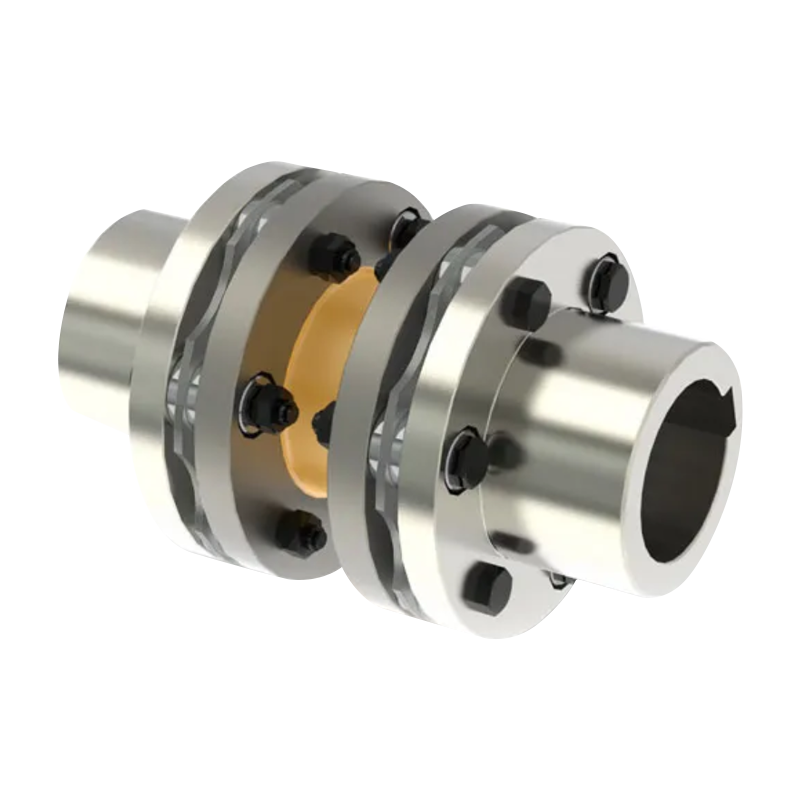
Disc couplings use one or more thin metal discs—usually made from stainless steel or high-strength alloy steel—to transmit torque while accommodating misalignment. These discs are bolted alternately to driving and driven flanges, allowing them to flex as the shafts move relative to each other.
The flexibility of a disc coupling comes from the slight bending of the metal discs. Because the discs operate within their elastic range, they return to their original shape once the load is removed, ensuring consistent performance over long service periods.
Key characteristics of disc couplings include:
- Zero or near-zero backlash, making them ideal for precision applications
- High torsional stiffness for accurate torque transmission
- Excellent resistance to high temperatures and corrosive environments
- No lubrication requirement
Disc couplings are widely used in servo drives, CNC machine tools, pumps, compressors, and high-speed rotating equipment.
Metal Bellows (Bellows Couplings)
Bellows couplings use a thin-walled, accordion-shaped metal bellows—typically manufactured from stainless steel or nickel-based alloys—to provide flexibility. The bellows can flex in multiple directions, allowing it to compensate for angular, axial, and parallel misalignment simultaneously.
The bellows structure is welded or brazed to hubs on both ends, creating a fully metallic, hermetically sealed coupling element. Torque is transmitted through the bellows walls, which deform elastically under load.
Notable features of bellows couplings include:
- Extremely high torsional rigidity
- Excellent misalignment compensation in compact designs
- Zero backlash, even under reversing loads
- Suitability for cleanroom and vacuum environments
Because of their precision and compact size, bellows couplings are commonly used in robotics, medical equipment, semiconductor manufacturing machinery, and high-end automation systems.
Slotted or Beam Structures (Beam Couplings)
Beam couplings, also known as helical or slotted couplings, achieve flexibility through a series of precisely machined slots cut into a single piece of metal. These slots form flexible beams that twist and bend slightly to accommodate misalignment.
Unlike disc or bellows couplings, beam couplings are typically machined from a single billet of aluminum or stainless steel, resulting in a compact, lightweight, and monolithic structure.
Their main advantages include:
- Simple, one-piece construction
- No assembly of flexible elements required
- Moderate misalignment compensation
- Zero backlash and maintenance-free operation
However, beam couplings generally have lower torque capacity compared to disc or gear couplings and are best suited for light to medium loads in motion control, encoders, and small automation equipment.
Gear Teeth (Gear Couplings)
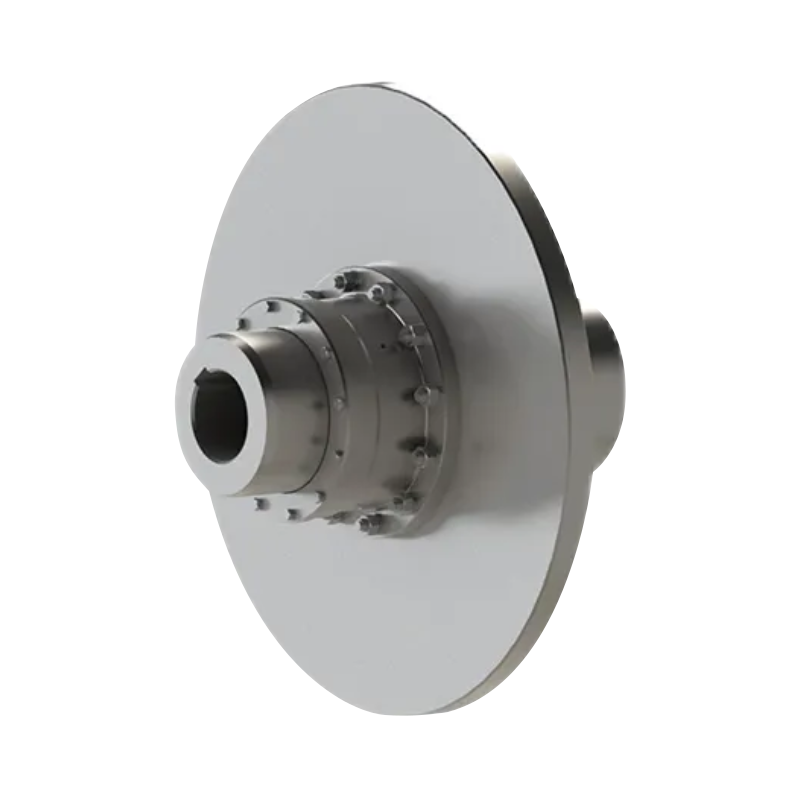
Gear couplings use internal and external gear teeth to transmit torque and accommodate misalignment. The flexibility is achieved through the sliding action of the gear teeth as the shafts move relative to each other.
Unlike elastomeric designs, gear couplings rely entirely on metal-to-metal contact. Proper lubrication is usually required to minimize wear and ensure smooth operation.
Key characteristics include:
- Very high torque capacity
- Ability to handle large shaft sizes
- Good misalignment compensation for heavy-duty applications
- Long service life when properly lubricated
Gear couplings are commonly used in steel mills, mining equipment, large pumps, conveyors, and other heavy industrial machinery.
Why They Are Called All-Metal Flexible Couplings
Because all flexibility is achieved through metallic components, these couplings are often referred to as all-metal flexible couplings. This term highlights two key aspects:
- The complete absence of elastomeric or polymer elements
- The reliance on engineered metal deformation and mechanical interaction
This design approach ensures predictable mechanical behavior, especially in applications where environmental conditions, precision requirements, or long-term reliability make elastomer-based solutions unsuitable.
Comparison of Common Non-Elastic Coupling Types
| Coupling Type | Main Flexible Element | Torque Capacity | Backlash | Typical Applications |
| Disc Coupling | Thin metal discs | Medium to high | Zero | Servo systems, pumps, compressors |
| Bellows Coupling | Metal bellows | Low to medium | Zero | Robotics, medical devices, automation |
| Beam Coupling | Slotted metal beams | Low to medium | Zero | Encoders, light-duty motion control |
| Gear Coupling | Gear teeth | Very high | Low | Heavy industrial machinery |
How Do Non-Elastic Flexible Couplings Work?
Non-elastic flexible couplings operate on a fundamentally different mechanical principle compared to elastomeric couplings. Instead of relying on rubber or polymer materials that compress, shear, or stretch, these couplings achieve flexibility through controlled mechanical behavior of metal components. Carefully engineered metal elements bend, slide, or articulate within their elastic limits, allowing the coupling to adapt to shaft misalignment while maintaining precise torque transmission.
This working mechanism enables non-elastic couplings to deliver a unique combination of flexibility, strength, and torsional rigidity, making them ideal for applications where accuracy, stability, and durability are critical.
Core Operating Mechanism: Flexibility Through Metal Behavior
At the heart of every non-elastic flexible coupling is the concept of elastic deformation of metal. Although metals are often perceived as rigid, they can flex slightly when subjected to controlled loads—provided the stress remains below the material’s yield strength.
Non-elastic couplings are designed so that:
- Metal components deform only within their elastic range
- Deformation is repeatable and fully reversible
- No permanent shape change occurs during normal operation
This ensures consistent performance over millions of load cycles without fatigue-related failure when properly selected and installed.
Bending Slightly Under Load
Controlled Elastic Bending
One of the primary ways non-elastic elements accommodate misalignment is through slight elastic bending. Thin metal discs, bellows walls, or beam structures are specifically designed with optimized thickness, shape, and material properties to allow controlled deflection under load.
When torque is transmitted from the driving shaft to the driven shaft, these elements experience bending forces. Instead of resisting these forces rigidly, they flex just enough to compensate for shaft displacement.
Key characteristics of this bending behavior include:
- Predictable stiffness based on geometry and material
- Uniform stress distribution across the bending area
- Immediate return to original shape when load is removed
This mechanism is commonly seen in disc couplings and bellows couplings, where the flexible metal element acts like a spring—but without the damping or aging effects associated with elastomers.
Sliding or Articulating Through Precision-Machined Interfaces
Mechanical Articulation Instead of Material Compression
In some non-elastic flexible couplings, flexibility is achieved not by bending alone, but through controlled sliding or articulation between precision-machined metal interfaces. Gear couplings are the most common example of this working principle.
As the shafts move out of perfect alignment, the gear teeth engage at slightly different contact points. This sliding motion allows the coupling to accommodate angular and parallel misalignment without introducing excessive stress concentrations.
Important aspects of this mechanism include:
- High-precision tooth profiles to ensure smooth load transfer
- Lubrication to reduce friction and wear
- Even load sharing across multiple contact surfaces
Unlike elastomeric couplings, which absorb misalignment through material deformation, articulated metal interfaces rely on geometry and surface interaction to maintain flexibility under heavy loads.
Even Stress Distribution Across Metal Components
Why Stress Distribution Matters
A key advantage of non-elastic flexible couplings is their ability to distribute stress evenly across multiple metal components. This is achieved through symmetrical designs, multiple flexible elements, or continuous deformation zones.
Even stress distribution helps:
- Reduce localized stress concentrations
- Minimize fatigue and crack initiation
- Extend the overall service life of the coupling
For example, in disc couplings with multiple disc packs, torque and misalignment loads are shared across several thin discs rather than being concentrated in a single element. This results in more stable performance under dynamic operating conditions.
Compensation for Different Types of Misalignment
By combining bending, sliding, and controlled articulation, non-elastic flexible couplings can compensate for multiple forms of shaft misalignment simultaneously.
Angular Misalignment
Angular misalignment occurs when the centerlines of two shafts intersect at an angle rather than forming a straight line. Non-elastic couplings accommodate this by allowing flexible elements to bend or articulate in a way that aligns with the angular offset.
Disc and bellows couplings are particularly effective at handling angular misalignment because their flexible elements can deform symmetrically around the shaft axis.
Parallel (Offset) Misalignment
Parallel misalignment, also known as offset misalignment, happens when two shaft centerlines are parallel but laterally displaced. To compensate for this, non-elastic couplings rely on a combination of bending and geometric displacement within the flexible elements.
In disc couplings, offset misalignment is absorbed by alternating bending patterns across the disc pack. In gear couplings, it is handled through sliding motion of the gear teeth.
Axial Movement
Axial movement refers to relative motion along the shaft axis, often caused by thermal expansion, load changes, or structural deflection. Many non-elastic flexible couplings are designed to allow limited axial displacement without transmitting excessive axial forces to connected equipment.
Bellows couplings, in particular, excel at axial compensation due to their accordion-like structure, which can compress or extend slightly while maintaining torsional stiffness.
Maintaining High Torsional Rigidity
Why Torsional Rigidity Is Critical
Despite their flexibility, non-elastic couplings are engineered to maintain high torsional rigidity. This means that they transmit torque with minimal angular deflection, ensuring accurate motion transfer between shafts.
High torsional rigidity is essential for:
- Precise positioning and repeatability
- Stable speed control
- Elimination of backlash and wind-up
Because metal has a much higher modulus of elasticity than rubber, non-elastic couplings can be both flexible and stiff at the same time—flexible in terms of misalignment compensation, but stiff in torque transmission.
Summary of Working Principles
| Mechanism | How It Works | Main Benefit |
| Elastic bending | Metal elements flex within elastic limits | Zero backlash, high precision |
| Sliding articulation | Precision metal interfaces slide or rotate | High torque capacity |
| Stress distribution | Load shared across multiple components | Long service life |
Non-elastic flexible couplings work by intelligently combining metal bending, articulation, and stress distribution. This allows them to compensate for angular, parallel, and axial misalignment while preserving high torsional rigidity and long-term mechanical stability. Their working principle makes them especially well-suited for precision machinery and demanding industrial environments where elastomer-based solutions fall short.
Key Characteristics of Flexible Couplings with Non-Elastic Elements
Flexible couplings with non-elastic elements are valued in modern mechanical and industrial systems because they combine durability, precision, and reliability in a way that elastomer-based couplings often cannot. Their key characteristics stem directly from the absence of rubber or plastic components and from the intelligent use of metal geometry to achieve flexibility. Below, the three most important characteristics are explained in detail.
1. No Elastomer, No Aging
Elimination of Material Degradation
One of the most defining characteristics of non-elastic flexible couplings is the complete absence of elastomeric materials such as rubber, polyurethane, or synthetic polymers. In traditional elastic couplings, these materials are responsible for flexibility and vibration damping, but they also represent the weakest link in terms of long-term reliability.
By contrast, non-elastic couplings rely entirely on metal components—such as steel discs, metal bellows, or precision-machined gear teeth—to achieve flexibility. Because metals do not suffer from the same aging mechanisms as elastomers, these couplings avoid common failure modes including:
- Cracking caused by repeated compression and relaxation
- Hardening or embrittlement over time
- Swelling or softening due to oil or chemical exposure
- Loss of elasticity caused by heat or UV radiation
As a result, performance remains stable and predictable over long operating periods, even in demanding environments.
Superior Performance in Harsh Environments
Because there is no rubber or plastic to degrade, non-elastic flexible couplings offer excellent resistance to extreme operating conditions. This includes:
- High ambient and operating temperatures
- Exposure to oils, greases, and hydraulic fluids
- Contact with aggressive chemicals or corrosive atmospheres
- Outdoor or high-humidity environments
In applications such as steel processing, chemical plants, power generation, or high-speed machinery, elastomeric couplings may require frequent replacement due to environmental damage. Non-elastic couplings, however, continue to function reliably because their metal components maintain structural integrity under these conditions.
2. High Torsional Stiffness
Minimal Backlash and Low Wind-Up
Another key characteristic of non-elastic flexible couplings is their high torsional stiffness. Torsional stiffness refers to how much a coupling twists under applied torque. The higher the stiffness, the less angular deflection occurs between the driving and driven shafts.
Because metal has a much higher modulus of elasticity than rubber, non-elastic couplings transmit torque with:
- Minimal backlash, often approaching zero
- Very low wind-up, even under fluctuating loads
This means that the rotational position of the input shaft is transferred almost exactly to the output shaft, without delay or elastic lag.
Importance for Precision Motion Control
High torsional stiffness is especially critical in applications where motion accuracy and repeatability are essential. In systems such as servo drives, CNC machines, and precision automation equipment, even small amounts of torsional wind-up can lead to positioning errors, vibration, or control instability.
Non-elastic flexible couplings excel in these environments because they provide:
- Accurate torque transmission
- Consistent angular positioning
- Stable dynamic response during acceleration and deceleration
This makes them a preferred choice for high-performance machinery where control precision directly affects product quality and operational efficiency.
Comparison with Elastomeric Couplings
Elastomeric couplings, while effective at damping vibration, inherently allow more torsional deflection due to the compressible nature of rubber. Over time, as the elastomer ages, this torsional behavior can become inconsistent. Non-elastic couplings, on the other hand, maintain a consistent stiffness profile throughout their service life, ensuring long-term accuracy.
3. Maintenance-Friendly or Maintenance-Free Design
No Lubrication or Minimal Servicing
Many non-elastic flexible couplings are designed to be maintenance-friendly or completely maintenance-free. Because there are no elastomer inserts to inspect or replace, routine servicing requirements are significantly reduced.
In designs such as disc couplings, bellows couplings, and beam couplings:
- No lubrication is required
- No periodic adjustment is necessary
- No consumable flexible elements need replacement
This simplifies maintenance planning and reduces downtime, especially in continuous-operation or hard-to-access installations.
Long Service Life and Predictable Performance
Another advantage of non-elastic couplings is their long and predictable service life. Since metal components behave consistently over time when operated within their design limits, performance does not gradually degrade as it does with aging elastomers.
This predictability allows engineers and maintenance teams to:
- Plan maintenance intervals more accurately
- Reduce unplanned shutdowns
- Lower total cost of ownership
In critical systems where reliability is essential, this predictable behavior is often more valuable than vibration damping alone.
Exceptions and Heavy-Duty Designs
Some heavy-duty non-elastic couplings, such as gear couplings, may require periodic lubrication to minimize wear between metal contact surfaces. However, even in these cases, maintenance intervals are typically longer and more stable compared to elastomeric designs, and performance does not depend on the condition of a flexible polymer element.
Summary of Key Characteristics
| Characteristic | Main Advantage | Practical Impact |
| No elastomer, no aging | Resistance to heat, oil, and chemicals | Stable long-term performance |
| High torsional stiffness | Minimal backlash and wind-up | High precision and accuracy |
| Maintenance-friendly design | Reduced servicing requirements | Lower downtime and operating costs |
The key characteristics of non-elastic flexible couplings—freedom from aging, high torsional stiffness, and maintenance-friendly operation—make them an ideal solution for precision machinery and harsh industrial environments. These attributes ensure reliable torque transmission, consistent performance, and long-term cost efficiency across a wide range of applications.
How Do Non-Elastic Flexible Couplings Differ from Elastic (Elastomeric) Couplings?
Understanding the differences between non-elastic flexible couplings and elastic (elastomeric) couplings is essential when selecting the right coupling for a mechanical system. Although both types are designed to connect shafts and accommodate misalignment, their working principles, performance characteristics, and ideal application scenarios differ significantly. These differences directly affect precision, durability, maintenance requirements, and long-term reliability.
The following sections provide a detailed comparison across key technical aspects to help clarify how these two coupling categories differ in real-world operation.
Flexibility Method
Metal Deformation vs Elastomer Compression
The most fundamental difference lies in how flexibility is achieved. Non-elastic flexible couplings rely on controlled deformation of metal components such as discs, bellows, beams, or gear teeth. These metal elements flex, bend, or articulate within their elastic limits, allowing misalignment compensation without permanent deformation.
In contrast, elastic couplings depend on rubber or elastomer inserts that compress, stretch, or shear under load. The elastomer acts as a flexible medium between the driving and driven hubs, absorbing misalignment through material deformation rather than geometric movement.
This difference has far-reaching implications. Metal deformation provides highly predictable mechanical behavior, while elastomer compression introduces variability due to material aging, temperature sensitivity, and load-dependent stiffness changes.
Shock and Vibration Damping
Low Damping vs High Damping Capability
Elastic couplings excel at shock and vibration damping. The inherent softness of rubber allows these couplings to absorb sudden torque spikes, reduce transmitted vibration, and isolate sensitive equipment from dynamic disturbances. This makes them well-suited for applications with irregular loads, frequent starts and stops, or significant torque fluctuations.
By comparison, non-elastic flexible couplings provide relatively low shock and vibration damping. Because they are made entirely of metal, they transmit torque more directly, with minimal energy absorption. While this results in cleaner and more precise motion transfer, it also means that vibrations and shocks are less attenuated.
As a result, non-elastic couplings are often paired with systems that already have stable operating conditions or where external damping is provided elsewhere in the drivetrain.
Torsional Stiffness
Very High vs Medium to Low Stiffness
Torsional stiffness refers to a coupling’s resistance to twisting under load. This is one of the most important differentiators between non-elastic and elastic couplings.
Non-elastic flexible couplings offer very high torsional stiffness because metal has a high modulus of elasticity. Under torque, these couplings exhibit minimal angular deflection, ensuring that rotational motion is transmitted accurately and consistently.
Elastic couplings, on the other hand, have medium to low torsional stiffness. The elastomer deforms under torque, creating torsional wind-up. While this can be beneficial for absorbing shocks, it introduces delays and inaccuracies in motion transfer.
In precision systems such as servo drives, CNC machines, and positioning equipment, high torsional stiffness is critical. Even small amounts of wind-up can lead to positioning errors, control instability, or reduced repeatability, making non-elastic couplings the preferred choice in these applications.
Temperature Resistance
Excellent Thermal Stability vs Limited Operating Range
Non-elastic flexible couplings offer excellent temperature resistance. Since they contain no rubber or plastic components, their performance remains stable across a wide temperature range. Metal elements can withstand high operating temperatures, as well as low-temperature environments, without significant changes in mechanical behavior.
Elastic couplings are inherently limited by the thermal properties of elastomers. At elevated temperatures, rubber materials may soften, lose strength, or degrade chemically. At low temperatures, they can harden or become brittle, reducing flexibility and increasing the risk of cracking.
For applications involving high-speed operation, heat generation, outdoor exposure, or extreme ambient conditions, non-elastic couplings provide a more reliable and consistent solution.
Precision and Backlash
Zero or Near-Zero Backlash vs Moderate Backlash
Precision and backlash characteristics are closely linked to torsional stiffness and flexibility method. Non-elastic flexible couplings are often designed with zero or near-zero backlash, meaning there is virtually no lost motion between the input and output shafts.
This makes them ideal for applications requiring:
- High positioning accuracy
- Exact speed synchronization
- Consistent bidirectional motion
Elastic couplings typically exhibit moderate backlash due to elastomer compression and relaxation. Over time, as the elastomer ages or wears, backlash can increase, further reducing precision.
In systems where motion accuracy is less critical but vibration isolation is a priority, this trade-off may be acceptable. However, in high-precision machinery, the backlash-free nature of non-elastic couplings is a decisive advantage.
Typical Lifespan
Long and Stable vs Elastomer-Limited
The lifespan of a coupling is strongly influenced by the durability of its flexible elements. Non-elastic flexible couplings generally have a long and stable service life, provided they operate within their design limits. Metal components do not suffer from aging in the same way elastomers do, and their mechanical properties remain consistent over time.
Elastic couplings, however, are limited by elastomer aging. Factors such as heat, ozone, UV exposure, chemicals, and repeated load cycles gradually degrade the rubber element. This leads to reduced flexibility, cracking, and eventual failure.
As a result, elastic couplings often require periodic inspection and replacement, while non-elastic couplings offer more predictable long-term performance and lower replacement frequency.
Side-by-Side Comparison
| Aspect | Non-Elastic Flexible Couplings | Elastic Couplings |
| Flexibility method | Metal deformation | Rubber or elastomer compression |
| Shock and vibration damping | Low | High |
| Torsional stiffness | Very high | Medium to low |
| Temperature resistance | Excellent | Limited |
| Precision and backlash | Very high, often zero backlash | Moderate |
| Typical lifespan | Long and stable | Limited by elastomer aging |
Non-elastic flexible couplings and elastic couplings serve different engineering priorities. Non-elastic couplings emphasize precision, torsional rigidity, temperature resistance, and long-term stability, making them ideal for high-accuracy and demanding industrial applications. Elastic couplings, by contrast, focus on vibration damping and shock absorption, offering advantages in systems with variable loads and less stringent precision requirements.
Choosing between these two types ultimately depends on whether the application prioritizes accuracy and durability or damping and flexibility. Understanding these differences ensures the coupling selected will deliver optimal performance and reliability throughout its service life.
Typical Applications of Flexible Couplings with Non-Elastic Elements
Flexible couplings with non-elastic elements are widely used across industries where precision, stability, and long-term reliability are critical. Unlike elastomeric couplings, these all-metal designs prioritize accurate torque transmission, high torsional stiffness, and resistance to harsh operating conditions. As a result, they are preferred in applications where even minor performance deviations can lead to reduced efficiency, quality issues, or equipment damage.
Below is a detailed overview of the most common application areas where non-elastic flexible couplings demonstrate clear advantages.
Precision Motion Control Systems
High Accuracy and Repeatability Requirements
In precision motion control systems, the primary goal is to achieve exact positioning, repeatable motion, and stable dynamic response. These systems are commonly found in automation lines, semiconductor equipment, optical inspection machines, and precision measurement devices.
Non-elastic flexible couplings are ideally suited for these systems because they offer:
- Very high torsional stiffness, ensuring minimal angular deflection
- Zero or near-zero backlash, even during frequent direction changes
- Consistent mechanical behavior over long operating cycles
Unlike elastomeric couplings, which may introduce positioning errors due to torsional wind-up or aging of rubber elements, non-elastic couplings maintain stable performance throughout their service life. This reliability is essential for systems where micrometer-level accuracy is required.
CNC and Machine Tools
Maintaining Machining Accuracy
CNC machines and machine tools rely heavily on precise coordination between motors, spindles, ball screws, and drive systems. Any loss of motion accuracy or stiffness can directly affect machining quality, surface finish, and dimensional tolerance.
Flexible couplings with non-elastic elements are commonly used in CNC applications because they:
- Transmit torque without elastic delay
- Maintain alignment under high-speed rotation
- Withstand continuous operation and thermal loads
Disc couplings and bellows couplings are particularly popular in CNC environments due to their compact size and high precision. Their ability to compensate for minor shaft misalignment while preserving rigidity helps protect bearings and spindles from excessive loads.
Support for High-Speed and High-Duty Cycles
Modern machine tools often operate at high spindle speeds and under continuous duty cycles. Non-elastic couplings perform reliably in these conditions because metal components do not soften or degrade with heat, unlike elastomer-based alternatives.
Pumps and Compressors (High-Speed Types)
Stable Torque Transmission at High Speeds
High-speed pumps and compressors place demanding requirements on shaft couplings. These machines often operate at thousands of revolutions per minute, where imbalance, vibration, and misalignment can quickly lead to mechanical failure.
Non-elastic flexible couplings are preferred in these applications because they provide:
- Excellent balance characteristics for high-speed rotation
- Consistent torque transmission without elastic lag
- Resistance to oil, heat, and process media
Disc and gear couplings are commonly used in centrifugal pumps, turbo compressors, and process equipment, where reliability and uptime are critical.
Reduced Risk of Elastomer Failure
In pumping and compression systems, exposure to lubricants, chemicals, and elevated temperatures is common. Elastomeric couplings may swell, crack, or lose strength under such conditions. By eliminating elastomers entirely, non-elastic couplings significantly reduce the risk of unexpected failures.
Robotics and Automation
Dynamic Performance and Control Precision
Robotics and automation systems require rapid acceleration, deceleration, and frequent direction changes. In these systems, coupling performance directly affects motion smoothness, control accuracy, and system responsiveness.
Non-elastic flexible couplings support advanced robotic applications by offering:
- High torsional rigidity for responsive control
- Zero backlash for precise joint positioning
- Compact designs suitable for limited installation space
Bellows couplings and beam couplings are often used in robotic joints, servo motor connections, and automated assembly equipment due to their precision and lightweight construction.
Long-Term Stability in Continuous Operation
Automation systems are frequently designed for 24/7 operation. The predictable behavior and long service life of non-elastic couplings make them ideal for such environments, reducing maintenance intervals and ensuring consistent performance over time.
Aerospace and Power Generation Equipment
Extreme Operating Conditions
In aerospace and power generation applications, mechanical components must operate reliably under extreme conditions, including high temperatures, variable loads, and strict safety requirements.
Non-elastic flexible couplings are selected in these sectors because they:
- Withstand extreme thermal environments
- Provide stable performance under fluctuating loads
- Offer long-term reliability with minimal degradation
In power generation equipment such as turbines, generators, and auxiliary drive systems, gear couplings and disc couplings are often used to handle high torque while accommodating shaft misalignment.
Compliance with International Standards
To ensure safety and reliability, couplings used in aerospace and power generation are often designed and tested according to international mechanical standards such as those issued by :contentReference[oaicite:0]{index=0}. Compliance with these standards helps ensure consistent quality, performance verification, and suitability for demanding industrial environments.
Overview of Typical Applications
| Application Area | Main Requirement | Why Non-Elastic Couplings Are Preferred |
| Precision motion control | High accuracy and repeatability | Zero backlash and high torsional stiffness |
| CNC and machine tools | Machining precision | Stable torque transmission under load |
| High-speed pumps and compressors | Reliability at high RPM | Heat and oil resistance |
| Robotics and automation | Dynamic response | Precise motion control |
| Aerospace and power generation | Extreme reliability | Compliance with international standards |
When Should You Choose a Non-Elastic Flexible Coupling?
Selecting the right shaft coupling is a critical decision in mechanical system design, as it directly affects accuracy, reliability, service life, and overall system performance. Non-elastic flexible couplings are not a universal replacement for all coupling types, but they offer clear advantages in specific operating conditions and application scenarios. Understanding when to choose a non-elastic flexible coupling helps engineers and system designers optimize performance while avoiding unnecessary maintenance or premature failure.
The following sections explain in detail the situations in which a non-elastic flexible coupling is the preferred choice, as well as cases where an elastic coupling may still be more suitable.
When High Positioning Accuracy Is Required
Precision as a Core Design Requirement
If an application demands high positioning accuracy, non-elastic flexible couplings are often the best solution. These couplings transmit motion with minimal angular deflection, ensuring that the rotational position of the driving shaft is accurately reflected at the driven shaft.
In systems such as servo-driven mechanisms, CNC axes, linear positioning stages, and precision measuring equipment, even small positioning errors can lead to unacceptable performance issues. Elastomeric couplings, due to their inherent compliance, may introduce angular lag or inconsistent motion under varying loads.
Non-elastic couplings eliminate this problem by providing:
- Consistent torque transmission
- Repeatable motion behavior
- Stable accuracy over long operating periods
This makes them particularly suitable for high-precision industrial and automation systems.
When Zero or Very Low Backlash Is Essential
Eliminating Lost Motion
Backlash refers to lost motion between the input and output shafts when the direction of rotation changes. In many applications, backlash leads to control instability, noise, and reduced accuracy.
Non-elastic flexible couplings are often designed with zero or near-zero backlash. Because they do not rely on compressible materials, there is no delay caused by elastomer deformation or recovery.
Applications that benefit from low or zero backlash include:
- Bidirectional positioning systems
- Robotic joints and arms
- Precision indexing mechanisms
In contrast, elastic couplings typically exhibit moderate backlash that may increase over time as the elastomer wears or ages. For systems where precise motion reversal and synchronization are critical, non-elastic couplings provide a decisive advantage.
When Stable Performance at High Speed or Temperature Is Needed
High-Speed Operation
Many modern machines operate at high rotational speeds, where centrifugal forces, heat generation, and dynamic loads place significant stress on coupling components. Non-elastic flexible couplings maintain stable performance at high speeds because their metal elements do not soften, creep, or degrade under centrifugal forces.
Disc couplings and bellows couplings, in particular, offer excellent balance characteristics, making them suitable for high-speed pumps, compressors, spindles, and turbo machinery.
High-Temperature and Thermal Cycling Environments
Temperature stability is another key reason to choose non-elastic couplings. Elastomeric materials have limited operating temperature ranges and may lose strength, harden, or crack when exposed to prolonged heat or repeated thermal cycling.
Non-elastic couplings, by contrast, provide:
- Excellent heat resistance
- Stable mechanical properties over wide temperature ranges
- Reliable operation during frequent start-stop cycles
This makes them suitable for furnaces, power generation equipment, and high-speed industrial machinery.
When Resistance to Chemicals, Oils, or UV Exposure Is Required
Operation in Aggressive Environments
In chemical processing plants, outdoor installations, and oil-intensive industrial environments, exposure to aggressive substances is unavoidable. Elastomeric couplings are vulnerable to swelling, cracking, or chemical breakdown when exposed to oils, solvents, or UV radiation.
Non-elastic flexible couplings offer superior resistance to these environmental factors because their metal components are not affected by chemical absorption or UV exposure.
Typical applications include:
- Chemical processing equipment
- Outdoor machinery and infrastructure
- Pumps and compressors handling aggressive media
In such environments, selecting a non-elastic coupling reduces the risk of unexpected failure and extends service life.
When Long-Term Reliability and Predictable Performance Matter
Minimizing Maintenance and Downtime
If minimizing maintenance and avoiding unplanned downtime are high priorities, non-elastic flexible couplings offer clear advantages. Because there are no elastomeric elements to inspect or replace, maintenance requirements are significantly reduced.
Their predictable metal behavior allows engineers to:
- Plan maintenance intervals more accurately
- Reduce spare parts inventory
- Lower total cost of ownership
In continuous-operation systems or remote installations, this reliability is especially valuable.
When an Elastic Coupling May Be the Better Option
Applications Prioritizing Shock Absorption and Vibration Isolation
Despite their many advantages, non-elastic flexible couplings are not ideal for every application. If shock absorption or vibration isolation is the primary requirement, an elastic coupling may still be the better choice.
Elastomeric couplings are effective at:
- Absorbing sudden torque spikes
- Reducing transmitted vibration
- Protecting sensitive components from impact loads
These characteristics make elastic couplings suitable for applications such as reciprocating machinery, conveyors with frequent load changes, and systems driven by internal combustion engines.
Decision-Making Overview
| Requirement | Recommended Coupling Type | Reason |
| High positioning accuracy | Non-elastic flexible coupling | Zero backlash and high torsional stiffness |
| High-speed or high-temperature operation | Non-elastic flexible coupling | Stable metal performance |
| Chemical or UV exposure | Non-elastic flexible coupling | Resistance to environmental degradation |
| Shock and vibration damping | Elastic coupling | Elastomer absorbs dynamic loads |
You should choose a non-elastic flexible coupling when precision, stability, and environmental resistance are more important than shock absorption. These couplings excel in high-accuracy systems, high-speed and high-temperature environments, and applications exposed to chemicals or outdoor conditions.
By carefully evaluating application requirements and operating conditions, engineers can determine whether a non-elastic or elastic coupling will deliver the optimal balance of performance, reliability, and long-term value.
Frequently Asked Questions (FAQ)
What is a non-elastic flexible coupling?
A non-elastic flexible coupling is a mechanical shaft coupling that accommodates misalignment through controlled deformation or articulation of metal components rather than through rubber or polymer elements. Common designs include disc couplings, bellows couplings, beam couplings, and gear couplings. These couplings are often referred to as all-metal flexible couplings.
How do non-elastic flexible couplings accommodate misalignment?
They compensate for misalignment by allowing metal elements to bend, slide, or articulate slightly under load. This engineered deformation enables the coupling to handle angular, parallel (offset), and axial misalignment while maintaining high torsional stiffness and accurate torque transmission.
What types of misalignment can they handle?
Non-elastic flexible couplings can typically compensate for:
- Angular misalignment between shafts
- Parallel (offset) misalignment
- Axial movement due to thermal expansion or shaft float
The allowable limits depend on the coupling design and manufacturer specifications.
Why are non-elastic couplings considered high-precision components?
These couplings provide very high torsional stiffness and usually operate with zero or near-zero backlash. As a result, there is minimal angular lag between the driving and driven shafts, making them ideal for precision motion control, CNC machinery, robotics, and servo-driven systems.
Do non-elastic flexible couplings absorb shock and vibration?
Only to a limited extent. Because they do not use elastomeric materials, their ability to absorb shock and damp vibration is low compared to elastic couplings. They are designed to transmit torque accurately rather than to isolate vibration.
Are non-elastic flexible couplings suitable for high-speed applications?
Yes. Many non-elastic coupling designs, especially disc and bellows couplings, are well suited for high-speed operation. Their all-metal construction provides excellent balance characteristics and stable performance under centrifugal forces.
How do non-elastic couplings perform in high-temperature environments?
They perform exceptionally well. Since there are no rubber or plastic elements, non-elastic couplings are resistant to heat, thermal cycling, and temperature-related degradation. This makes them suitable for furnaces, power generation equipment, and other high-temperature applications.
What are the maintenance requirements for non-elastic flexible couplings?
Most non-elastic flexible couplings are maintenance-free or require minimal maintenance. Many designs do not need lubrication and have long service lives, provided that alignment limits and load ratings are respected.
In what environments are non-elastic couplings preferred?
They are preferred in environments involving:
- Chemicals and oils
- Outdoor exposure and UV radiation
- High temperatures or aggressive industrial conditions
Metal components are not susceptible to chemical swelling, cracking, or UV degradation.
When should an elastic coupling be chosen instead?
An elastic coupling may be a better choice when shock absorption, vibration damping, or protection against sudden torque spikes is the primary requirement. Applications such as reciprocating machinery, conveyors, and engine-driven systems often benefit from elastomeric elements.
How do non-elastic and elastic couplings differ in lifespan?
Non-elastic flexible couplings generally have a longer and more predictable lifespan because they are not affected by elastomer aging. Elastic couplings have a limited service life determined by the condition of the elastomer, which can degrade over time.
References
The following standards, technical publications, and industry references support the concepts discussed in this article:
- ISO 14691 – Petroleum, petrochemical and natural gas industries — Flexible couplings for mechanical power transmission
- ISO 10816 – Mechanical vibration — Evaluation of machine vibration by measurements on non-rotating parts
- AGMA 9002 – Flexible Couplings — Application and Selection Guide
- VDI 2240 – Design of shaft-hub connections and couplings
- Machinery’s Handbook, Industrial Press — Sections on shaft alignment and flexible couplings
- Manufacturer technical catalogs and application guides for disc, bellows, beam, and gear couplings
- Engineering textbooks on mechanical power transmission and machine element design

- Quick Links
- About
- Products
- Our Service
- News & Events
- Contact
- Products Series
- Flexible Couplings with Non-Elastic Elements
- Flexible Couplings with Metal Elastic Elements
- Flexible Couplings with Non-Metallic Elastic Elements
- Safety Coupling
- Rigid Coupling
- Contact Us
- Tel : +86 511 8572 3800 +86 511 8572 3900
- Mobile : +86 15106109009
- Email : sales@couplingzy.com
- Add:No.1 Zhongye Yingbin Avenue, Gaozi Street, Dantu Economic Development Zone, Zhenjiang City, Jiangsu Province, China.


